Developing problem-solving skills Addition Worksheets for Ages 6-8
5 filtered results
-
From - To
Welcome to our collection of "Developing Problem-Solving Skills Addition Worksheets" designed specifically for children aged 6-8! These engaging worksheets encourage young learners to build essential math skills while tackling real-world problems through addition. With a variety of fun and interactive exercises, your child will enhance their critical thinking and reasoning abilities. Our resources promote independence and confidence, allowing children to explore different strategies for solving addition problems. Whether used at home or in the classroom, these worksheets offer a fun way to support your child’s math journey. Download today and watch their problem-solving skills blossom!
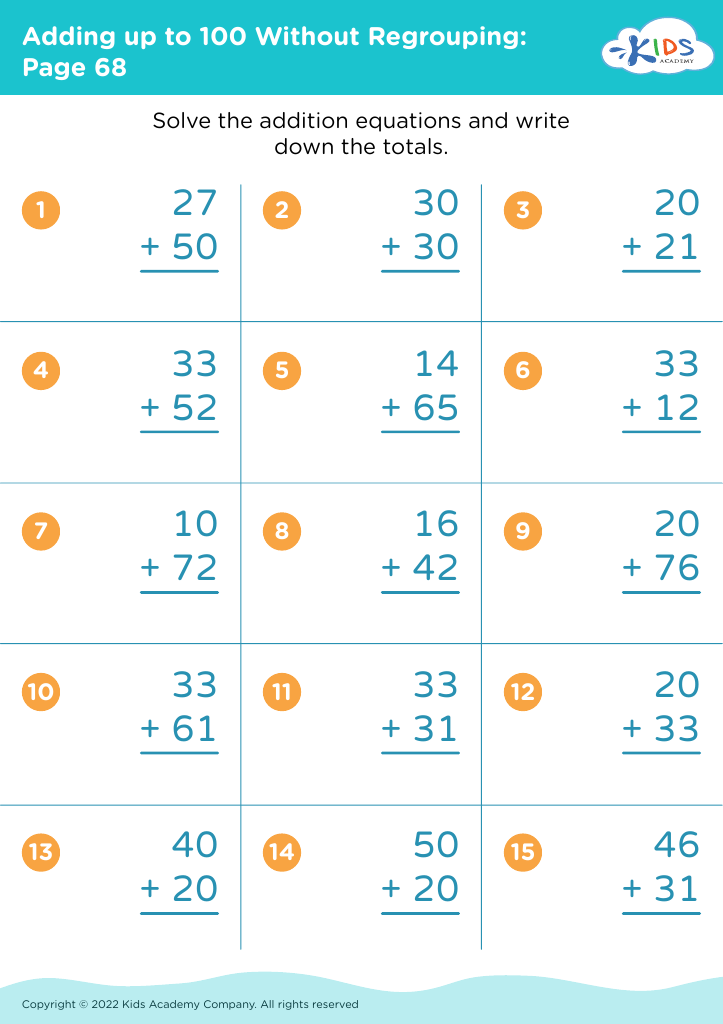
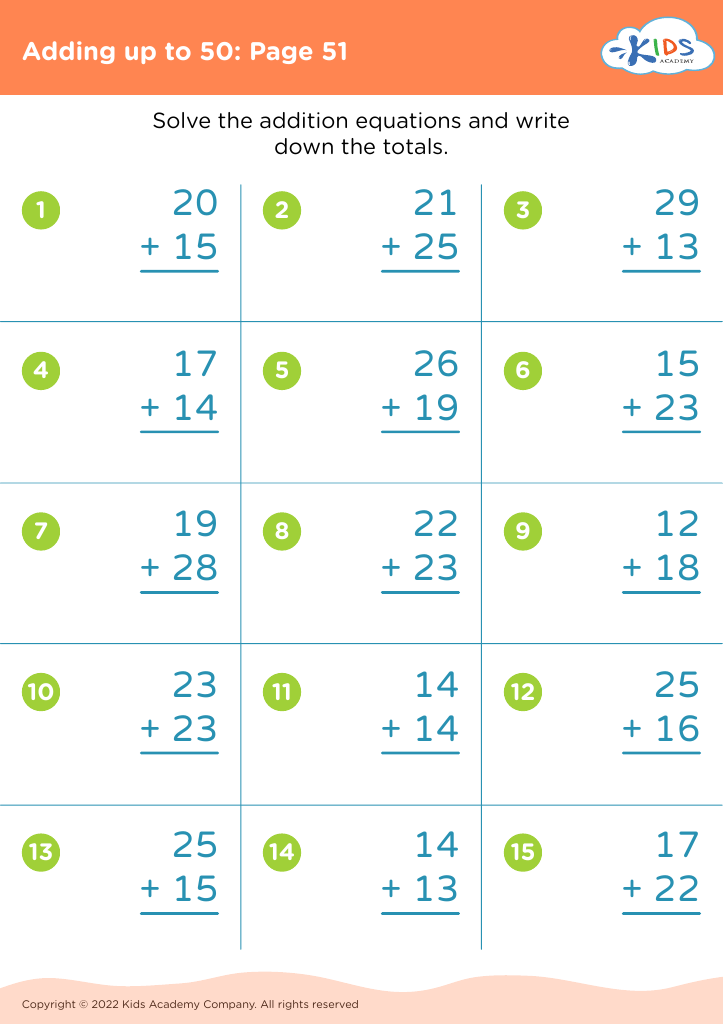
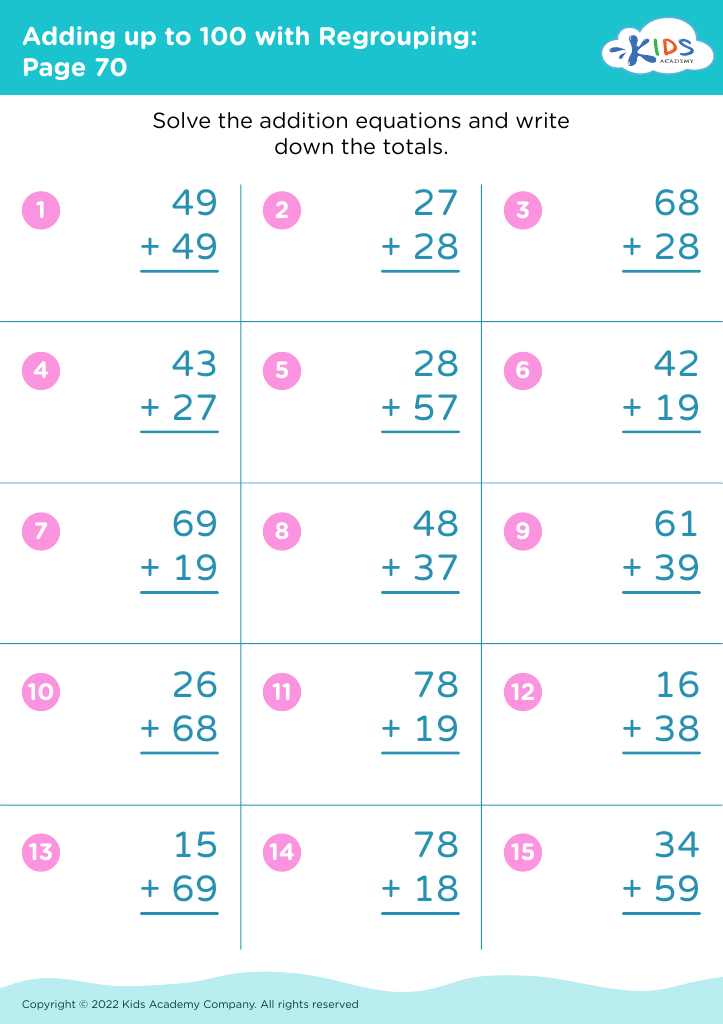
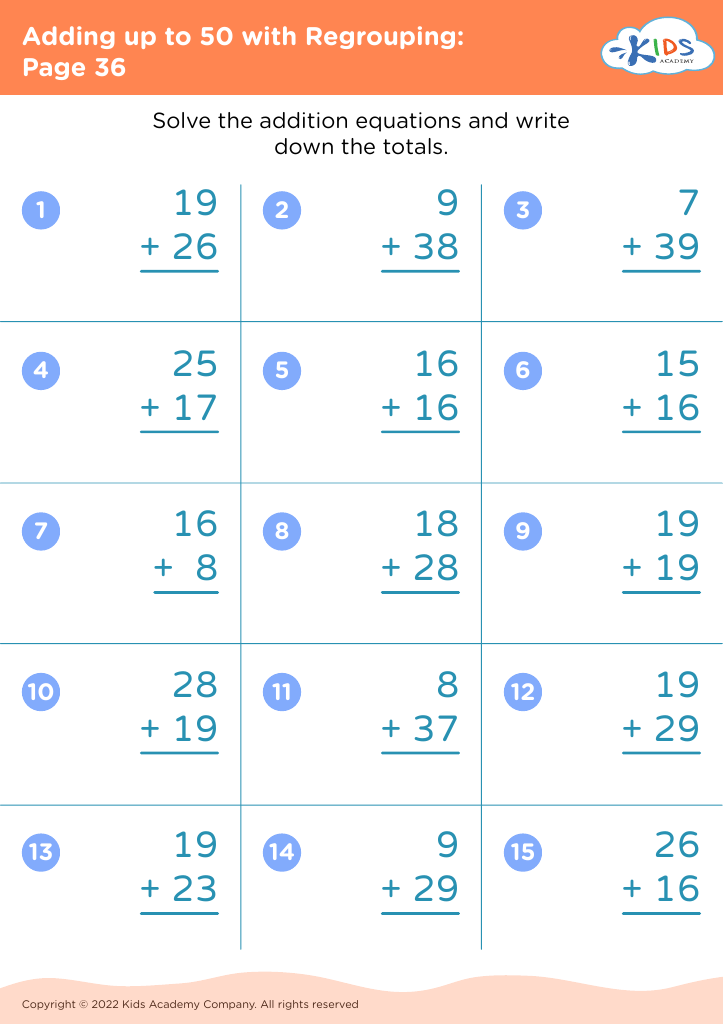
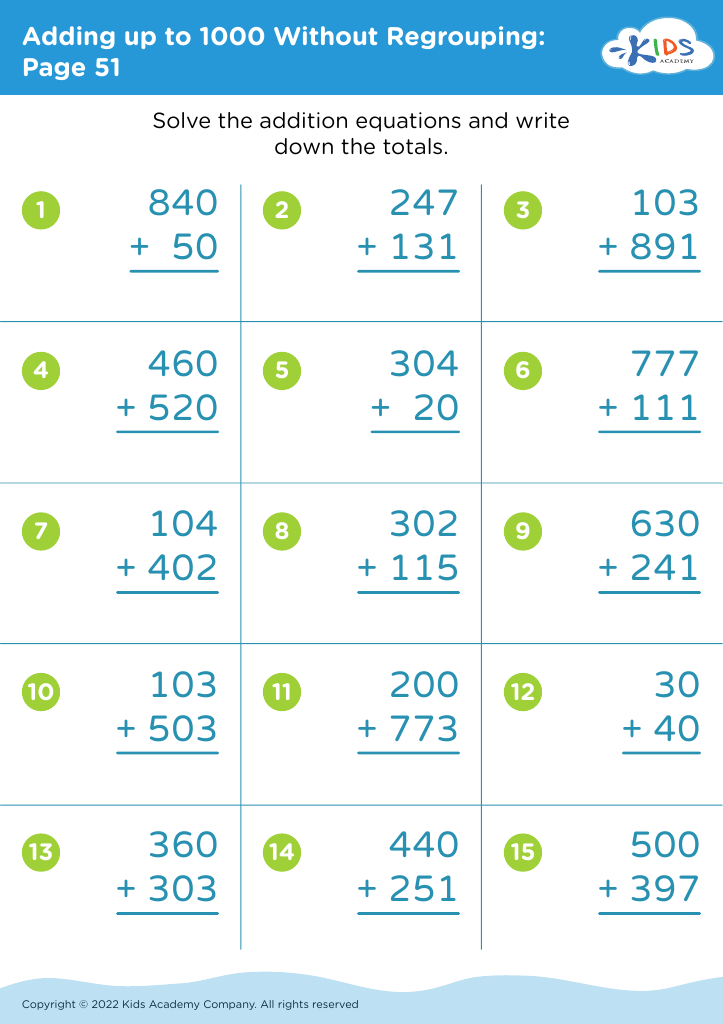








Developing problem-solving skills related to addition for children aged 6-8 is crucial for several reasons. First, this foundational skill is vital in everyday life activities, such as budgeting, cooking, and time management. Teaching children to approach addition problems helps them understand how to tackle real-world situations logically and effectively.
Additionally, problem-solving promotes critical thinking and cognitive flexibility. As children learn to navigate various addition problems, they explore different strategies, developing resilience and creativity. This not only reinforces basic mathematical concepts but also boosts their confidence in tackling more complex challenges in the future.
Furthermore, problem-solving fosters collaboration and communication skills. Engaging with peers in solving addition problems encourages children to articulate their thoughts, listen to others, and work as a team, valuable life skills that extend beyond mathematics.
Lastly, this focus is essential for early numeracy development, laying the groundwork for more advanced mathematical concepts. By nurturing problem-solving skills, we help children build a positive attitude towards learning and math, setting them up for success in their academic journey and beyond. Parents and teachers play a critical role in this development, partnering to ensure children embrace both mathematics and problem-solving as enjoyable and essential parts of life.








