Enhance critical thinking Addition Worksheets for Ages 6-8
4 filtered results
-
From - To
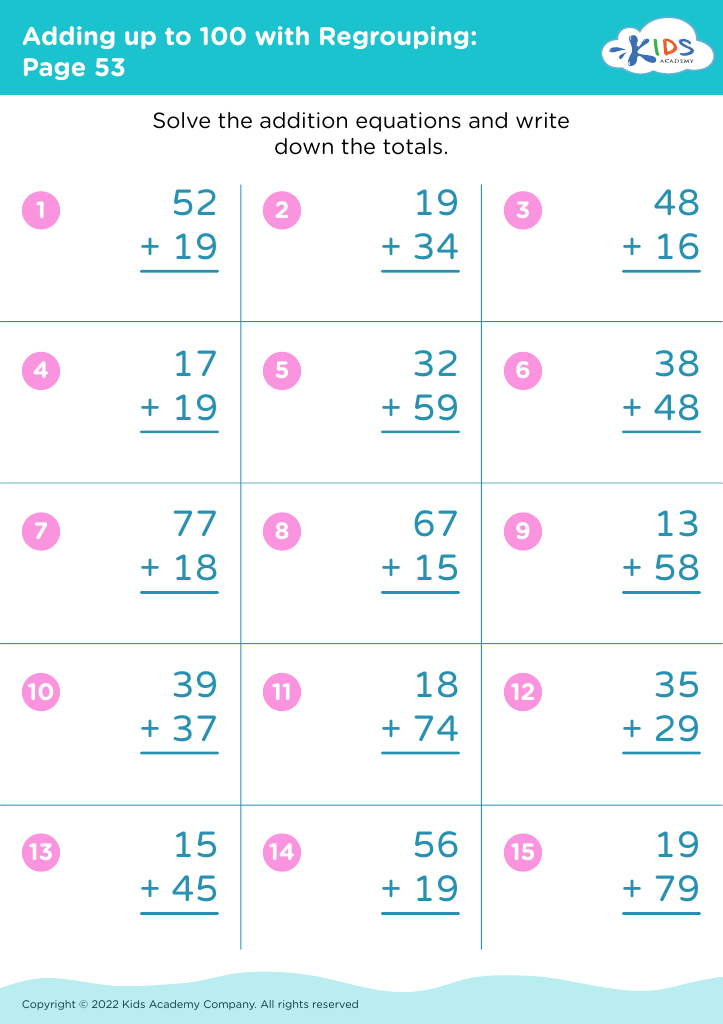
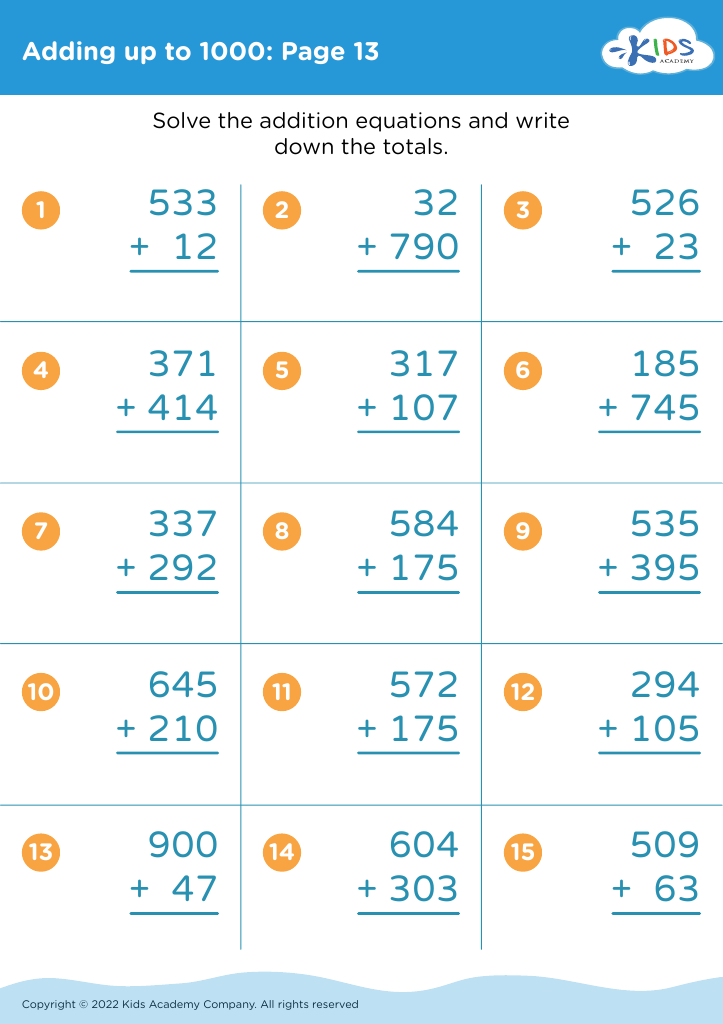
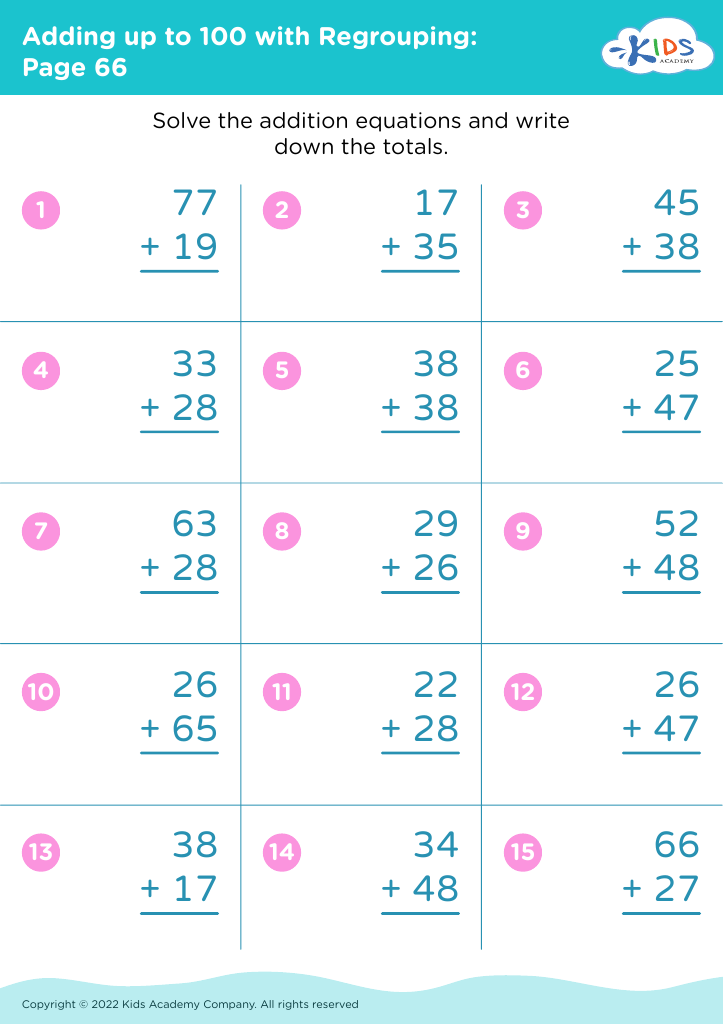
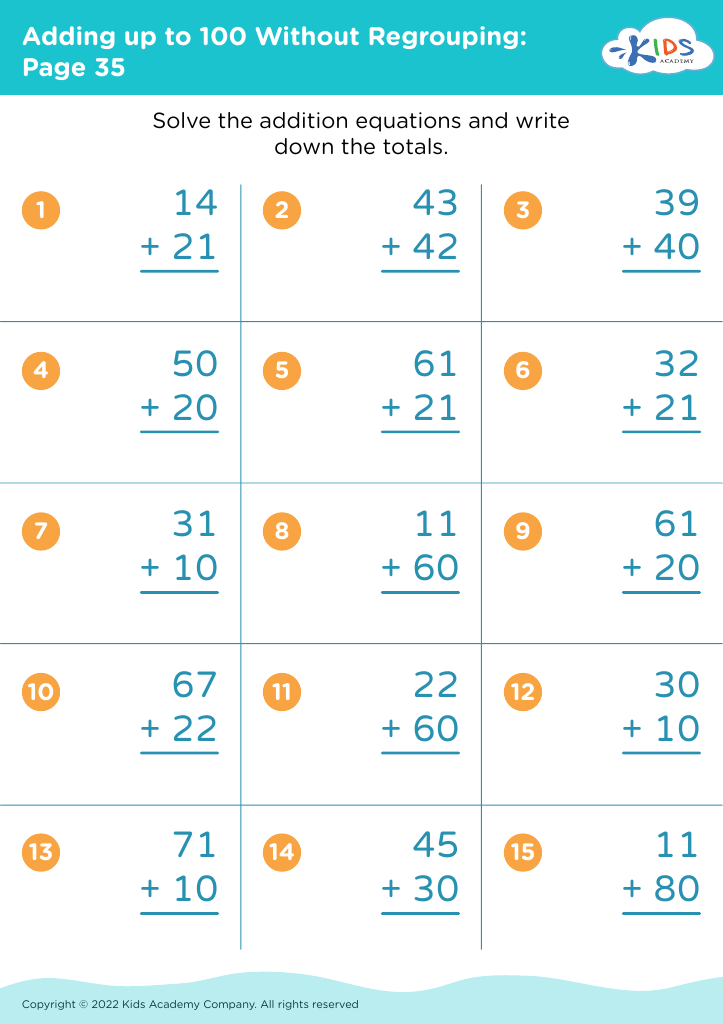
Discover our "Enhance Critical Thinking Addition Worksheets" designed for children aged 6-8. These engaging worksheets go beyond basic addition, encouraging young learners to develop essential problem-solving skills. Each activity promotes logical reasoning and challenges students to think critically about numbers and operations. With a variety of fun, interactive exercises, kids will cultivate their mathematical abilities while enhancing their cognitive skills. Perfect for teachers and parents alike, these worksheets provide a comprehensive approach to mastering addition through critical thinking techniques. Start your child's journey to mathematical confidence and curiosity today with our thoughtfully crafted resources!








Enhancing critical thinking skills in children aged 6-8 is crucial for their overall development and success in the future. At this age, children are beginning to explore complex ideas and question the world around them. By fostering critical thinking, parents and teachers can equip them with the ability to analyze situations, solve problems, and make informed decisions.
Firstly, critical thinking helps children develop strong reasoning skills. It encourages them to consider multiple perspectives, weigh evidence, and draw logical conclusions. This foundation is vital for academic success as they transition to more complex subjects. Secondly, critical thinking promotes independence. Children learn to think for themselves, fostering creativity and innovation. This independence is essential in a rapidly changing world where adaptability and original thought are prized.
In addition, enhancing critical thinking through engaging activities keeps children motivated and curious about learning. Such skills encourage collaboration, as children often work together on problem-solving tasks, nurturing teamwork and communication abilities. Ultimately, when parents and teachers invest in critical thinking, they prepare children not only for school but for life, helping them become informed, engaged citizens who contribute positively to society.








