Enhancing concentration Addition Worksheets for Ages 6-8
3 filtered results
-
From - To
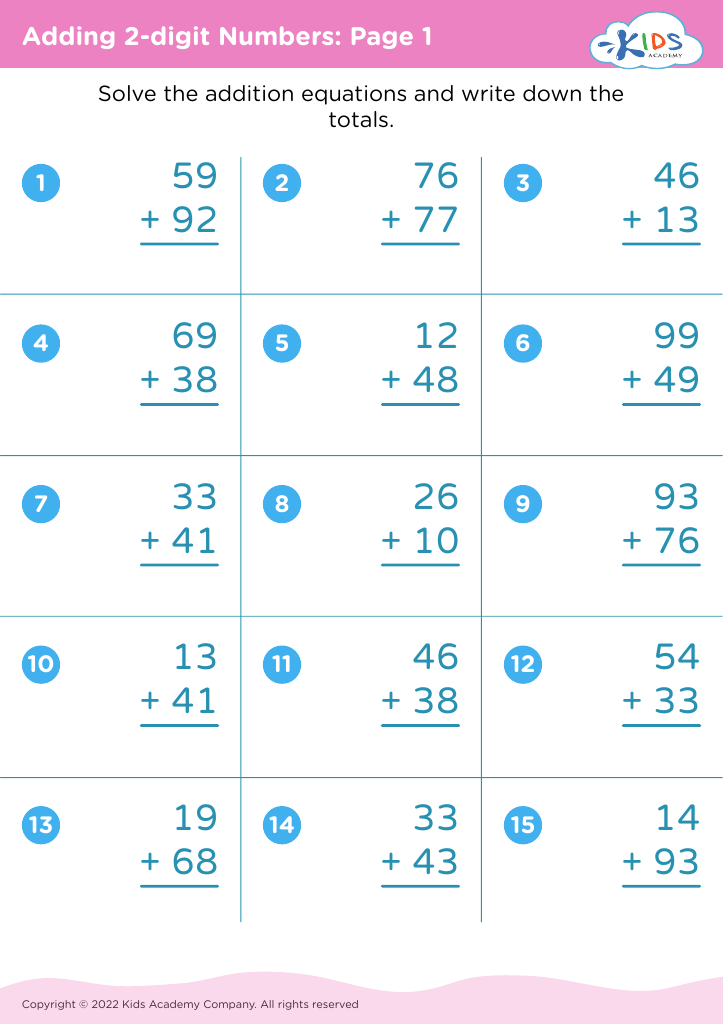
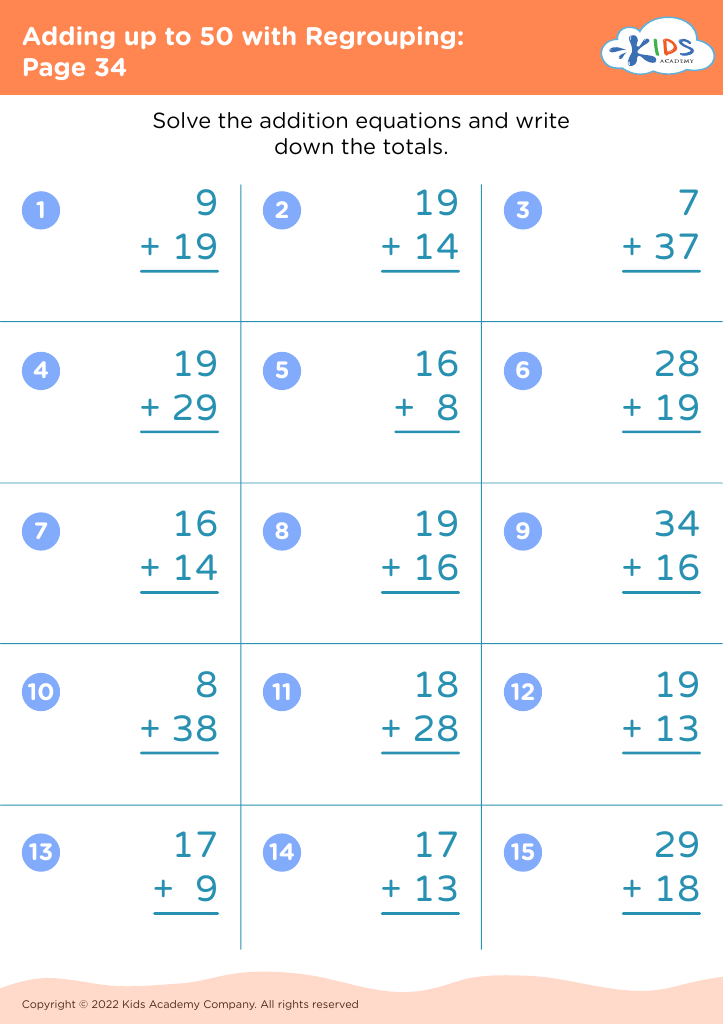
Enhance your child's concentration and math skills with our engaging Addition Worksheets designed specifically for ages 6-8. These worksheets focus on improving attention span while reinforcing fundamental addition concepts. Each activity combines fun visuals with challenging exercises, helping young learners stay motivated and focused. With various difficulty levels, our worksheets cater to individual learning needs, encouraging progress and confidence in math. Perfect for homeschoolers and classroom teachers alike, these resources promote critical thinking and problem-solving abilities. Download and print our enriching addition worksheets today to give your child the tools they need to excel in math while sharpening their concentration skills!

Desert Addition Worksheet
 Assign to My Students








Enhancing concentration during the critical ages of 6-8 is vital for a child's academic success and overall development. At this age, children are developing foundational skills in critical thinking, problem-solving, and basic academic concepts, including addition.
Concentration plays a pivotal role in learning. When children are able to focus, they can absorb new information more effectively, engage deeply with tasks, and build their confidence in subjects like mathematics. Improved concentration skills also contribute to better classroom behavior and social interactions, helping children to collaborate and communicate effectively with peers and teachers.
Furthermore, concentration is linked to self-regulation and emotional development. Children who can focus are more likely to exhibit patience and persistence in challenging tasks, traits that are essential for lifelong learning.
Parents and teachers should care about enhancing concentration in this age group because it lays the groundwork for future learning experiences. Engaging activities, like play-based learning, games, and structured routines that emphasize concentration can keep children motivated and eager to learn. Investing in techniques to boost concentration now will pay dividends down the road, ensuring that children are well-equipped for academic challenges and capable of navigating an increasingly complex world.








