Fine motor skills (writing) Addition Worksheets for Ages 6-8
6 filtered results
-
From - To
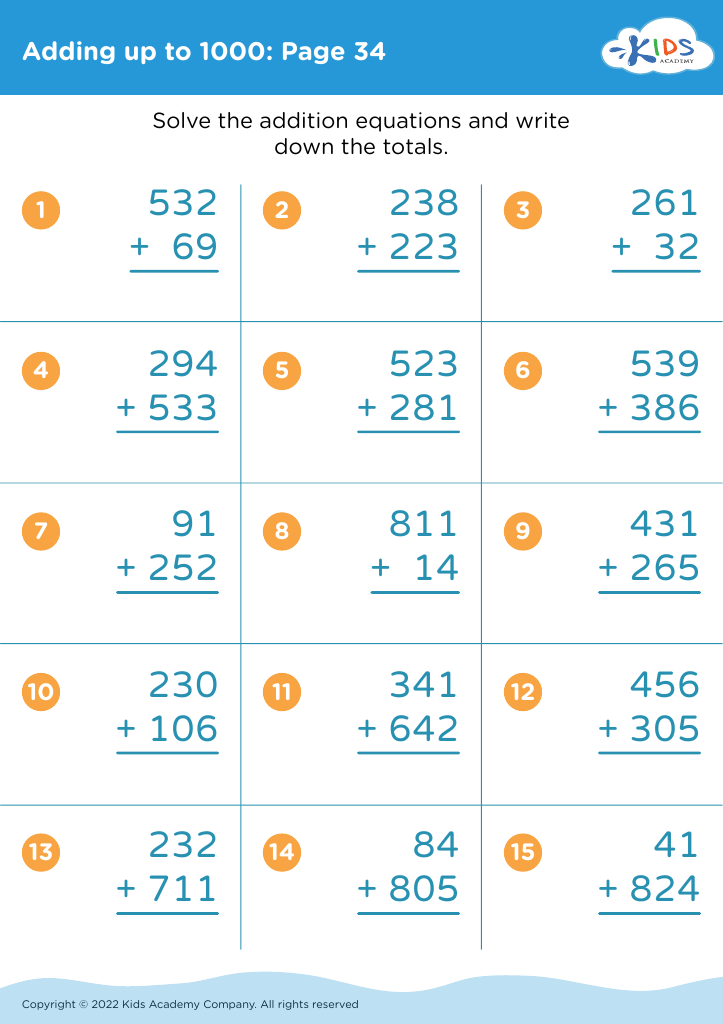
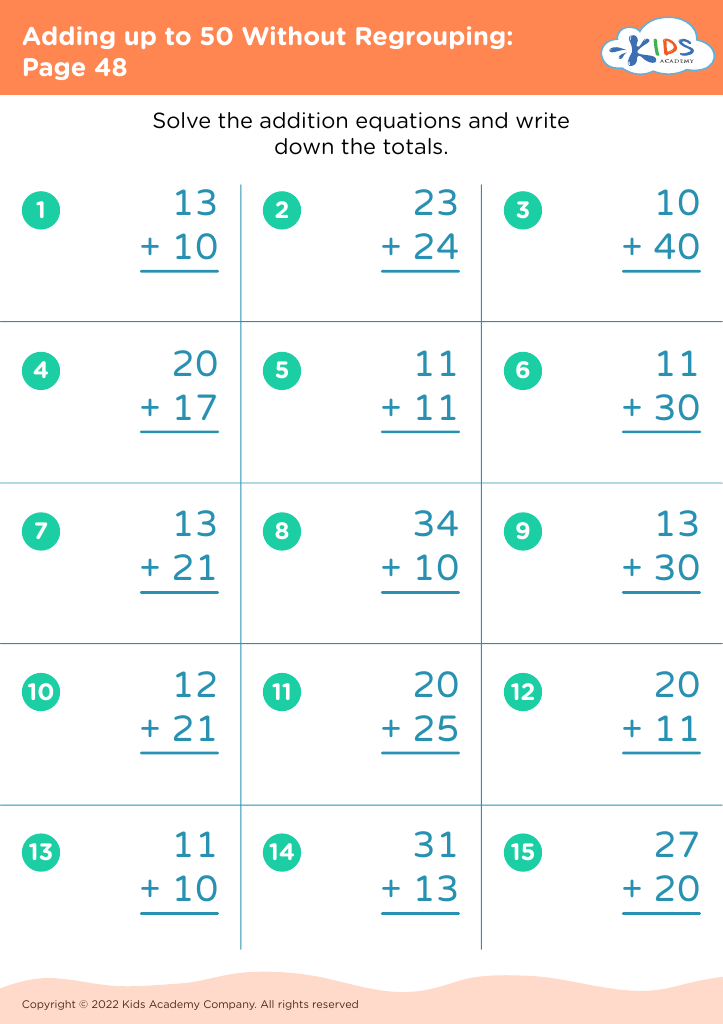
Boost your child's fine motor skills with our engaging Addition Worksheets for Ages 6-8! At Kids Academy, we offer meticulously crafted worksheets designed to enhance handwriting precision while honing addition skills. Perfect for young learners, these printables combine fun activities with educational content, ensuring your child practices math fundamentals alongside developing essential hand-eye coordination and dexterity. Our colorful, interactive worksheets make learning addition an enjoyable and rewarding experience. Ideal for at-home practice or classroom use, these resources cater to continuous learning and skill improvement. Encourage your child's growth and confidence in both writing and math today! Explore our collection now.








Parents and teachers should prioritize the development of fine motor skills, including writing, for children aged 6-8, because these skills are essential for academic success and overall development. Fine motor skills involve the coordination of small muscles in the hands and fingers, which are crucial for tasks like writing, drawing, and manipulating objects. During the ages of 6-8, children enter a critical period for these skills and are typically required to use them daily in school settings.
Strong fine motor skills enhance a child's ability to write legibly and efficiently, which directly impacts their performance in subjects where written expression is necessary. Quality handwriting allows children to focus more on learning and expression rather than struggling with the physical act of writing.
Additionally, fine motor skills facilitate independence and self-care, such as tying shoelaces and buttoning clothes, which boosts self-confidence. Activities that improve fine motor skills, like cutting with scissors, playing with clay, or threading beads, also encourage creativity and problem-solving.
Neglecting these skills can result in frustration, low self-esteem, and academic challenges. By supporting fine motor skill development, parents and teachers are ensuring that children have the necessary tools to succeed academically and feel confident in their abilities beyond the classroom.








