
Fraction conversion Addition Worksheets for Ages 6-8
3 filtered results
Difficulty Level
Grade
Age
-
From - To
Subject
Activity
Standards
Explore our engaging Fraction Conversion Addition Worksheets designed specifically for children aged 6-8! These worksheets foster essential mathematical skills by helping young learners grasp the concept of adding fractions through fun and interactive exercises. With a variety of problems that incorporate simple visual aids, children will confidently practice converting fractions while enhancing their addition abilities. Our resources align with educational standards and aim to simplify complex topics, making learning enjoyable. Perfect for home or classroom use, these worksheets are an excellent way to nurture a child's love for math while developing critical thinking skills. Start your child's fraction adventure today!
Favorites
With answer key
Interactive
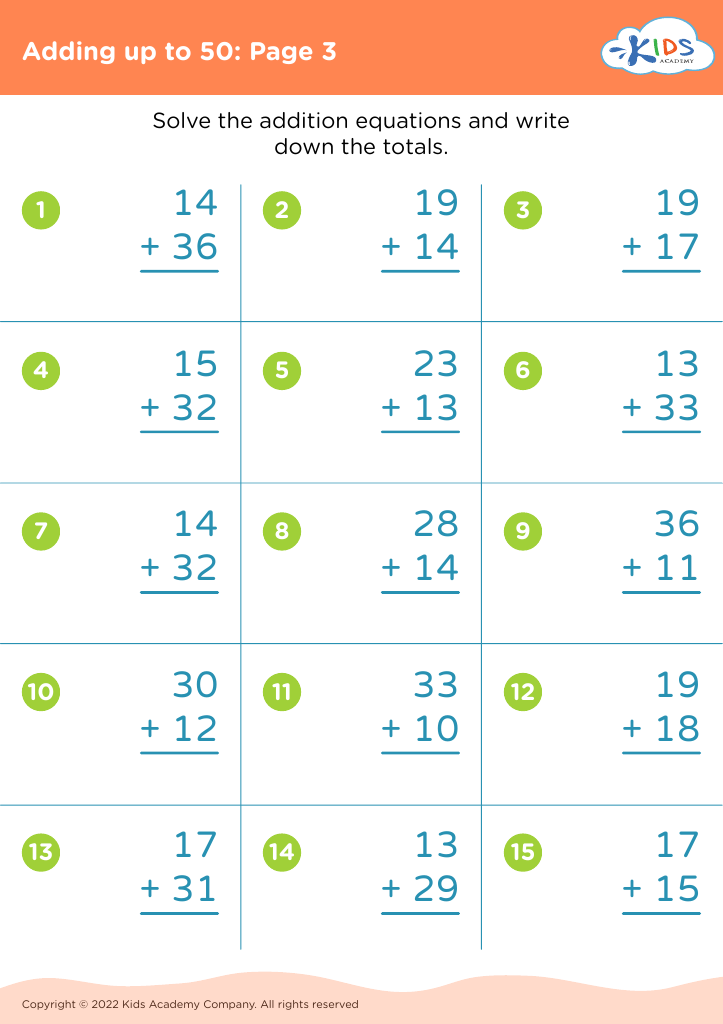
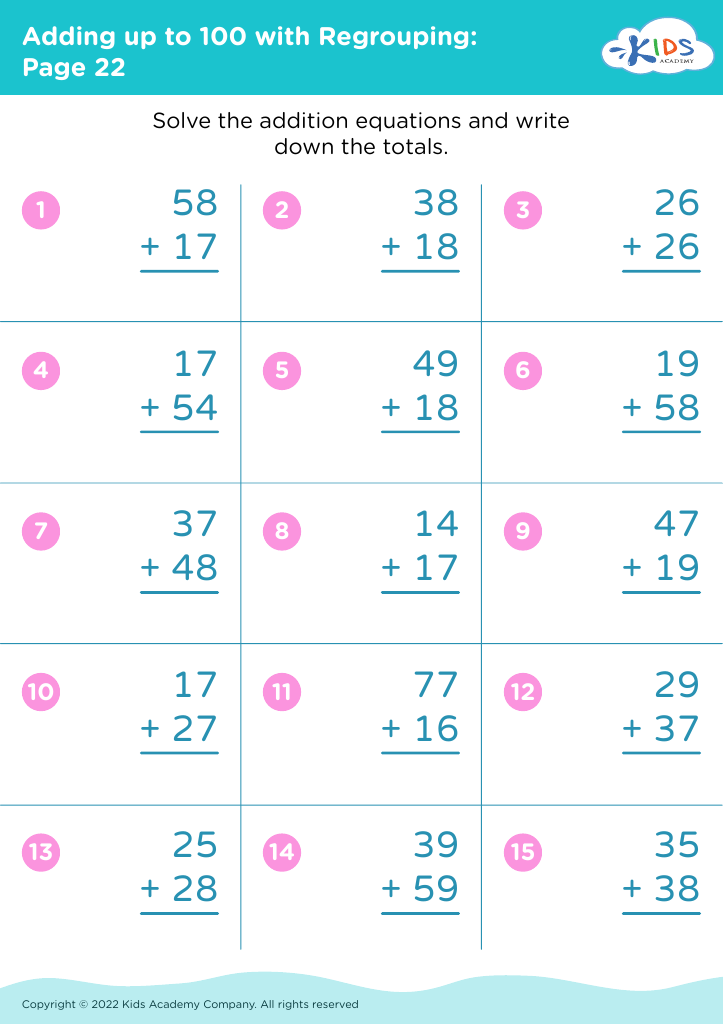
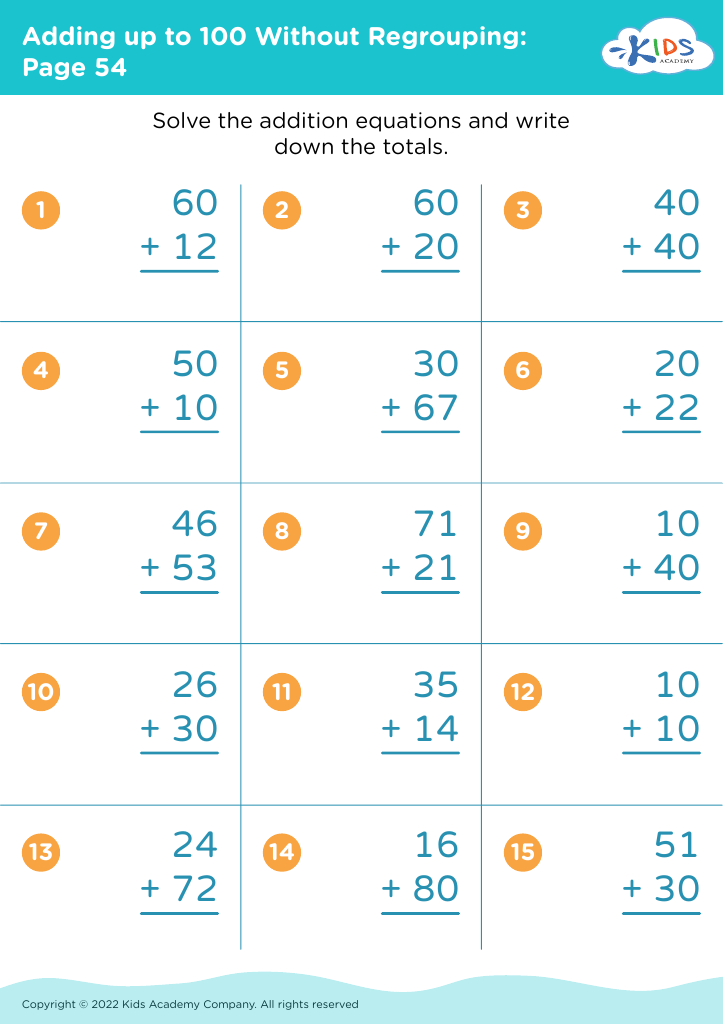
Join Kids Academy for Free
Who is primarily going to use this learning content?





.jpg)


Parents and teachers should prioritize understanding fraction conversion and addition for children aged 6-8 because these foundational skills build essential mathematical literacy. At this age, children are beginning to grasp the concept of fractions, and learning how to convert and add them lays the groundwork for more advanced math concepts in the future, including operations with whole numbers, decimals, and ratios.
Grasping these concepts helps children develop critical thinking and problem-solving skills. When they learn to recognize equivalent fractions and practice adding them, they gain insight into the relationships between numbers, enhancing their numerical understanding. This fosters a positive attitude towards math, encouraging them to tackle complex problems confidently.
Additionally, reinforcing these skills in a supportive environment allows for improved concentration and retention of knowledge. By integrating real-life examples, such as sharing pizzas or measuring ingredients, learners can relate to fractions meaningfully.
Furthermore, parents and teachers serve as role models in fostering a growth mindset around math, emphasizing persistence and resilience in learning. Ultimately, a strong foundation in fraction conversion and addition not only prepares children academically but also equips them with skills applicable in everyday situations, thus nurturing lifelong learners.








