Identifying patterns Addition Worksheets for Ages 6-8
3 filtered results
-
From - To
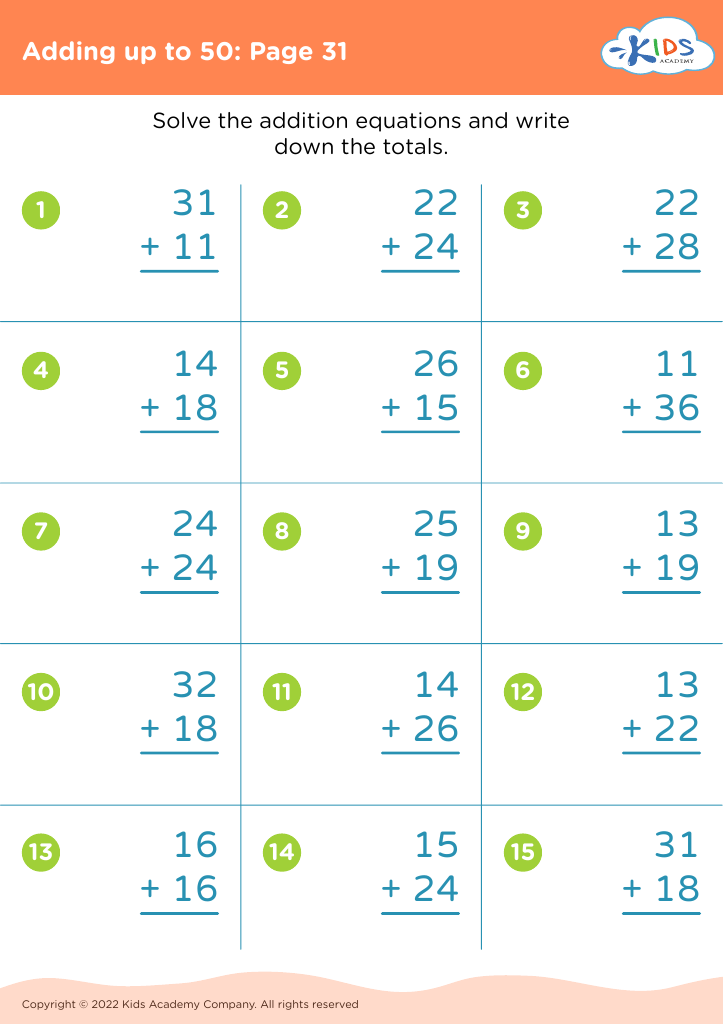
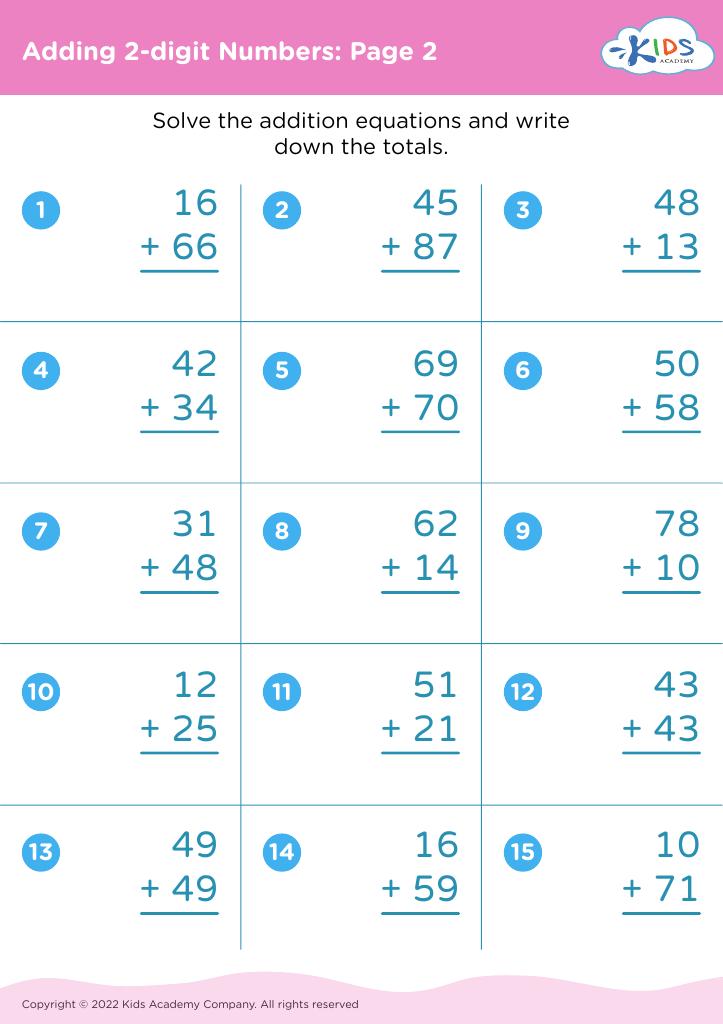
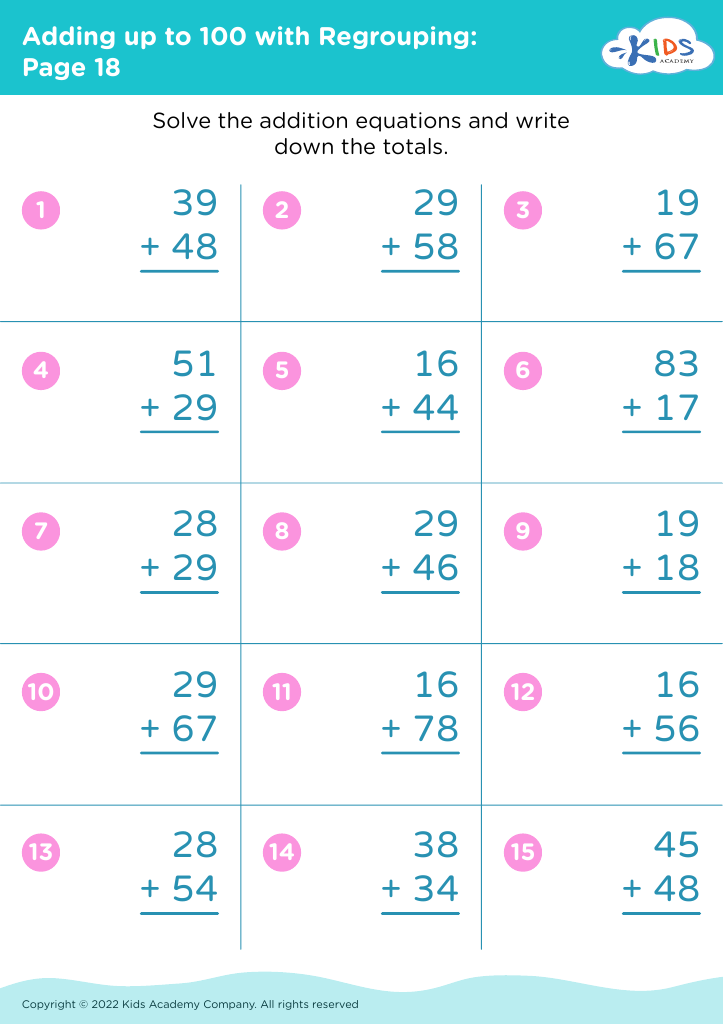
Unlock the world of numbers with our "Identifying Patterns Addition Worksheets" designed specifically for children ages 6-8! These engaging and visually appealing worksheets enhance young minds' mathematical skills by focusing on pattern identification in addition. As kids practice, they'll discover the joy of solving problems while solidifying core concepts. Perfect for both classroom and at-home learning, these worksheets encourage critical thinking and foster a deeper understanding of addition. Tailored to suit this developmental stage, the activities provide a fun and educational pathway to mastering math. Download now and watch your child's confidence in math grow!


.jpg)
.jpg)




Identifying patterns in addition for children ages 6-8 is crucial because it lays the foundation for several fundamental mathematical skills. At this developmental stage, kids are incredibly receptive to recognizing and internalizing patterns, which enhances their ability to understand and predict numerical sequences. This skill is directly linked to mental math abilities – they begin to comprehend relationships between numbers and grasp concepts like doubling, halving, and incremental increases without needing physical counting aids.
Moreover, fostering pattern recognition helps improve computational fluency. Children who recognize that adding 2 to a number always results in the next odd or even number, for example, can process addition more quickly and accurately. This fluency is beneficial not just in math, but also in everyday problem-solving and logical reasoning tasks.
Beyond arithmetic, identifying patterns in addition prepares young learners for more complex mathematical concepts in the future, such as multiplication, algebra, and data analysis. Being proficient in spotting patterns ensures that kids don’t just memorize math facts, but truly understand the underlying principles, thereby setting a strong foundation for later academic success.
In addition, early exposure to pattern recognition supports cognitive development areas like memory, attention, and critical thinking. Therefore, parents and teachers should prioritize nurturing this skill to facilitate a lifelong understanding and appreciation of mathematics.








