Logical Reasoning Addition Worksheets for Ages 6-8
7 filtered results
-
From - To
Boost your child's problem-solving skills with our Logical Reasoning Addition Worksheets, tailored for ages 6-8. These engaging activities combine fundamental addition with fun logical challenges to enhance critical thinking. Perfect for classroom use or at-home practice, our worksheets make learning interactive and enjoyable. Each sheet is designed to reinforce core math concepts while encouraging children to identify patterns, predict outcomes, and solve puzzles. Help your young learner build a strong mathematical foundation and develop their logical reasoning with our expertly crafted addition worksheets. Explore and download our printable resources today to spark a love for learning!
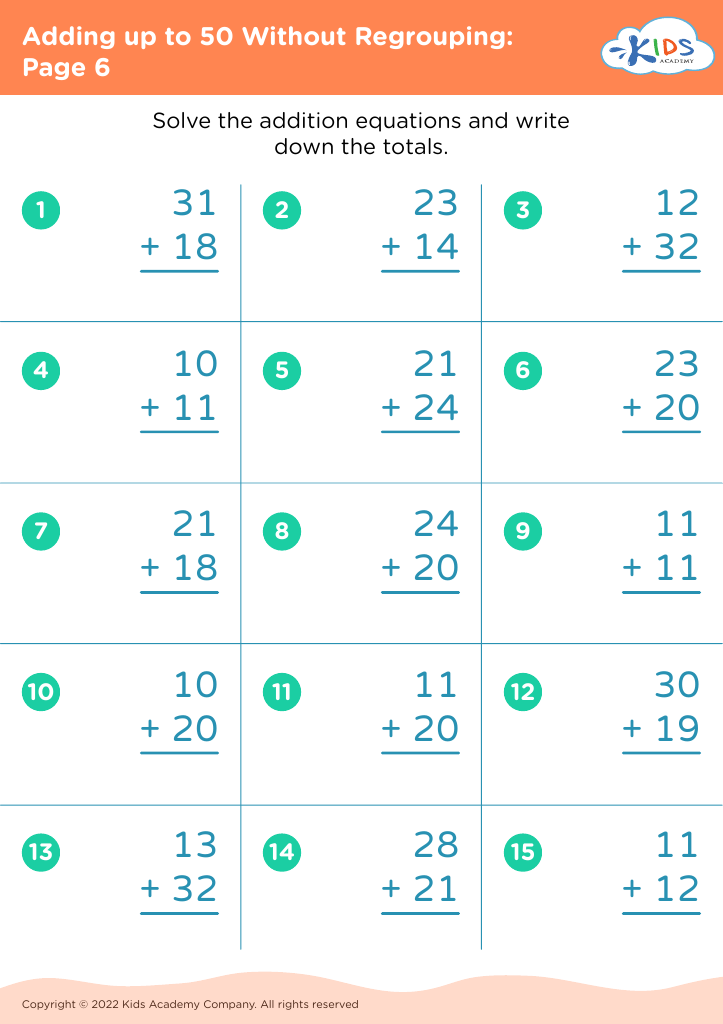
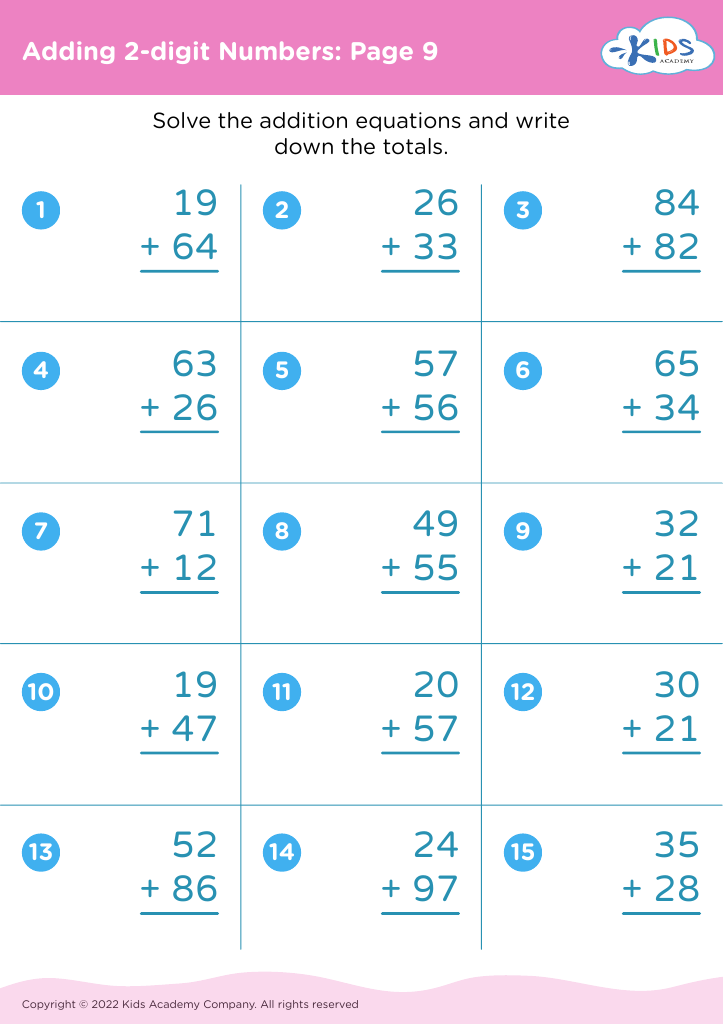
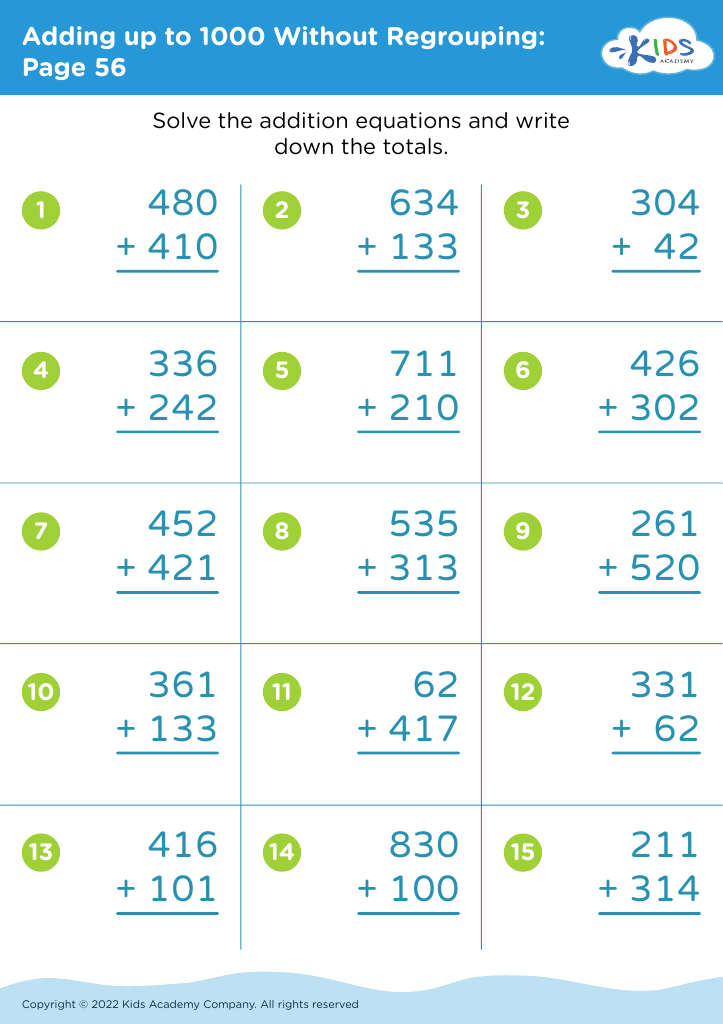
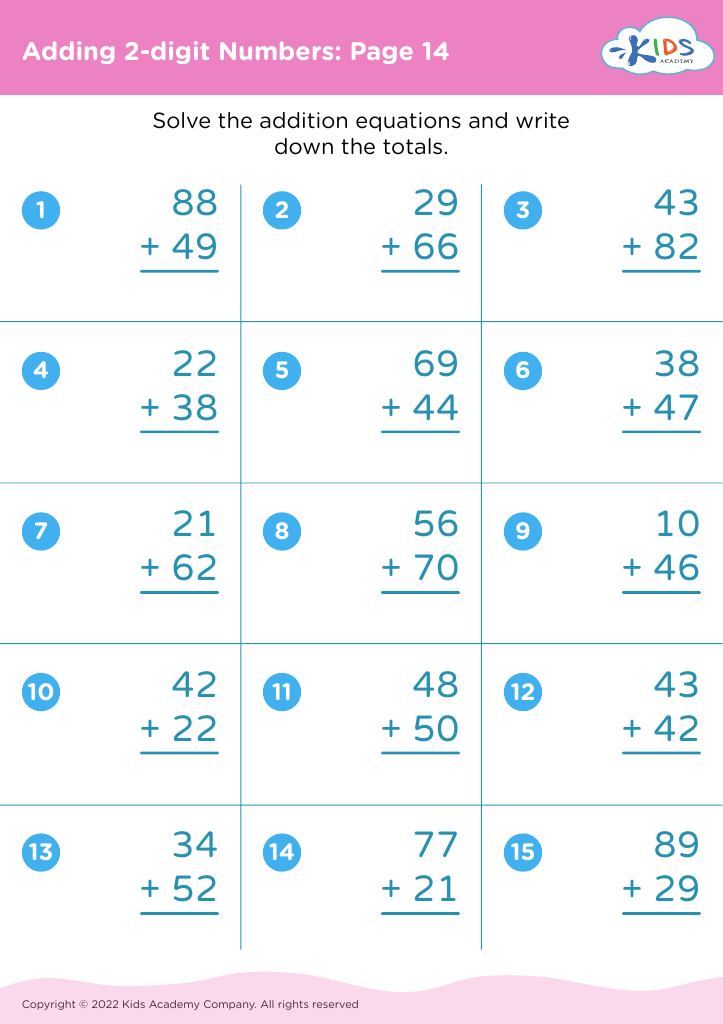
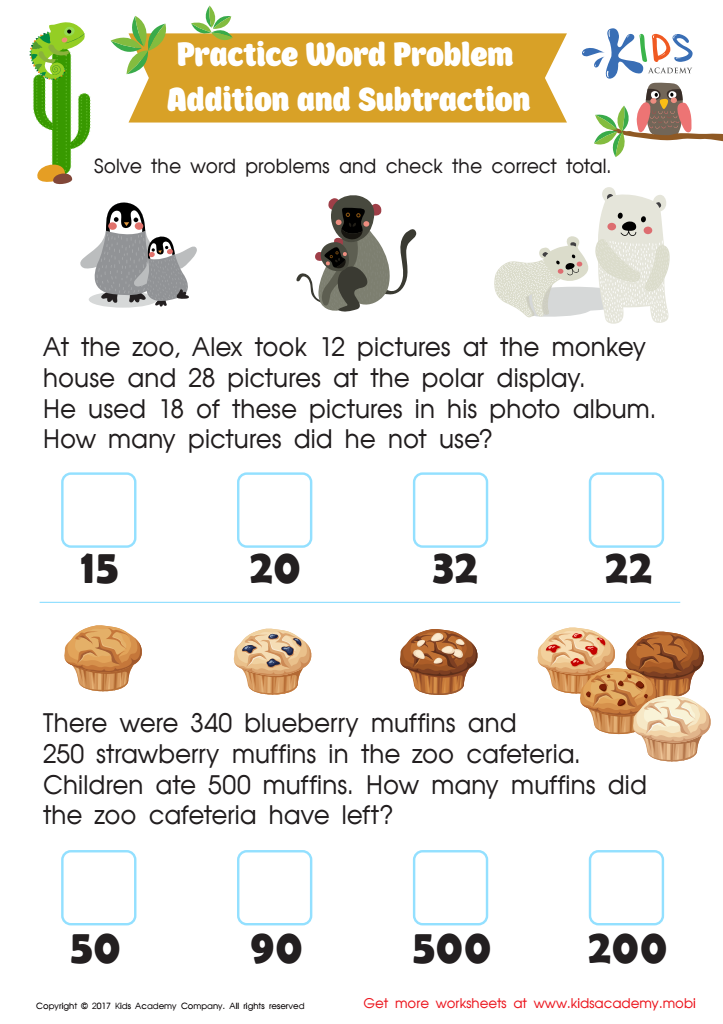
Addition and Subtraction: Word Problems Worksheet
 Assign to My Students
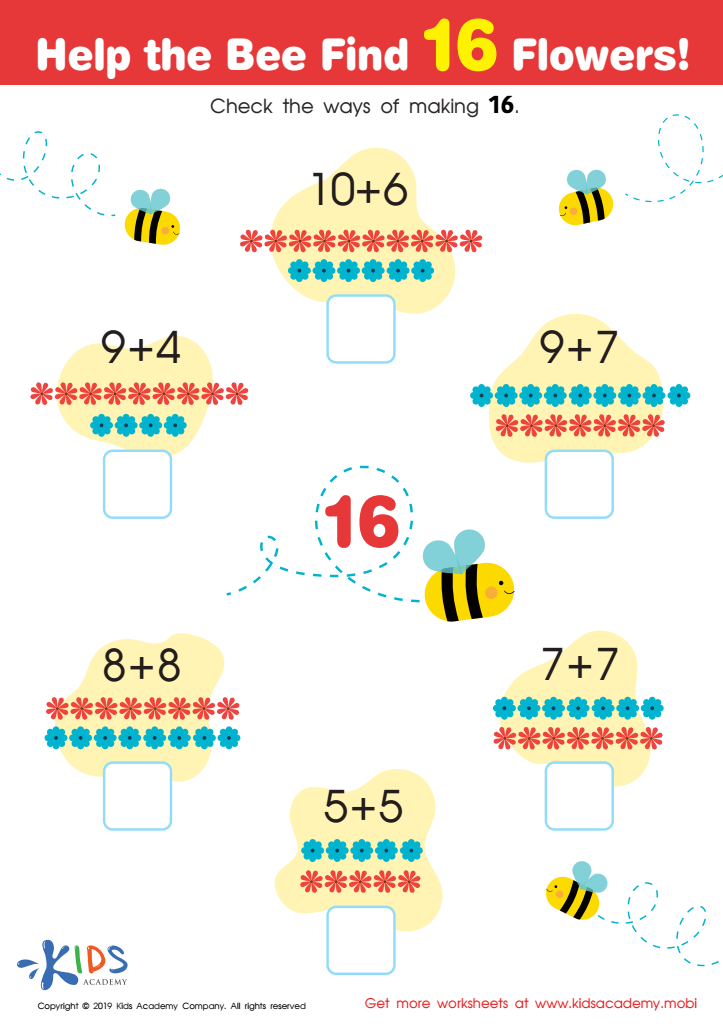
Help the Bee Find 16 Flowers Worksheet
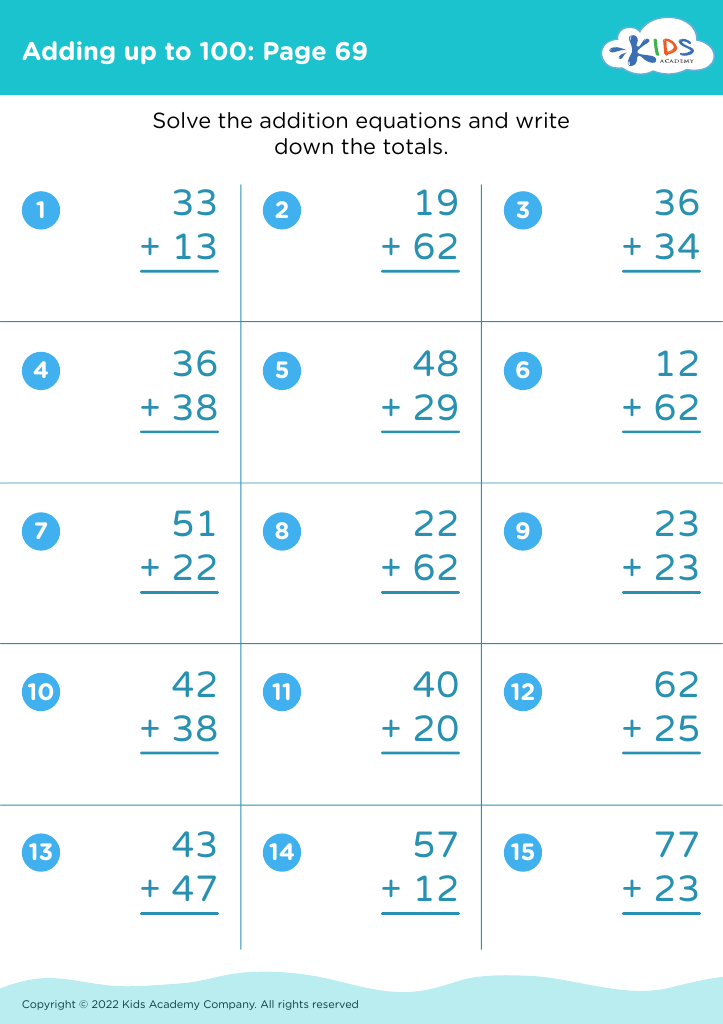







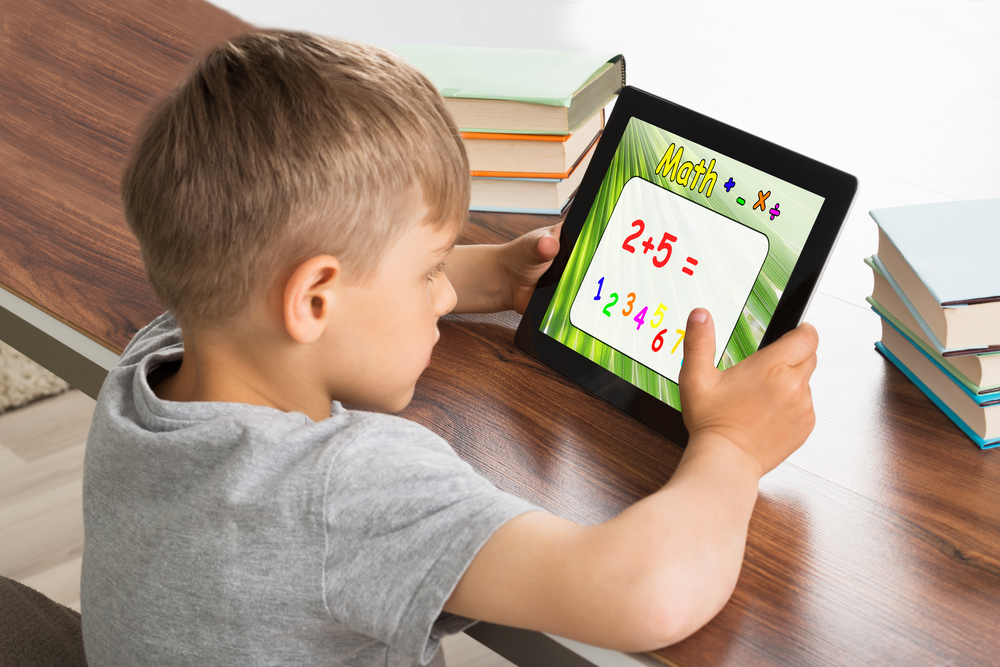
Logical reasoning skills are fundamental for children aged 6-8 as they navigate through early stages of cognitive development, and incorporating logical reasoning addition exercises into their learning can yield remarkable benefits. First, logical reasoning addition helps cultivate problem-solving abilities. Children start to apply basic principles of logic and mathematics to deduce answers, which aids in classroom learning and daily life challenges.
Additionally, these exercises improve their computational fluency by encouraging mental arithmetic and pattern recognition. As children practice, they become faster and more accurate at adding numbers, which lays a solid groundwork for more complex math topics in later years.
Moreover, logical reasoning nurtures their critical thinking skills. When children engage in activities that require planning, analyzing, and evaluating, they learn to approach problems methodically rather than relying on guesswork. This aptitude extends beyond math, contributing to overall academic performance and developing their ability to think independently.
From an emotional standpoint, successfully solving logical addition problems can boost a child's confidence and foster a growth mindset. Every win in finding the correct answer reinforces that persistence and effort are keys to overcoming challenges.
In summary, nurturing logical reasoning addition skills in young learners supports not only their mathematical abilities but also their overall cognitive and emotional development, laying a strong foundation for future learning across disciplines.








