
Matching skills Addition Worksheets for Ages 6-8
3 filtered results
Difficulty Level
Grade
Age
-
From - To
Subject
Activity
Standards
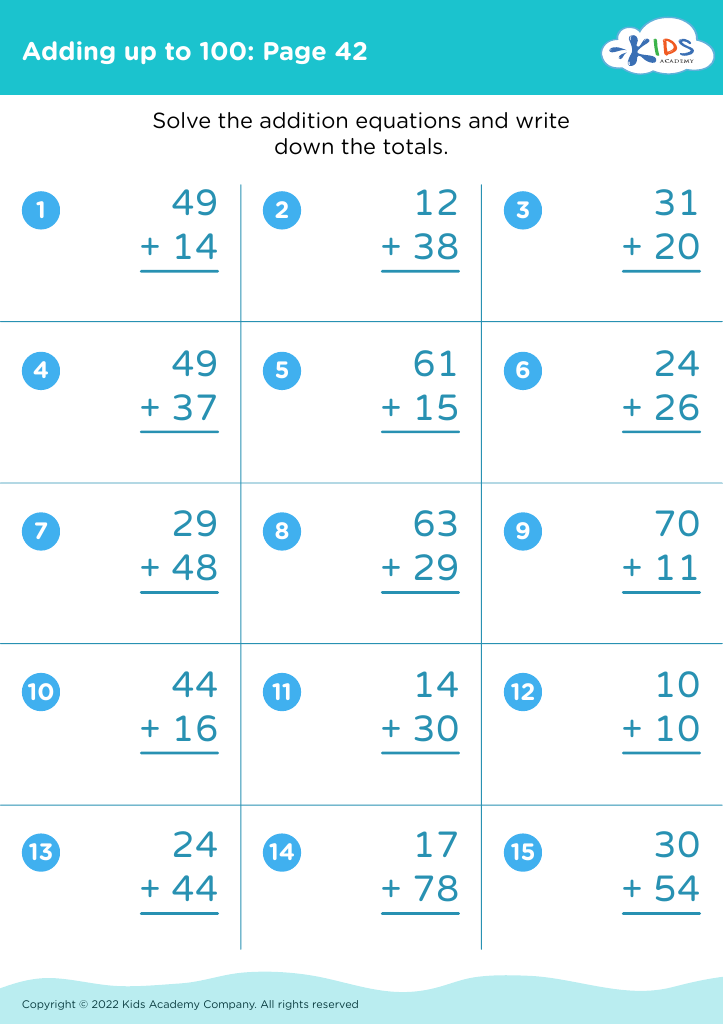
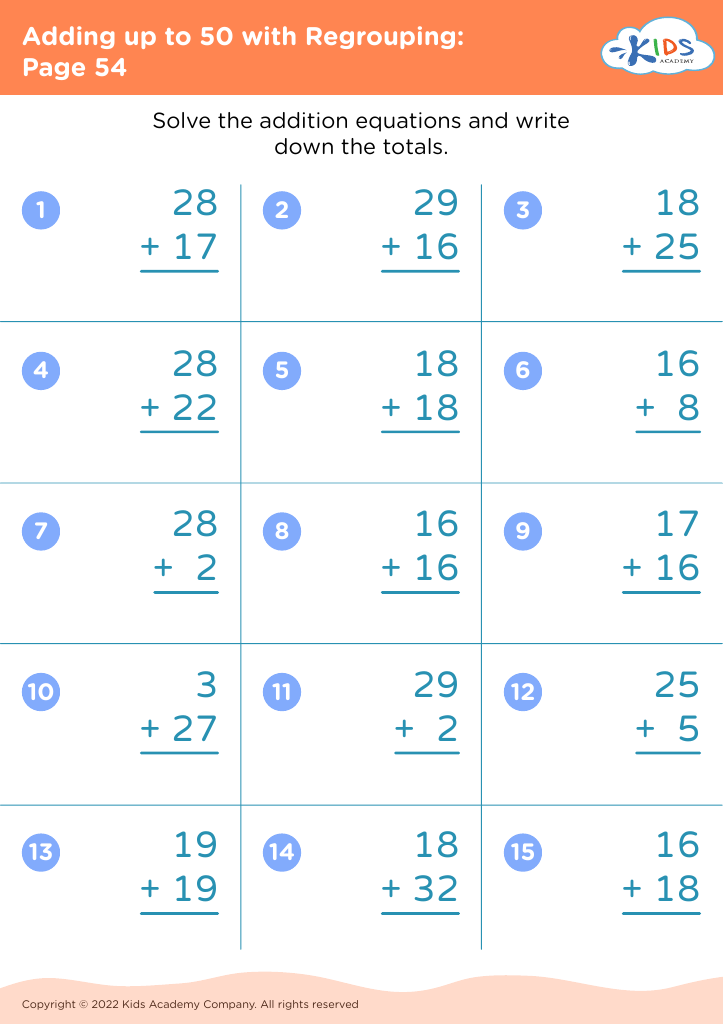
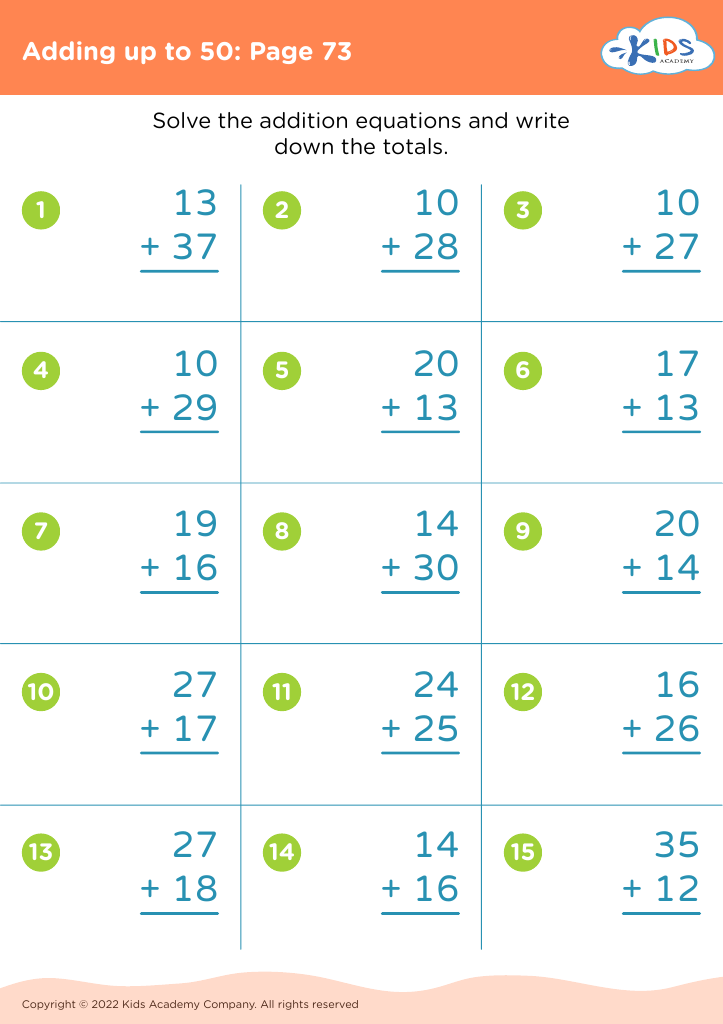
Enhance your child's mathematical abilities with our "Matching Skills Addition Worksheets" designed for ages 6-8. These engaging worksheets focus on developing foundational addition skills while promoting pattern recognition and critical thinking. Each activity encourages kids to match numbers, images, and sums, making learning both fun and interactive. Perfect for at-home practice or supplemental classroom activities, our worksheets adapt to various learning styles, ensuring every child gains confidence in their math capabilities. Explore our collection and watch your little learners excel in addition while enjoying rewarding challenges tailored to their skill level! Download now to get started on a math adventure!
Favorites
With answer key
Interactive
Join Kids Academy for Free
Who is primarily going to use this learning content?








Parents and teachers should prioritize Matching Skills Addition for children aged 6-8 for several compelling reasons. This foundational math concept plays a crucial role in developing early numeracy skills, which are essential for future math success. By engaging in matching activities, children enhance their understanding of number relationships, laying the groundwork for more complex mathematical ideas.
Matching skills also foster critical thinking and problem-solving abilities. As children work to pair numbers with corresponding quantities or visual representations, they practice reasoning and logical thinking. This process builds cognitive skills that transcend mathematics, benefiting students in various subjects and life situations.
Additionally, incorporating matching games and exercises adds an element of fun to learning. At this age, children are more likely to engage and retain information when activities are interactive and enjoyable. These experiences can also build confidence in their mathematical abilities, encouraging them to take on new challenges in the future.
Lastly, reinforcing addition skills encourages collaboration when done in group settings. This not only aids in social development but also provides opportunities for peer teaching, where students can learn from and support one another. Thus, Matching Skills Addition is essential for holistic development in young learners.








