Pattern recognition Addition Worksheets for Ages 6-8
6 filtered results
-
From - To
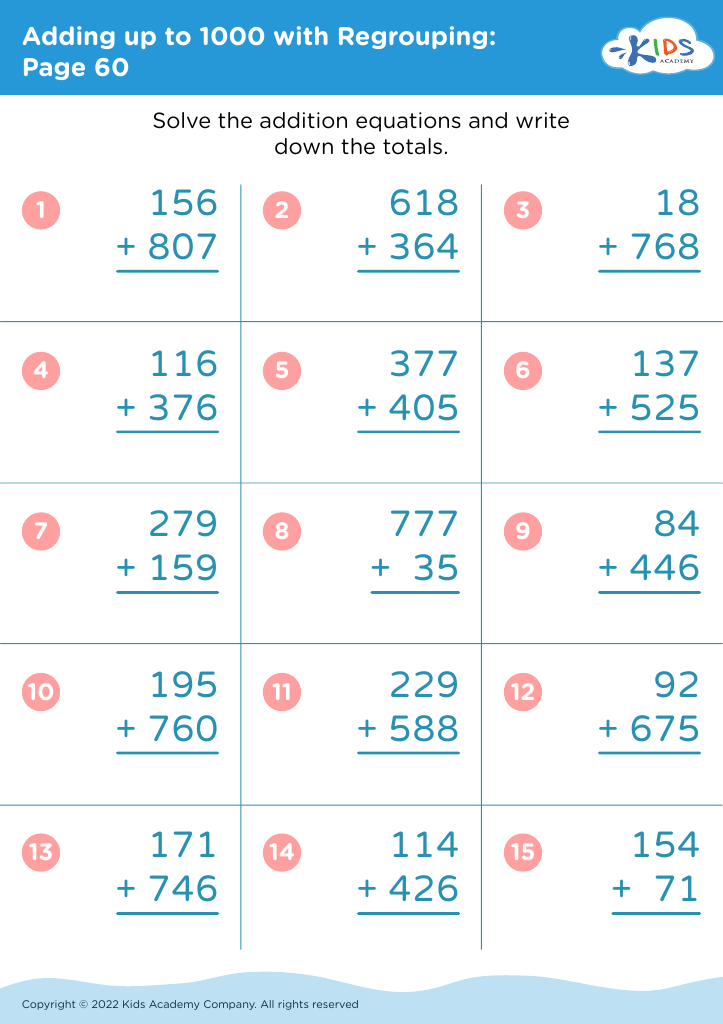
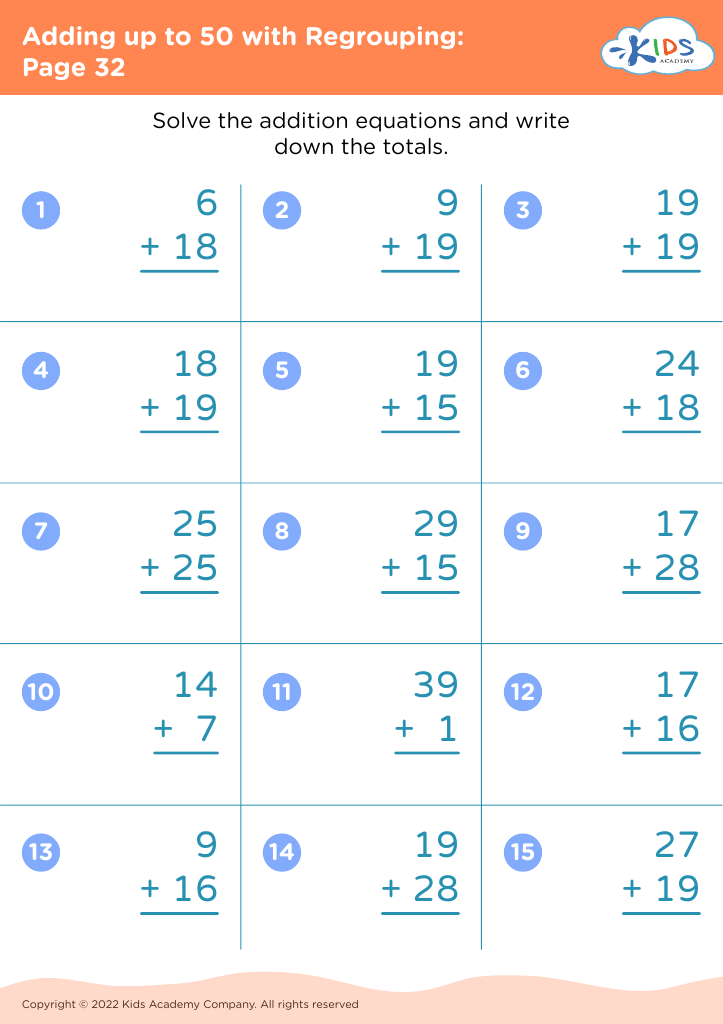
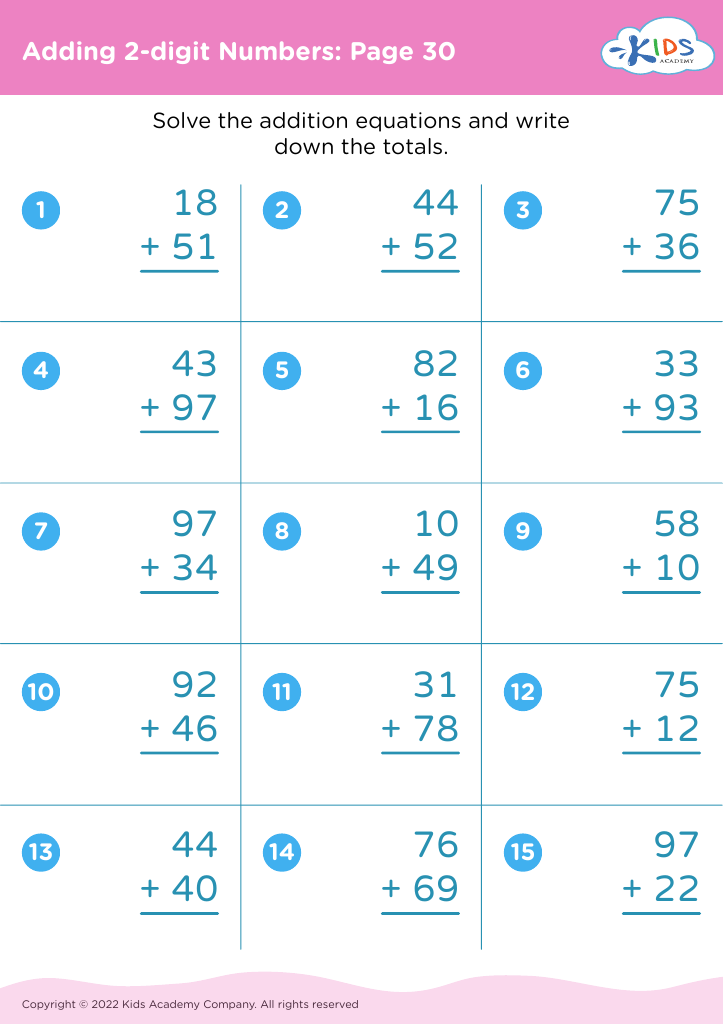
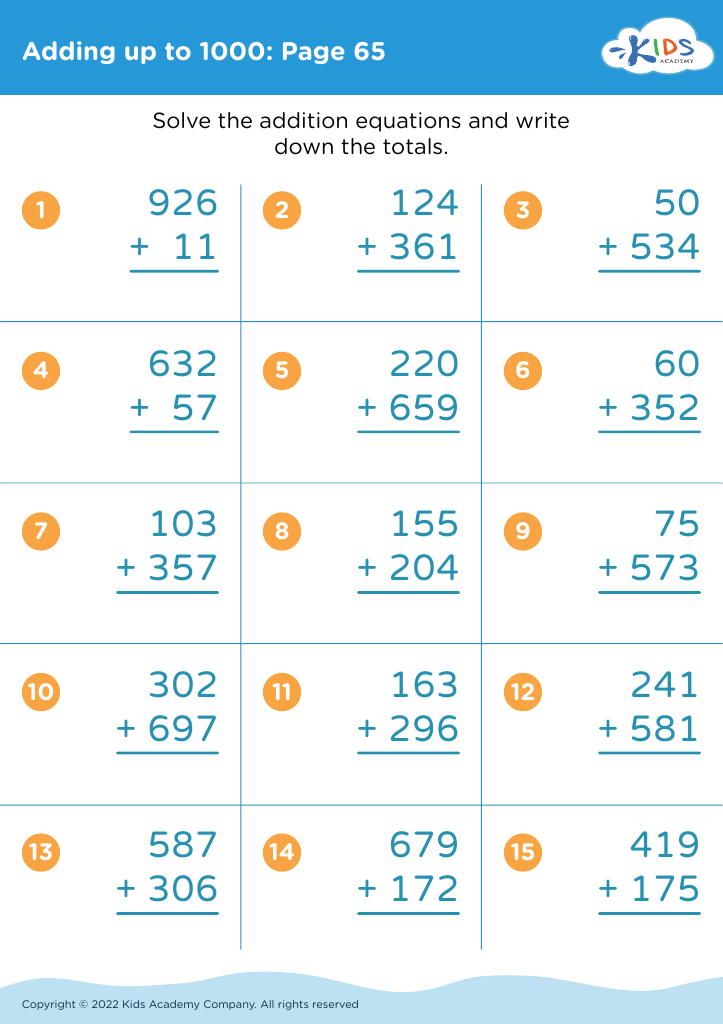
Enhance your child's math skills with our engaging Pattern Recognition Addition Worksheets, specially designed for ages 6-8. These worksheets provide a fun and interactive way for young learners to develop essential addition abilities while recognizing and understanding numerical patterns. With a variety of activities that promote critical thinking, students will sharpen their math skills and boost their confidence. The colorful and appealing designs make learning enjoyable, ensuring that children stay motivated and engaged. Perfect for classroom use or homework, our worksheets are an excellent resource for parents and teachers looking to reinforce important math concepts in a playful manner.
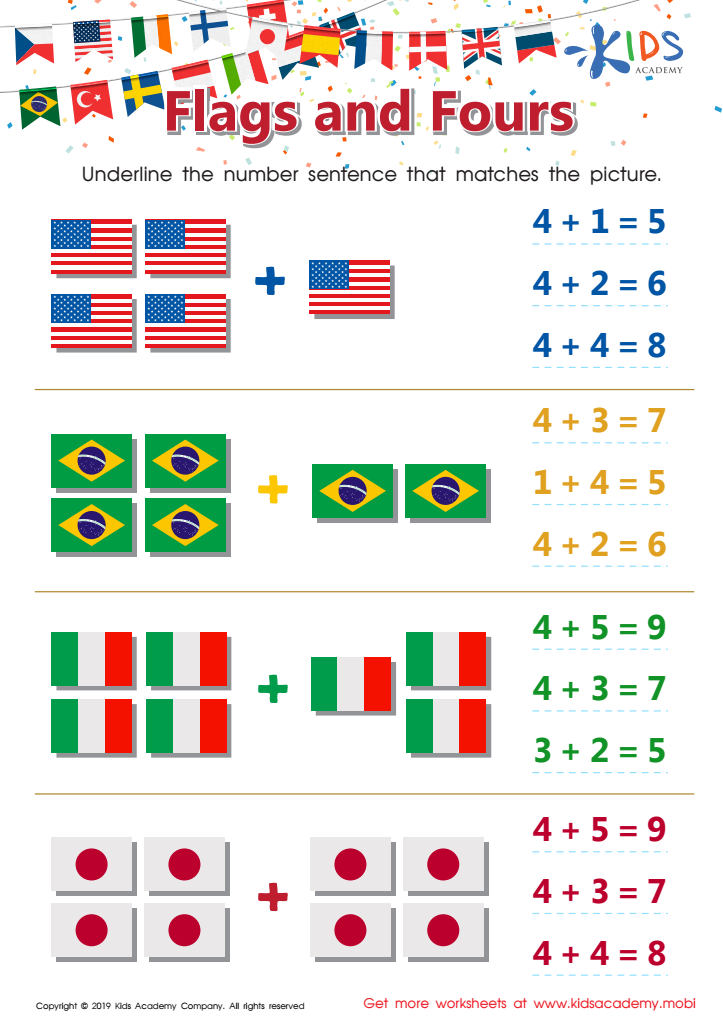
Flags and Fours Worksheet
 Assign to My Students
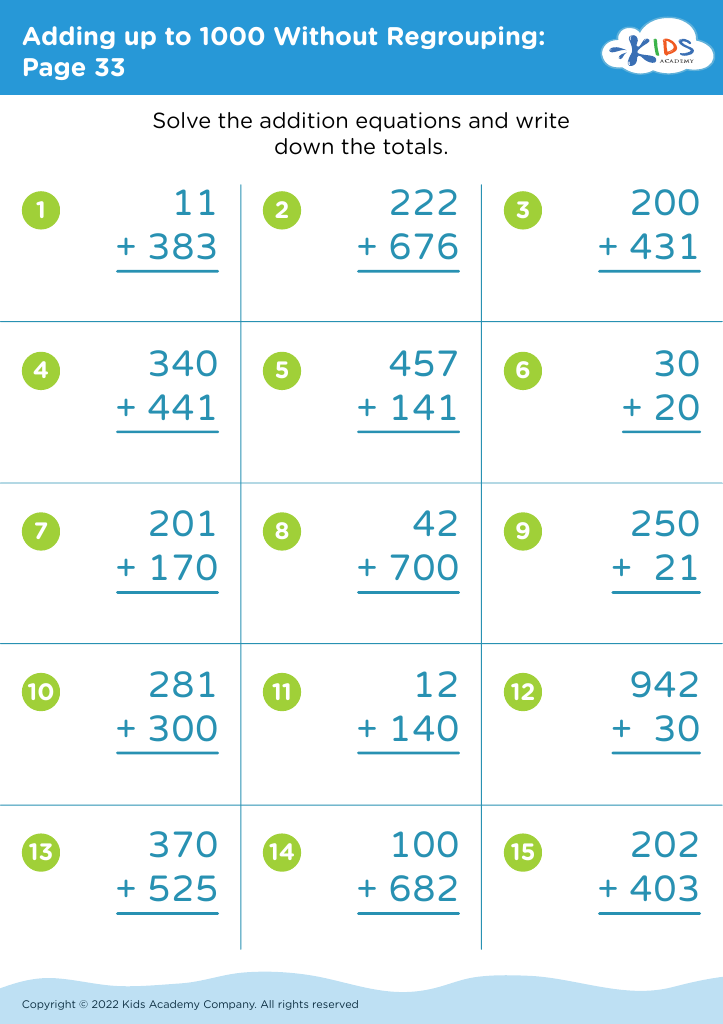








Pattern recognition in addition for children aged 6-8 is crucial for developing early math skills and fostering a deeper understanding of mathematical concepts. At this age, children are transitioning from simple counting to more complex numerical operations, and recognizing patterns lays a strong foundation for their arithmetic journey.
When children engage in pattern recognition, they start to identify relationships among numbers, which helps them predict outcomes and solve problems more efficiently. For instance, understanding that adding two even numbers results in an even number can streamline computation and elevate their confidence in math. Such skills are essential not only for addition but also facilitate learning multiplication, as children can recognize repeated addition patterns.
Moreover, pattern recognition nurtures critical thinking and problem-solving abilities, both of which are vital in mathematics and everyday life. Parents and teachers should care because fostering these skills contributes to a child's overall cognitive development, keeps them engaged in learning, and helps cultivate a positive attitude towards math. Encouraging children to recognize and create patterns enhances their inquiry and curiosity, making math a fun and relational subject rather than a list of memorized operations. This engagement can lead to a lifelong appreciation for mathematics and analytical thinking.








