Practice problem-solving Addition Worksheets for Ages 6-8
4 filtered results
-
From - To
Enhance your child's mathematical skills with our practice problem-solving addition worksheets designed for ages 6-8. These fun and engaging worksheets build a strong foundation in basic arithmetic by providing a variety of addition problems that gradually increase in difficulty. Our worksheets not only boost calculation abilities but also promote logical thinking and problem-solving strategies. Perfect for classroom activities or additional practice at home, these materials make learning math enjoyable and rewarding. Inspire confidence and a love of math in your young learner with our expertly crafted addition worksheets from Kids Academy.
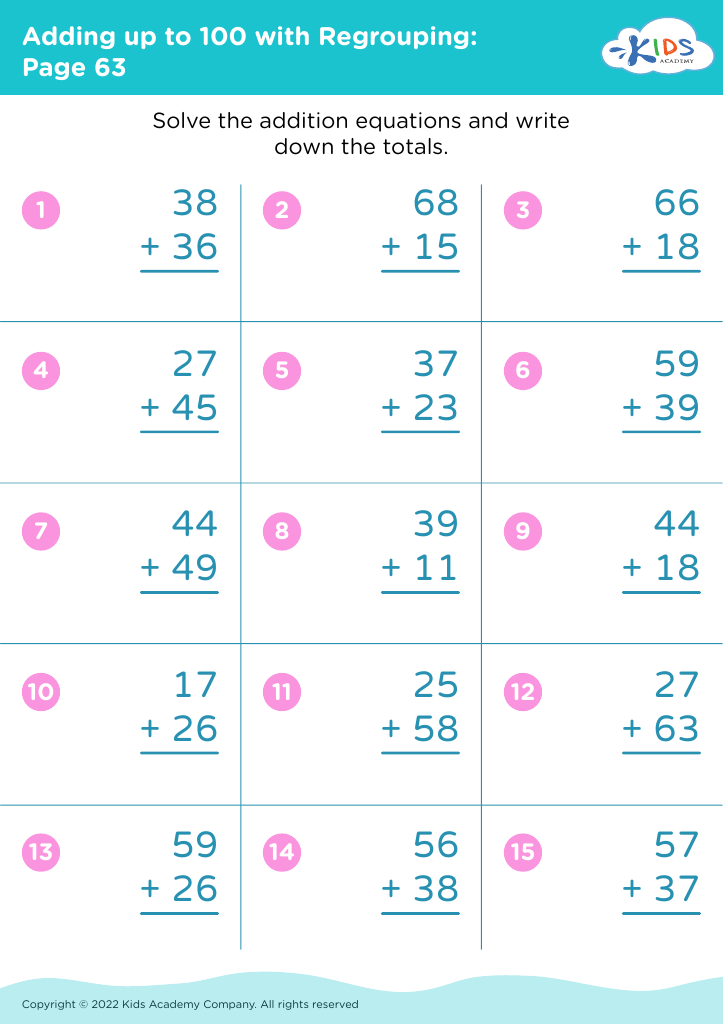
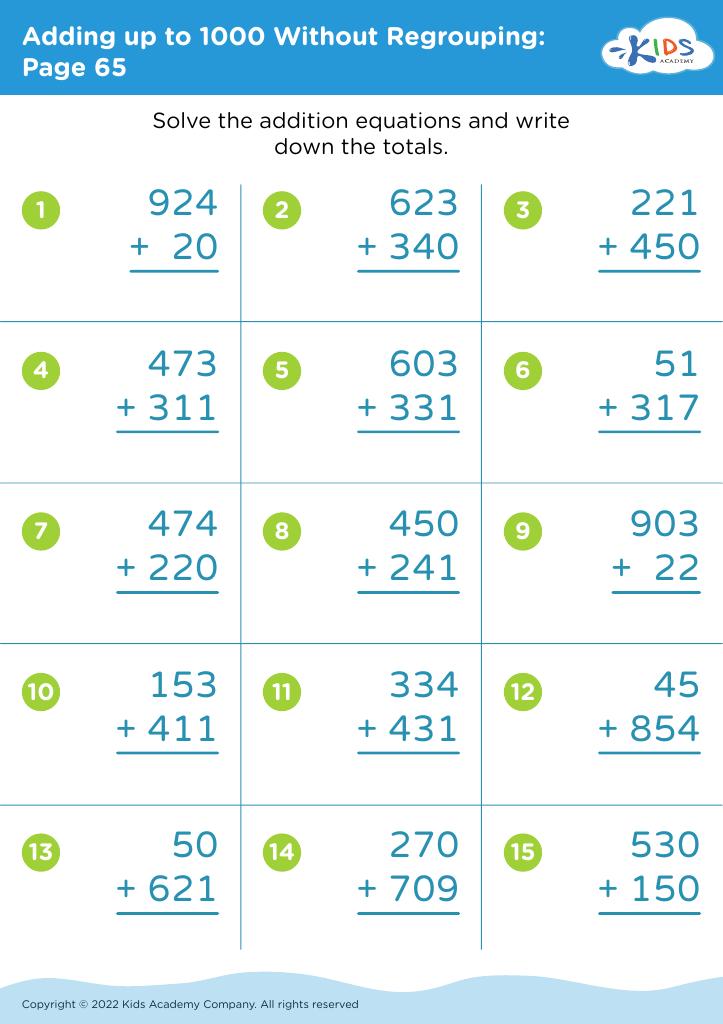
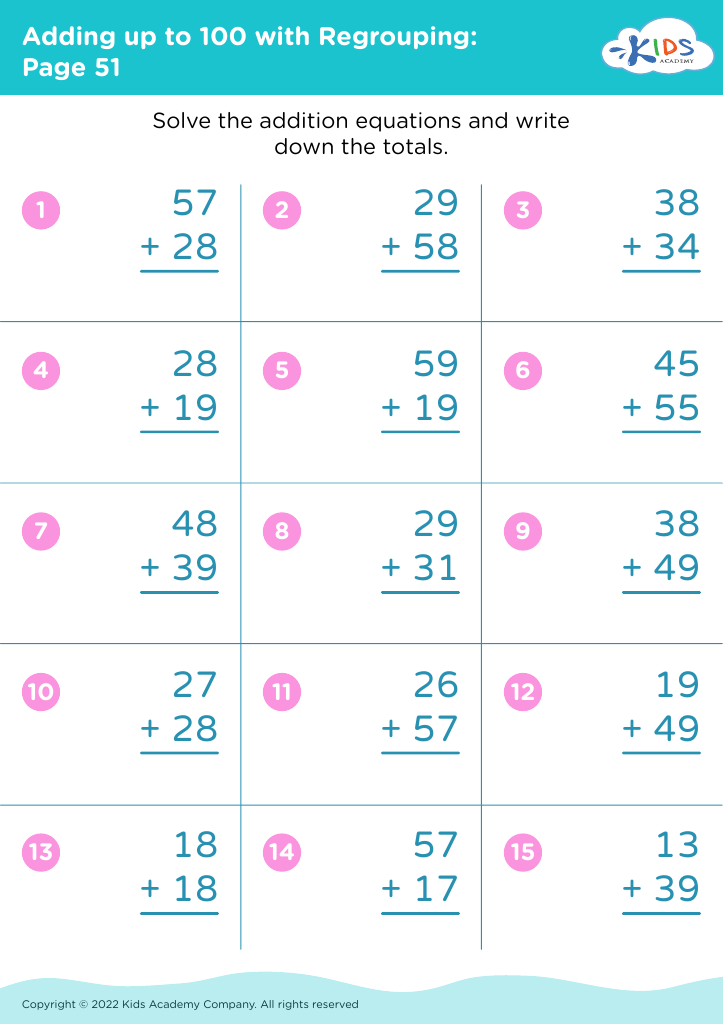
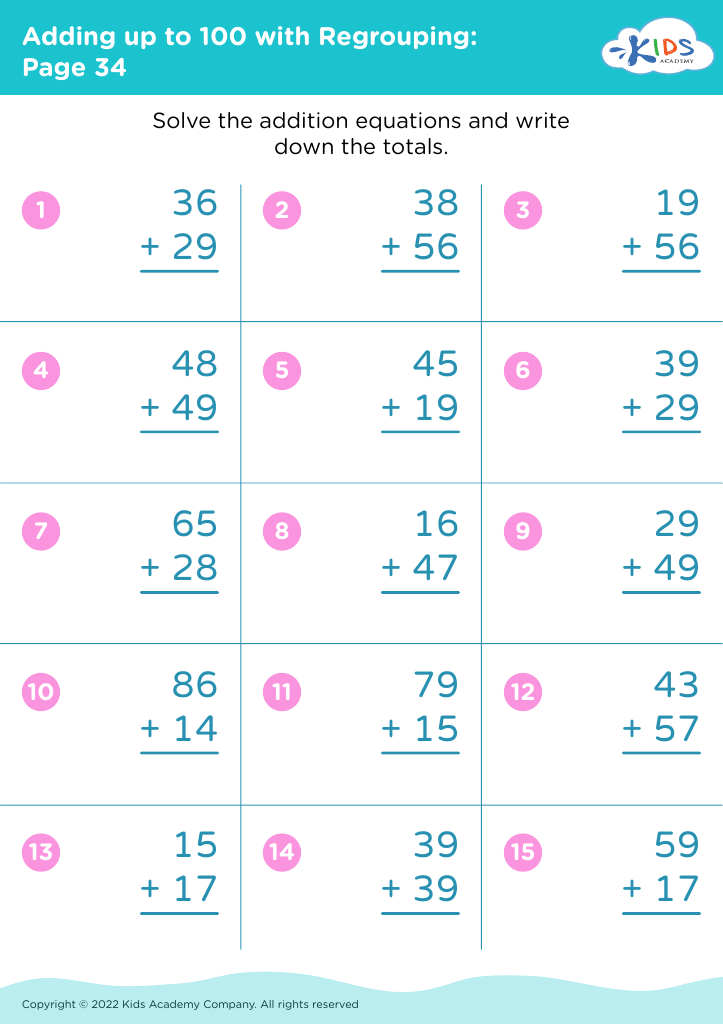








Fostering problem-solving skills in addition for children aged 6-8 is crucial for several reasons. At this developmental stage, kids are transitioning from basic counting to more complex mathematical concepts. Working through addition problems strengthens their foundational arithmetic skills, which are essential for future math success. Additionally, by practicing problem-solving, children enhance their critical thinking and logical reasoning abilities, essential skills in and out of the classroom.
For parents and teachers, prioritizing these skills means preparing children for real-world situations where they must use math to make decisions, solve problems, and think critically. Mastery of addition also builds confidence in young learners, encouraging a positive attitude toward math and reducing anxiety associated with the subject.
Moreover, addition forms the basis for more advanced math operations like subtraction, multiplication, and division. Successfully understanding and solving addition problems enables children to tackle these more complex operations with greater ease.
Incorporating engaging and varied problem-solving activities helps maintain the children’s interest and makes learning fun and effective. Thus, caring about and investing time in practice problem-solving for addition ensures a strong mathematical foundation, positioning children for academic and personal success in their future endeavors.








