Recognize shapes Addition Worksheets for Ages 6-8
9 filtered results
-
From - To
Discover our engaging "Recognize Shapes Addition Worksheets" designed for ages 6-8 at Kids Academy. These worksheets combine fun shape recognition activities with essential addition practice to boost your child's math skills. Through interactive exercises, children learn to identify various shapes and solve addition problems, enhancing both their geometric understanding and arithmetic abilities. Perfect for classroom use or extra practice at home, these worksheets cater to different learning styles, ensuring a solid foundation in early math concepts. Help your child cultivate a love for learning with our expertly crafted educational resources.
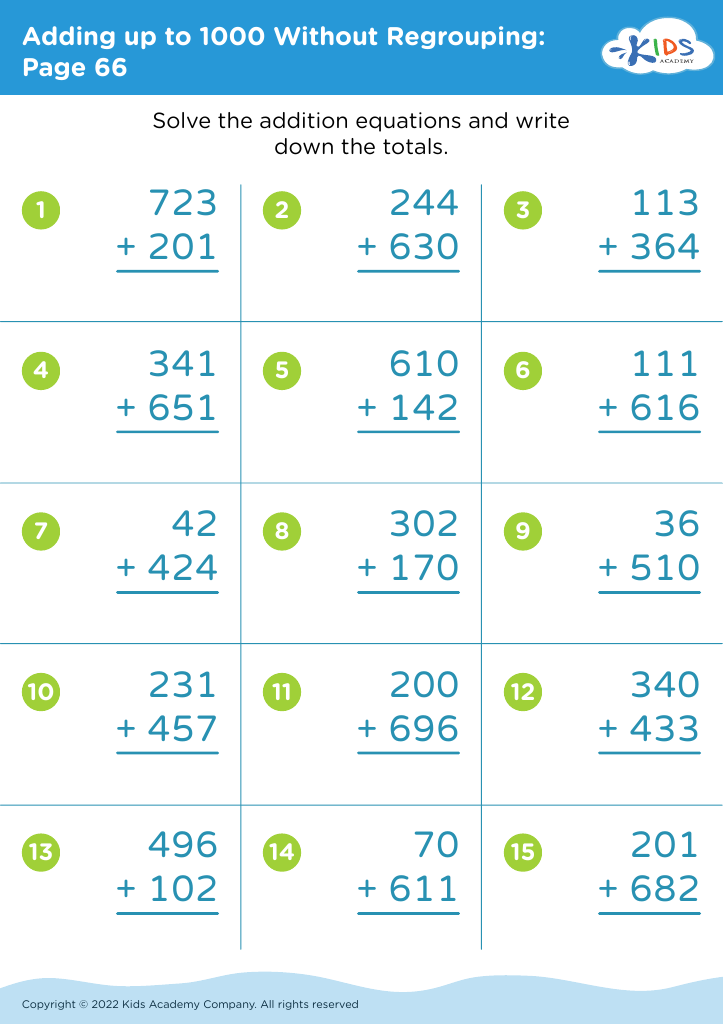
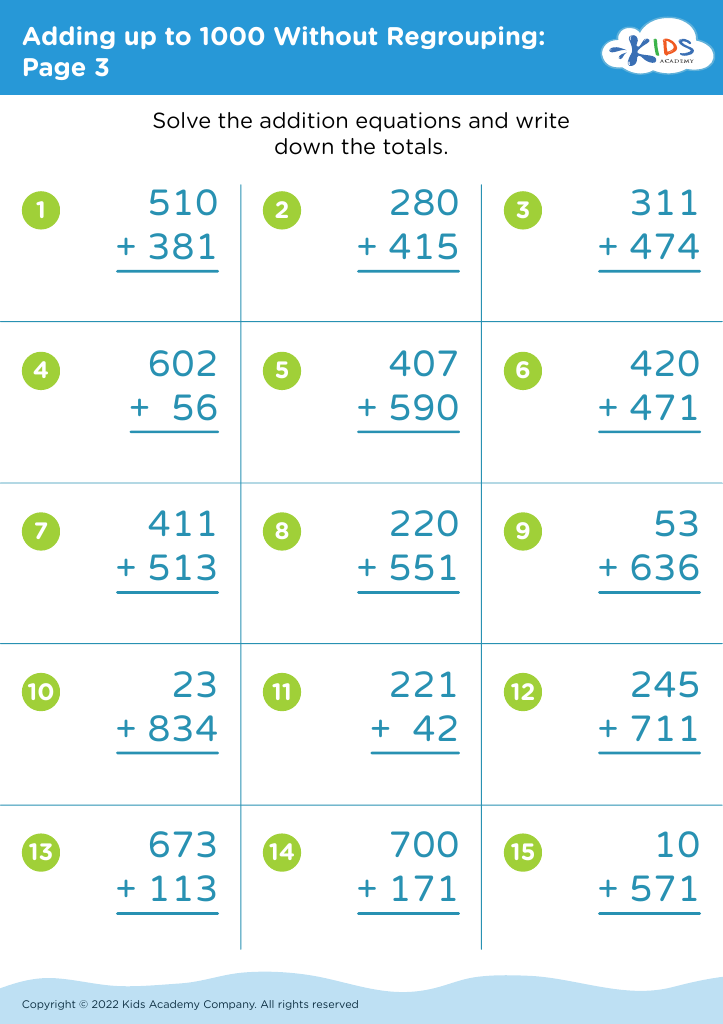
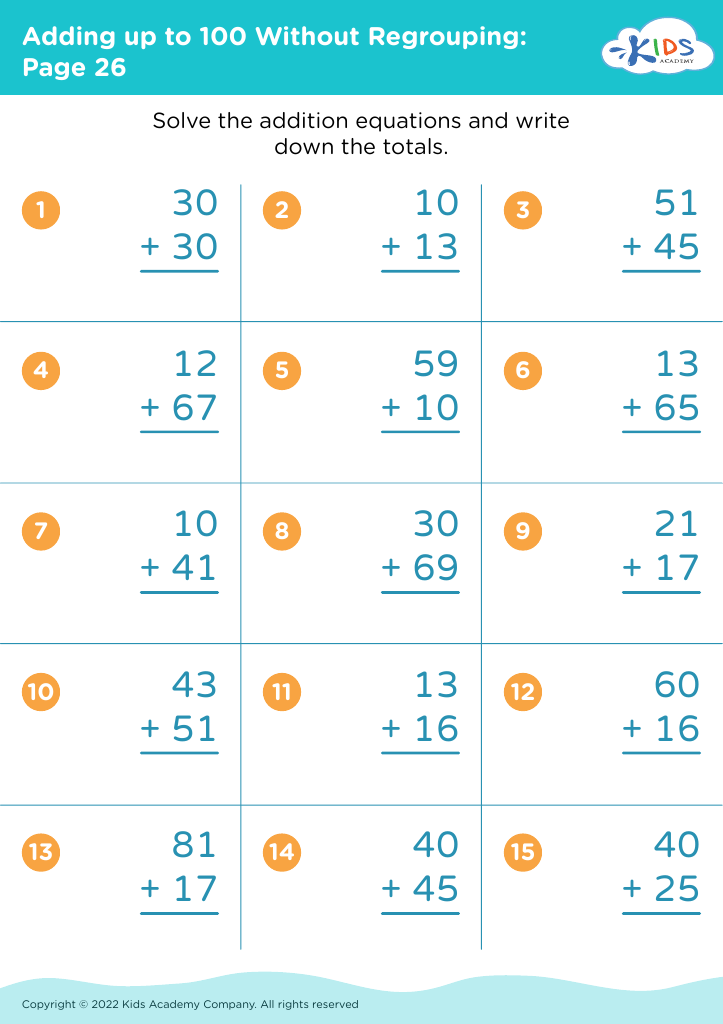
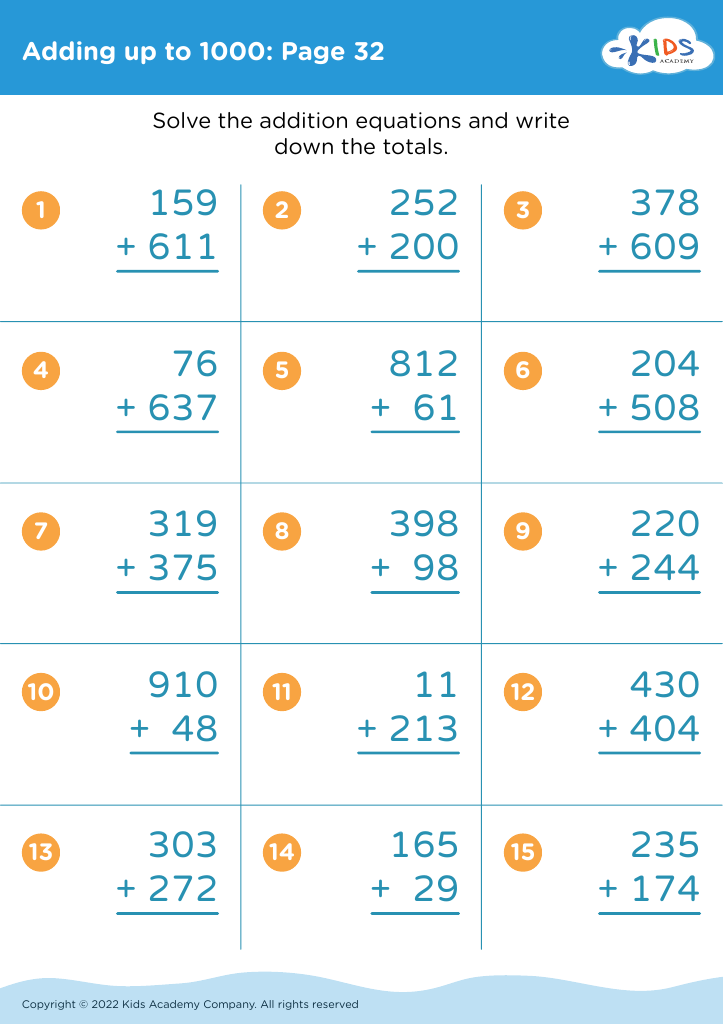
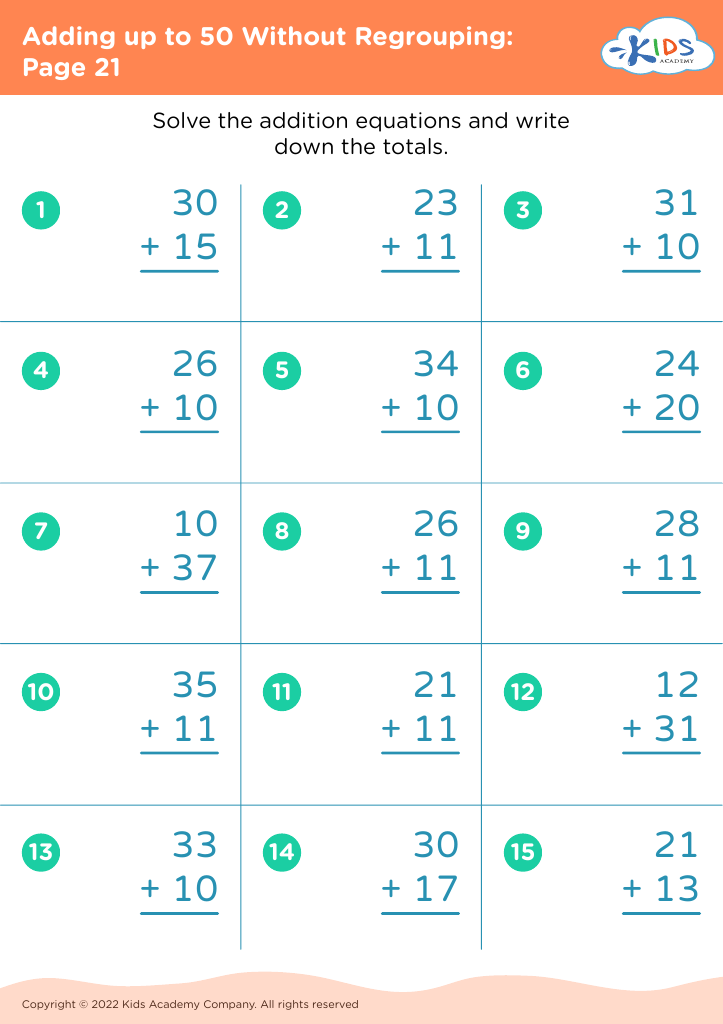
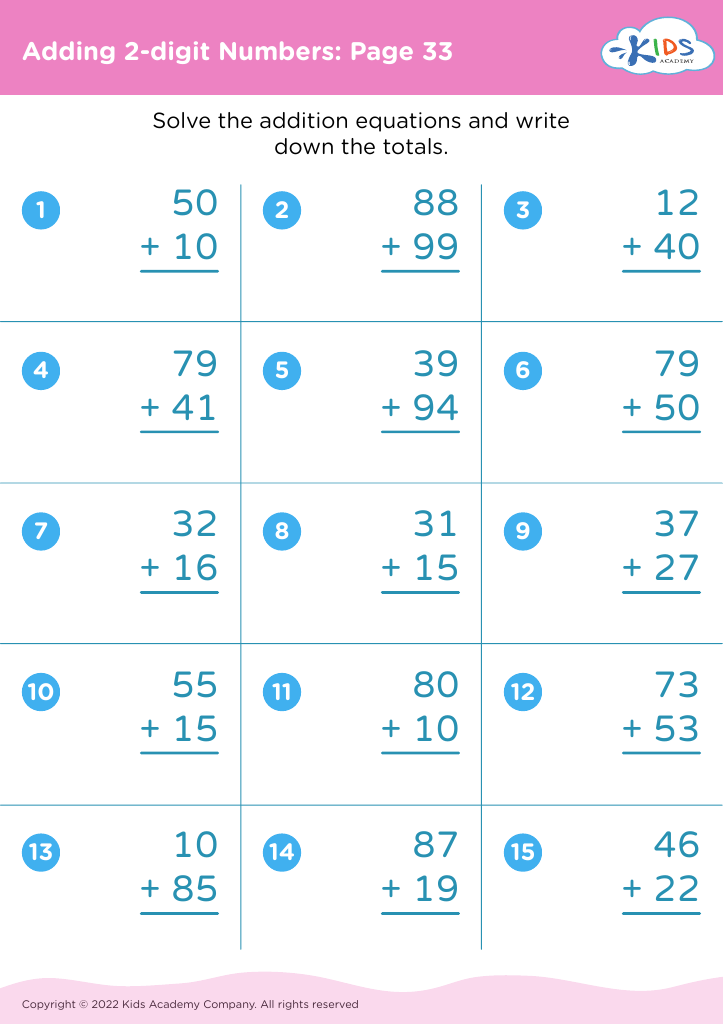
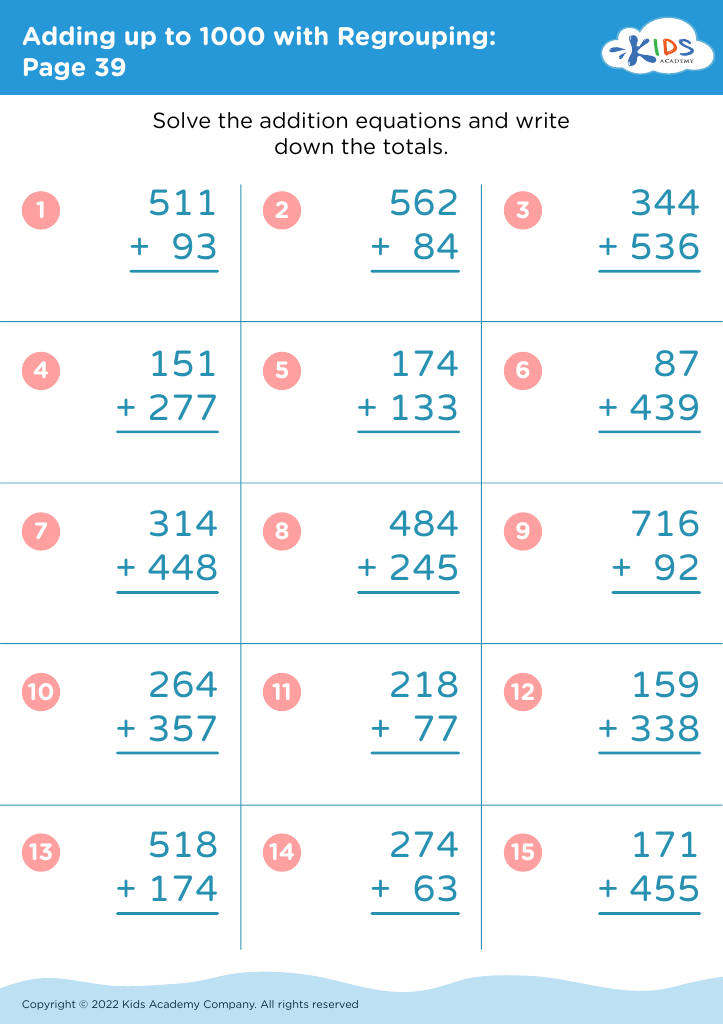
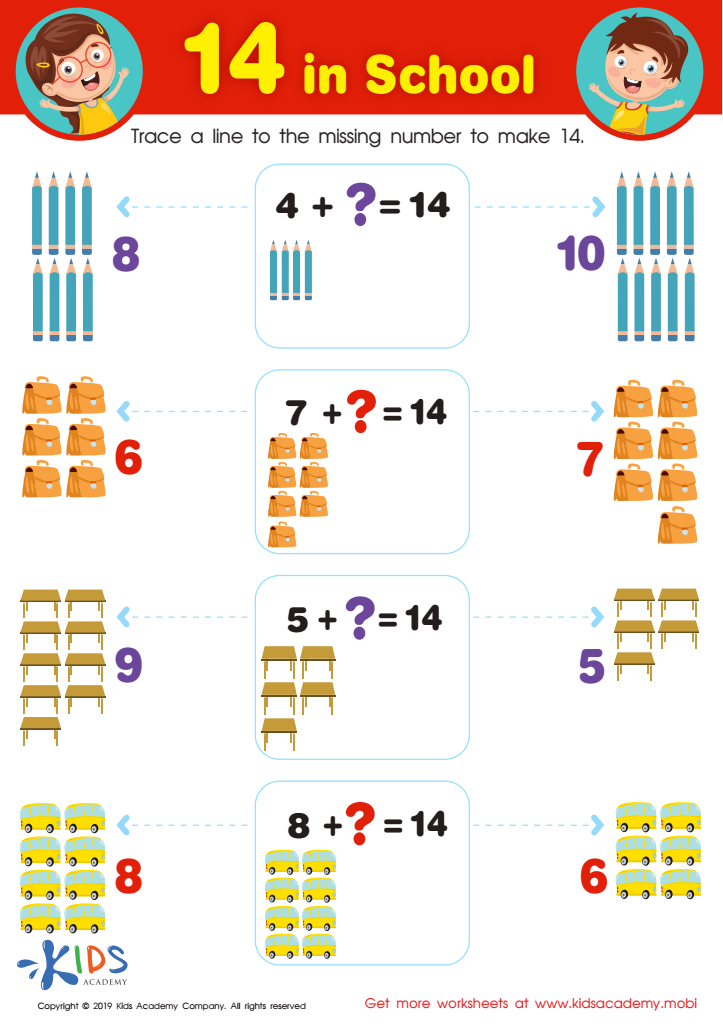
14 in School Worksheet
 Assign to My Students







Recognizing shapes and basic addition are foundational skills essential for children aged 6-8. Firstly, understanding shapes helps with spatial reasoning and geometry, providing the building blocks for complex mathematical concepts. For instance, recognizing shapes lends itself to understanding patterns, symmetry, and the relationships between objects, which is crucial for advanced mathematics and everyday decision-making.
Basic addition, on the other hand, is fundamental to numeracy. Proficiency in addition is not just about solving math problems but about developing number sense — an intuitive feel for numbers and their relationships. It paves the way for more complex arithmetic operations like subtraction, multiplication, and division.
An early grasp of these concepts enhances cognitive development and fosters problem-solving skills. For example, understanding how smaller shapes combine to form more complex figures can parallel the way basic numbers combine in addition. When children see these connections, they become better equipped to approach new academic challenges with confidence.
Parents' and teachers' encouragement in mastering these basic skills can also build a child's confidence and enjoyment in learning. This not only sets a solid academic foundation but can foster a lifelong appreciation for math and logical thinking, which are crucial in innumerable life situations and career paths.








