Recognizing equivalent fractions Addition Worksheets for Ages 6-8
5 filtered results
-
From - To
Help your child master the concept of equivalent fractions with our engaging Addition Worksheets, specifically designed for ages 6-8. These printable activities focus on recognizing and combining fractions, making learning fun and interactive. With colorful visuals and age-appropriate challenges, children will develop essential math skills while exploring how different fractions can represent the same value. Our worksheets promote critical thinking, problem-solving, and confidence in math, setting a strong foundation for future learning. Encourage your young scholars to dive into the world of fractions today and watch them excel in their math journey! Perfect for home or classroom use.
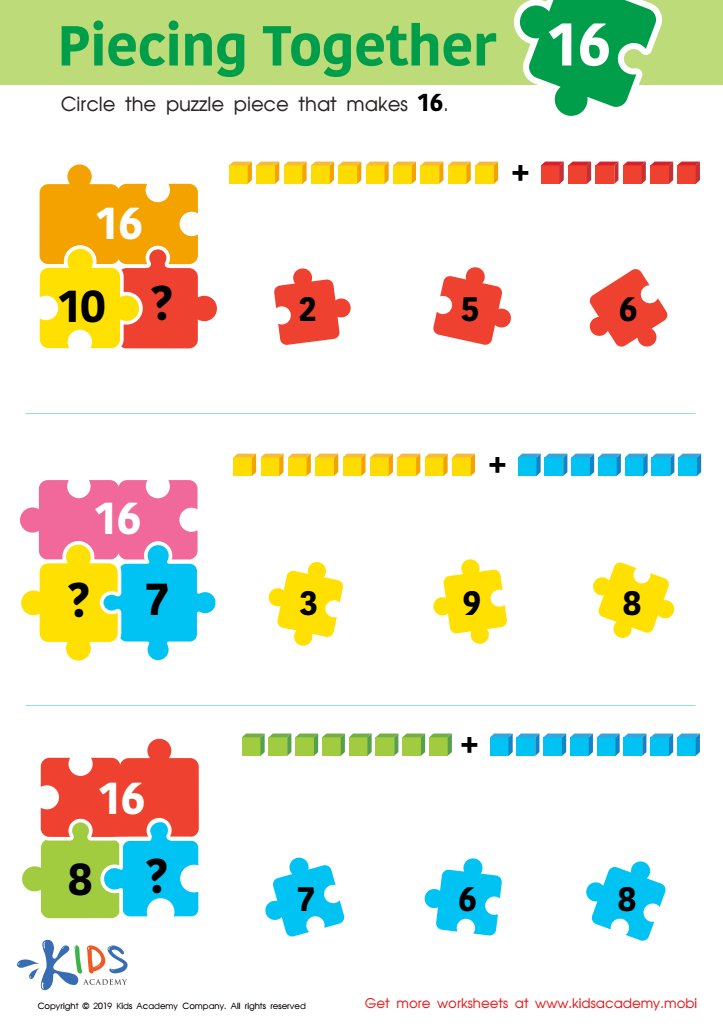
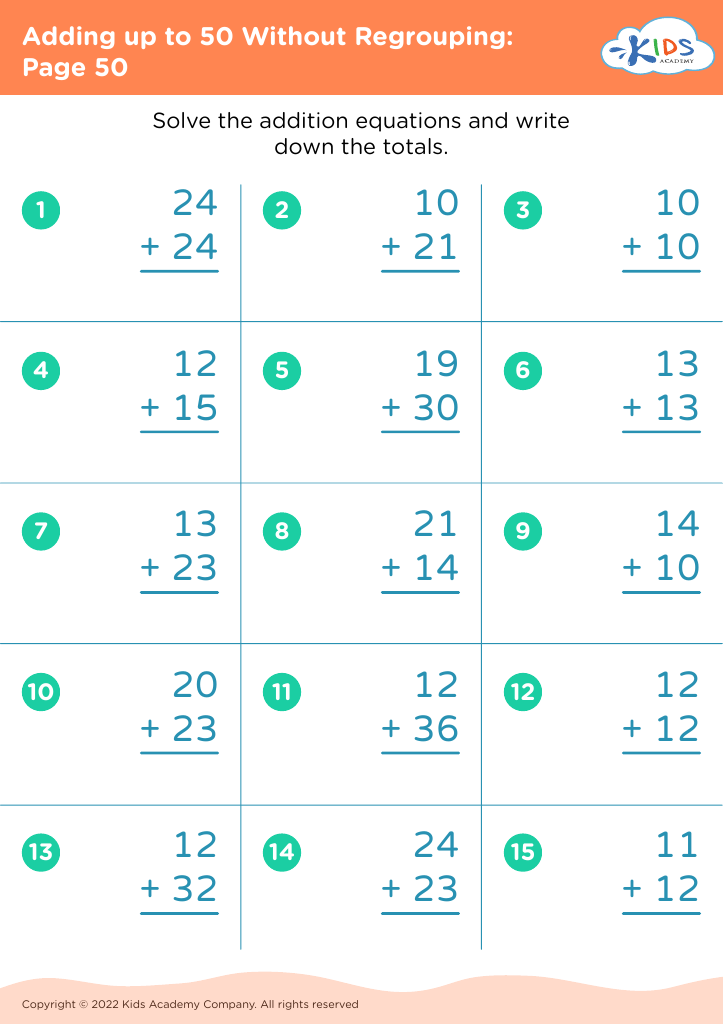
Piecing Together 16 Worksheet
 Assign to My Students



.jpg)




Understanding equivalent fractions and their addition is crucial for children aged 6-8 as they lay the foundation for more advanced mathematical concepts. This concept fosters a deeper understanding of fractions, helps build number sense, and nurtures essential problem-solving skills. When children recognize that different fractions can represent the same value, they become more flexible thinkers and can approach addition with confidence, recognizing that 1/2 is equivalent to 2/4, for example.
For parents and teachers, emphasizing this skill not only encourages mathematical proficiency but also promotes analytical thinking. By mastering equivalent fractions and their addition, children learn to assess different situations, compare quantities, and facilitate real-life applications like sharing or dividing equally—skills they will use for the rest of their lives.
Moreover, real-life connections make learning more engaging; when children see these concepts in action—like during cooking or crafting—they are more likely to grasp them meaningfully. Cultivating an environment where children feel comfortable exploring fractions will ultimately support their long-term mathematical confidence and persistence. Thus, recognizing equivalent fractions and mastering their addition should be a priority for parents and teachers, ensuring children are well-equipped for future academic challenges.








