
Spatial awareness Addition Worksheets for Ages 6-8
5 filtered results
Difficulty Level
Grade
Age
-
From - To
Subject
Activity
Standards
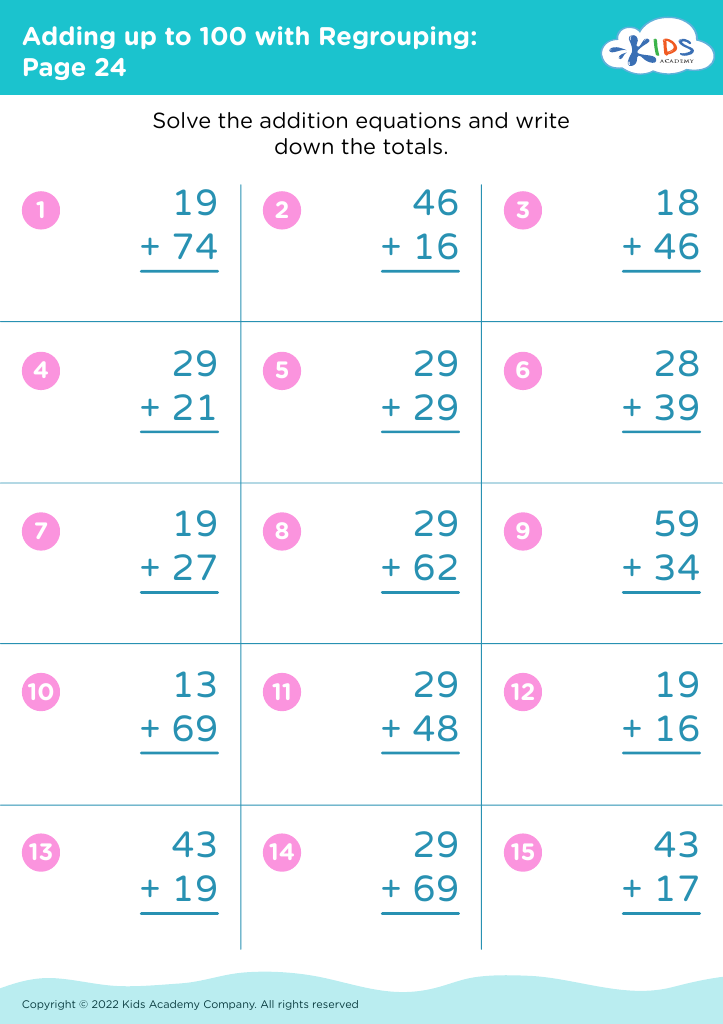
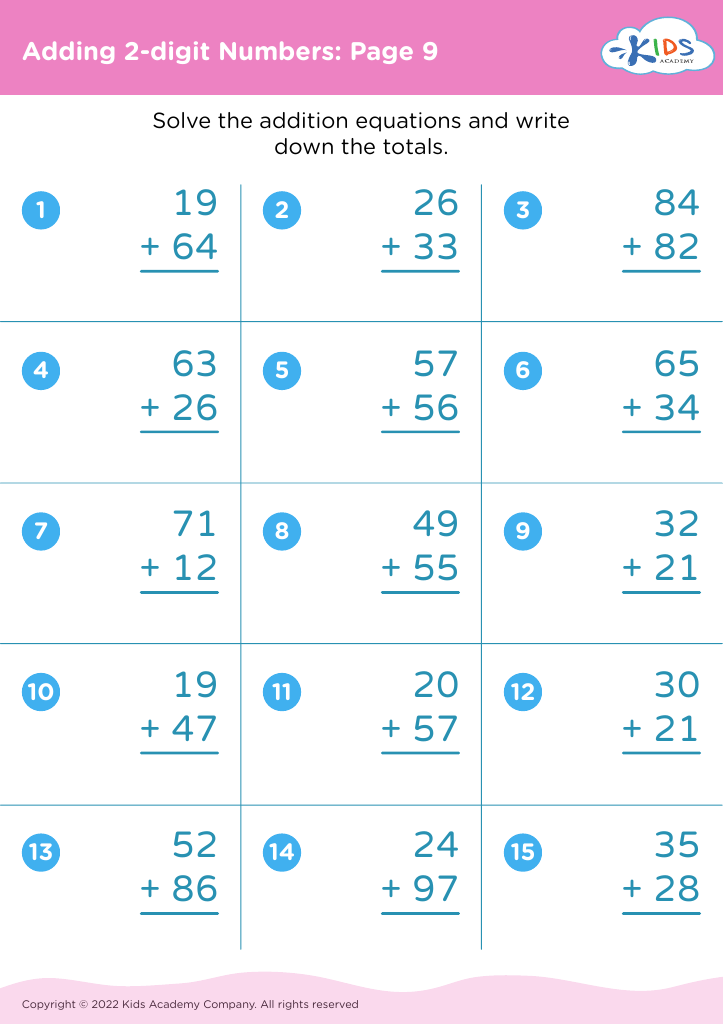
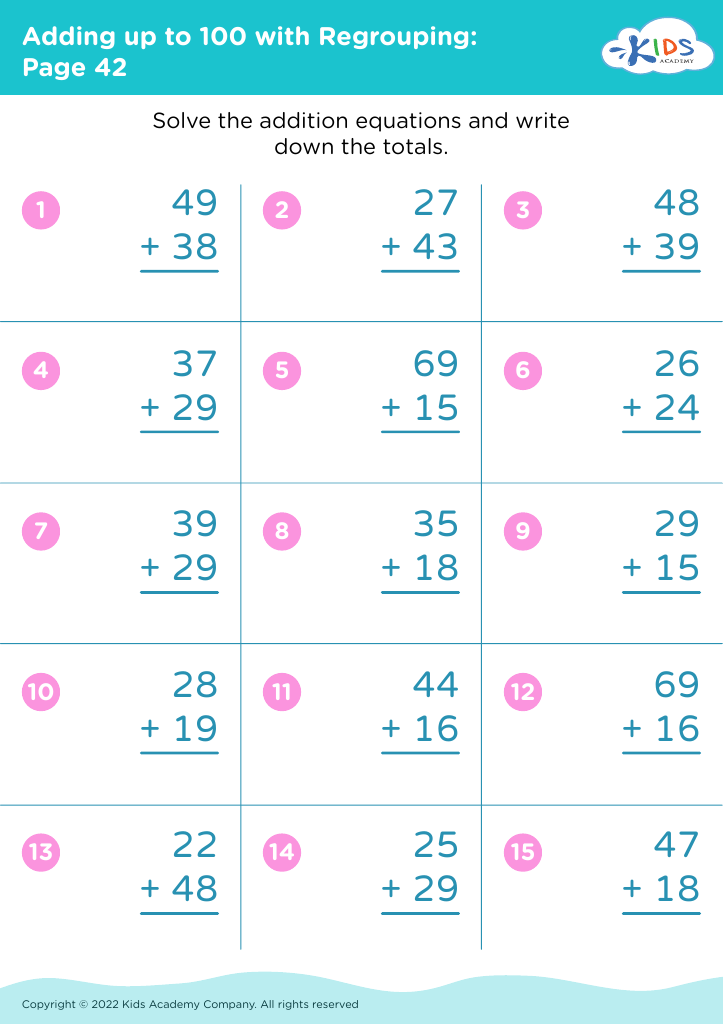
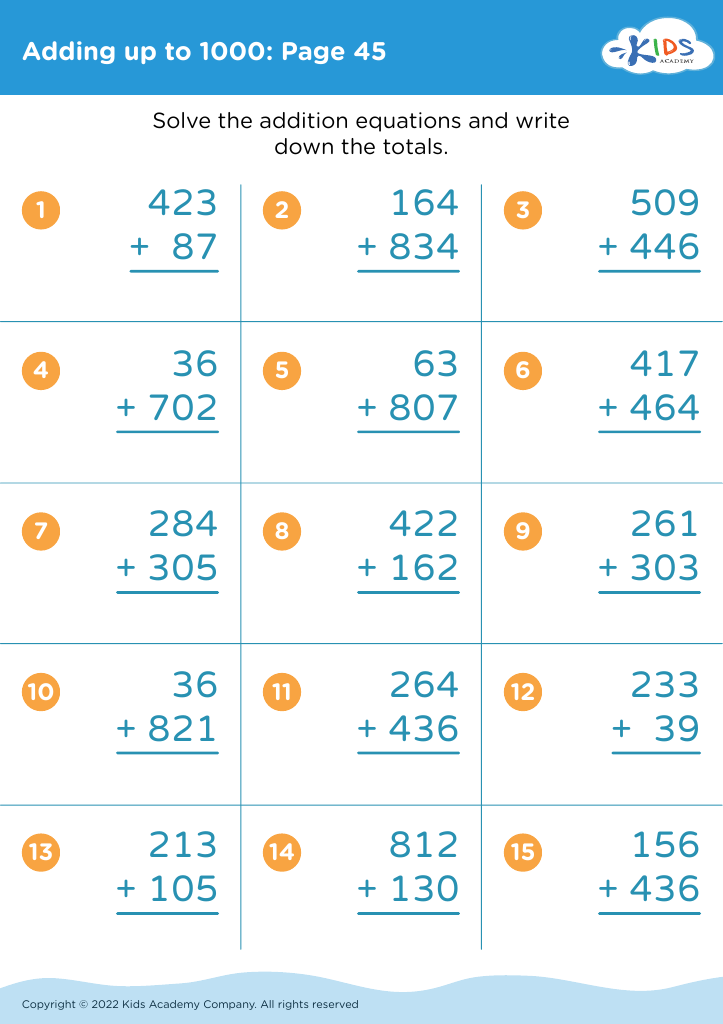
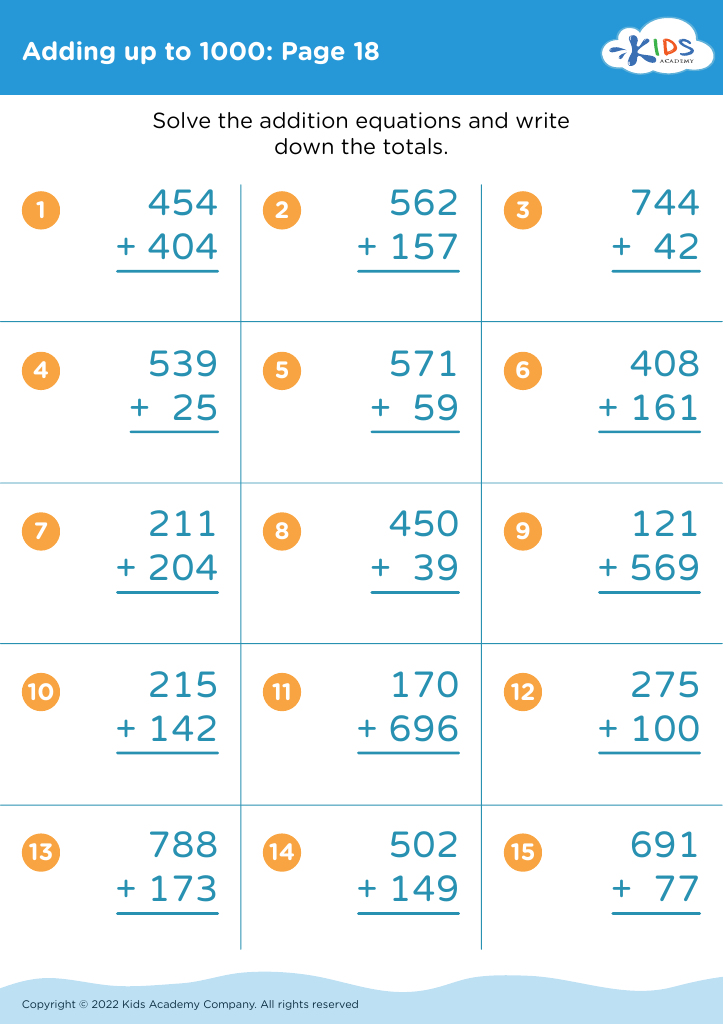
Unlock your child’s mathematical potential with our Spatial Awareness Addition Worksheets designed for ages 6-8! These engaging worksheets combine essential addition skills with spatial awareness concepts, helping young learners develop a strong foundation in math. By working through fun activities, children will enhance their ability to visualize and manipulate objects in space, fostering critical thinking and problem-solving skills. Perfect for at-home learning or classroom use, our worksheets provide a balanced approach to mastering addition while promoting spatial intelligence. Explore our collection today to support your child's learning journey and watch them thrive in their mathematical skills!
Favorites
With answer key
Interactive
Join Kids Academy for Free
Who is primarily going to use this learning content?








Spatial awareness is a crucial cognitive skill that significantly impacts a child’s learning and development, particularly in the areas of mathematics and geometry. For children aged 6–8, developing strong spatial awareness skills through activities like spatial addition can enhance their ability to visualize and manipulate objects in their minds. This foundational skill aids in understanding numerical concepts, problem-solving, and critical thinking.
Parents and teachers should care about spatial awareness because it lays the groundwork for more complex mathematical reasoning. It helps children grasp the relationships between numbers and shapes, as well as fostering more advanced skills such as measurement and problem-solving strategies. Engaging children in activities that strengthen their spatial awareness promotes creativity and innovation, allowing them to approach challenges from different angles.
Furthermore, developing spatial awareness is not limited to math—it's transferable to real-world situations, such as navigation, engineering, art, and design. By prioritizing spatial awareness addition and related exercises, parents and teachers can enhance children's overall learning experiences, ensuring they build essential skills that will benefit them across subjects and in daily life. In essence, supporting these skills is an investment in a child's future academic and personal success.








