Filters

13 filtered results

Clear all filters
Favorites
With answer key
Interactive

13 filtered results

Difficulty Level

Grade


Welcome to our Subtraction Skills Addition Worksheets tailored for children ages 6-8! These engaging resources are designed to help young learners master subtraction concepts while reinforcing their addition skills. Our visually appealing worksheets provide a variety of exercises, including interactive problems and fun activities that make learning enjoyable. These worksheets encourage critical thinking and problem-solving, building confidence in math. Perfect for home or classroom use, parents and teachers can easily integrate these materials into daily lessons. Download our Subtraction Skills Addition Worksheets today and watch your child's math abilities flourish as they develop essential skills in a supportive environment!

Check out this FREE Trial Lesson on Addition for age 6-8!

Place Value to Add

Favorites
With answer key
Interactive
  • 6-8
  • Subtraction skills
  • Addition
Base ten block worksheets for 3rd grade

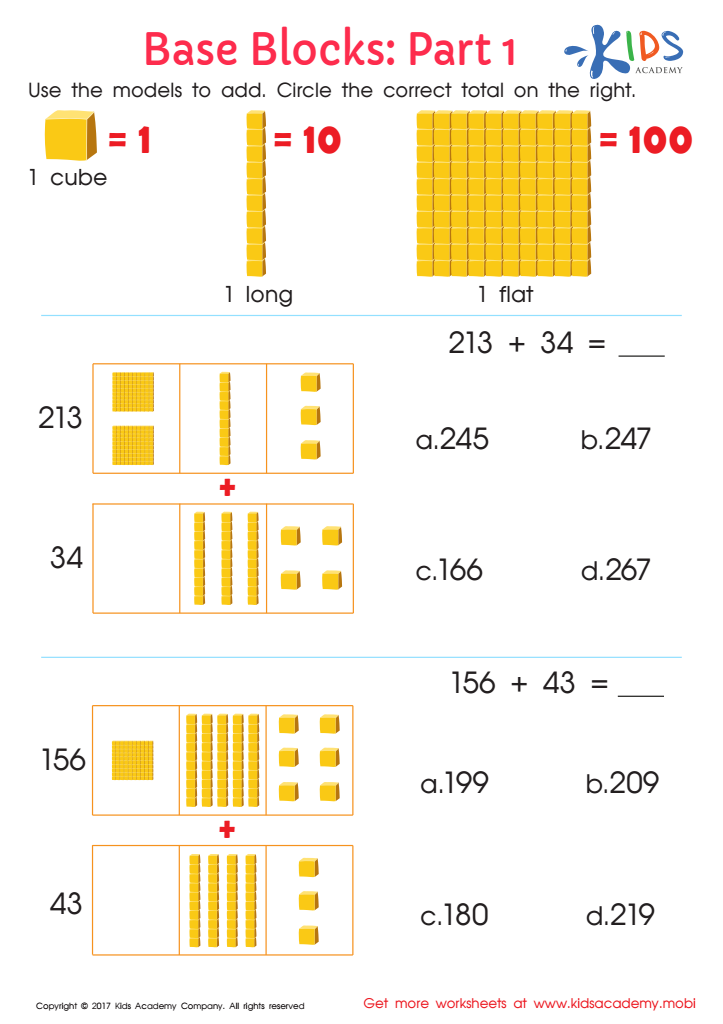
Base Ten Blocks Worksheet: Part 1

They promote numeracy and are a great substitute when kids don't have access to physical blocks.
Base Ten Blocks Worksheet: Part 1
Worksheet
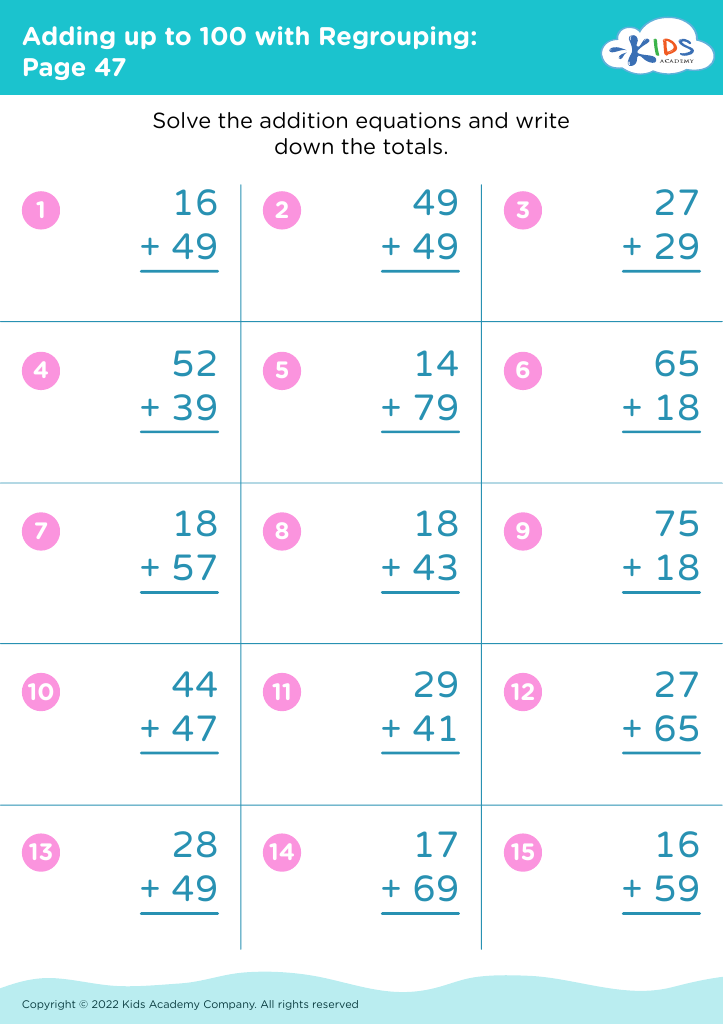
Adding up to 100 with Regrouping: Page 47
Worksheet
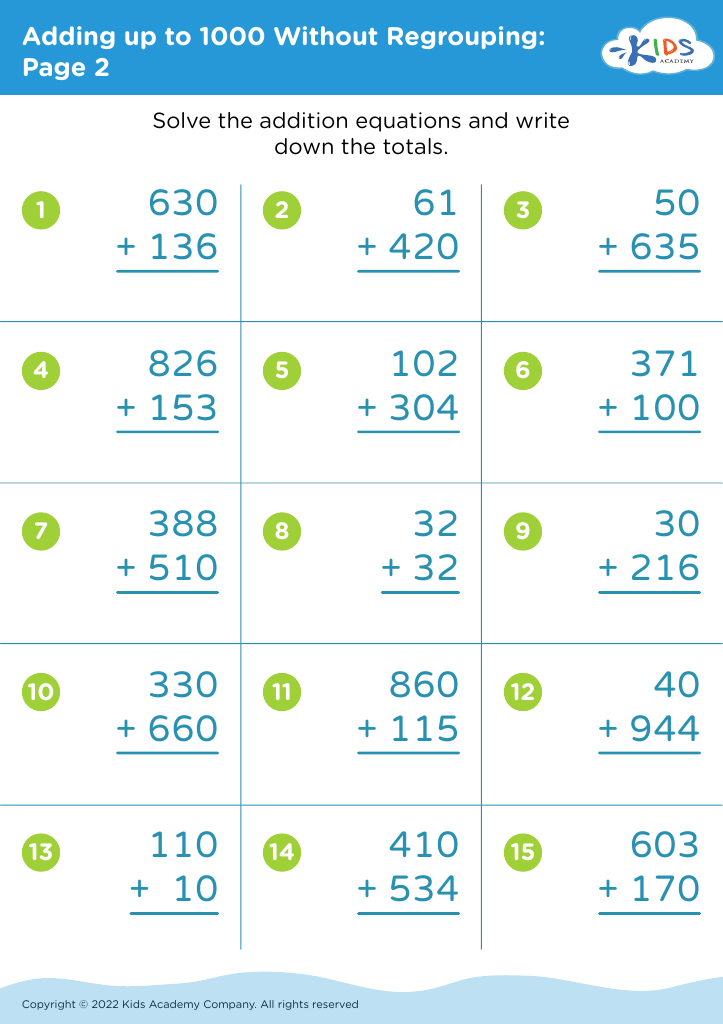
Adding up to 1000 Without Regrouping: Page 2
Worksheet
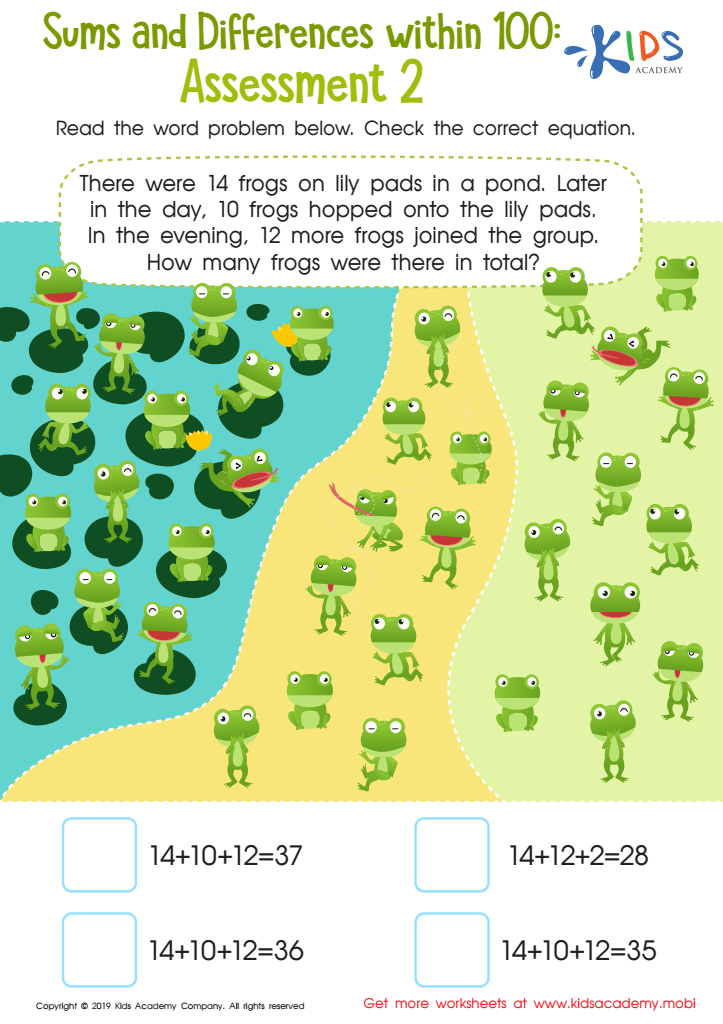
Sums and Differences Within 1 - Assessment 2 Worksheet
Sums and Differences Within 1 - Assessment 2 Worksheet
Help your kids practice math with these simple word problems. Read the question, discuss with them to form the equation and then check the answer. Give them a chance to sharpen their math skills!
Sums and Differences Within 1 - Assessment 2 Worksheet
Worksheet
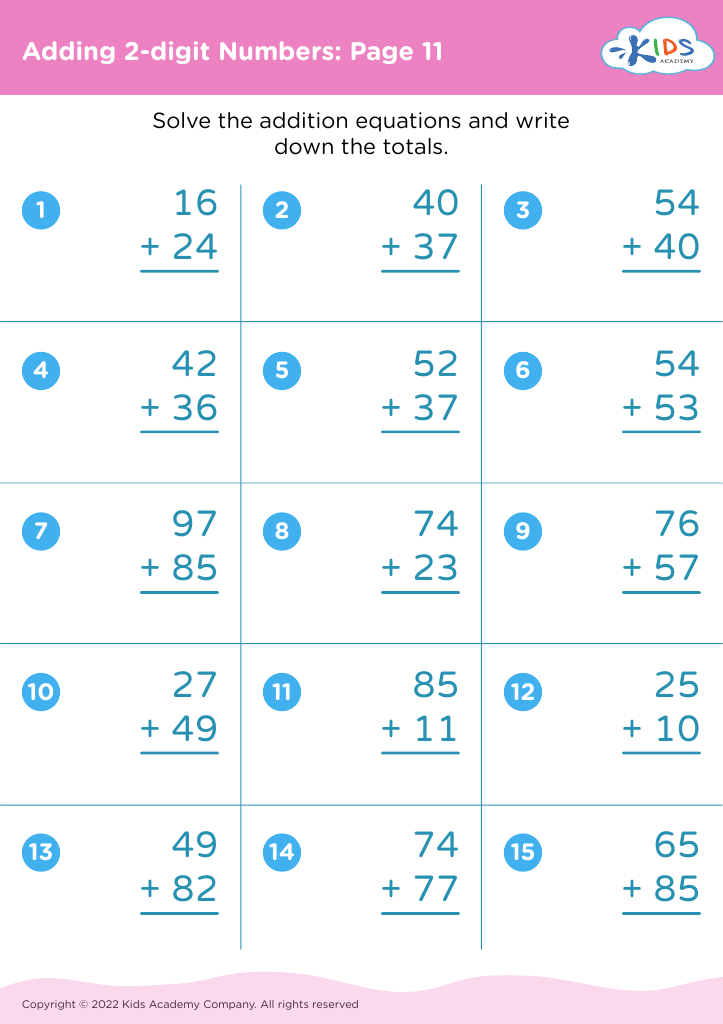
Adding 2-digit Numbers: Page 11

Adding 2-digit Numbers: Page 11

Adding 2-digit Numbers: Page 11
Worksheet
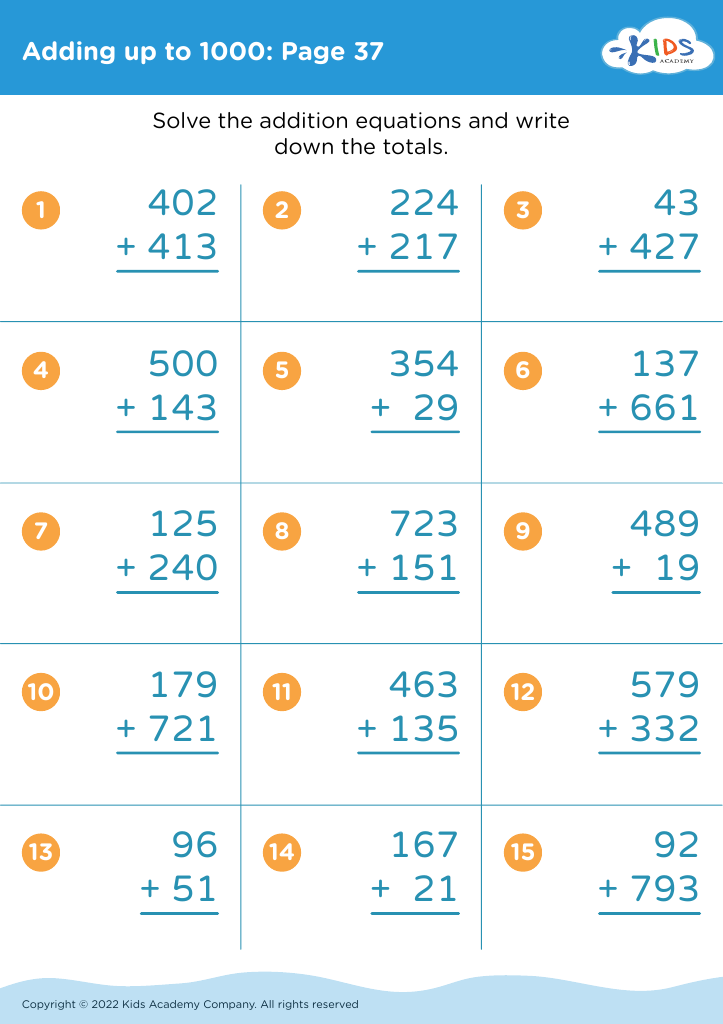
Adding up to 1000: Page 37

Adding up to 1000: Page 37

Adding up to 1000: Page 37
Worksheet
Sums and Differences Within 1 - Assessment 3 Worksheet
Sums and Differences Within 1 - Assessment 3 Worksheet
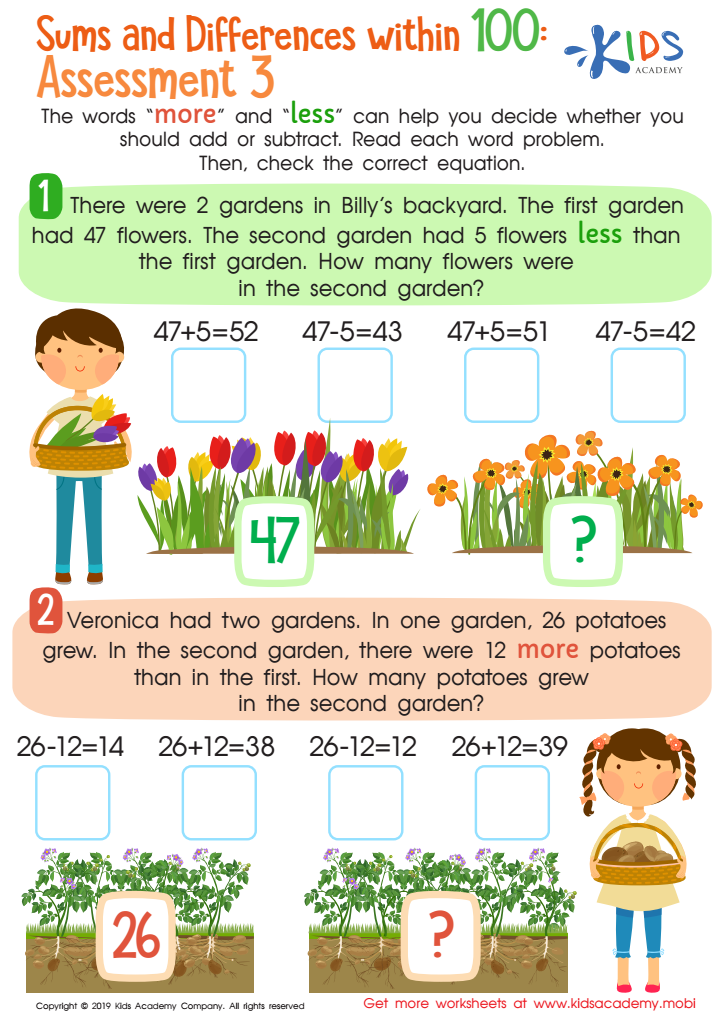
When we see 'more' or 'less', they usually refer to quantity. In Math, they indicate addition or subtraction. Help kids read aloud two simple word problems and figure out the correct equations for each. Check the correct equation afterwards.
Sums and Differences Within 1 - Assessment 3 Worksheet
Worksheet
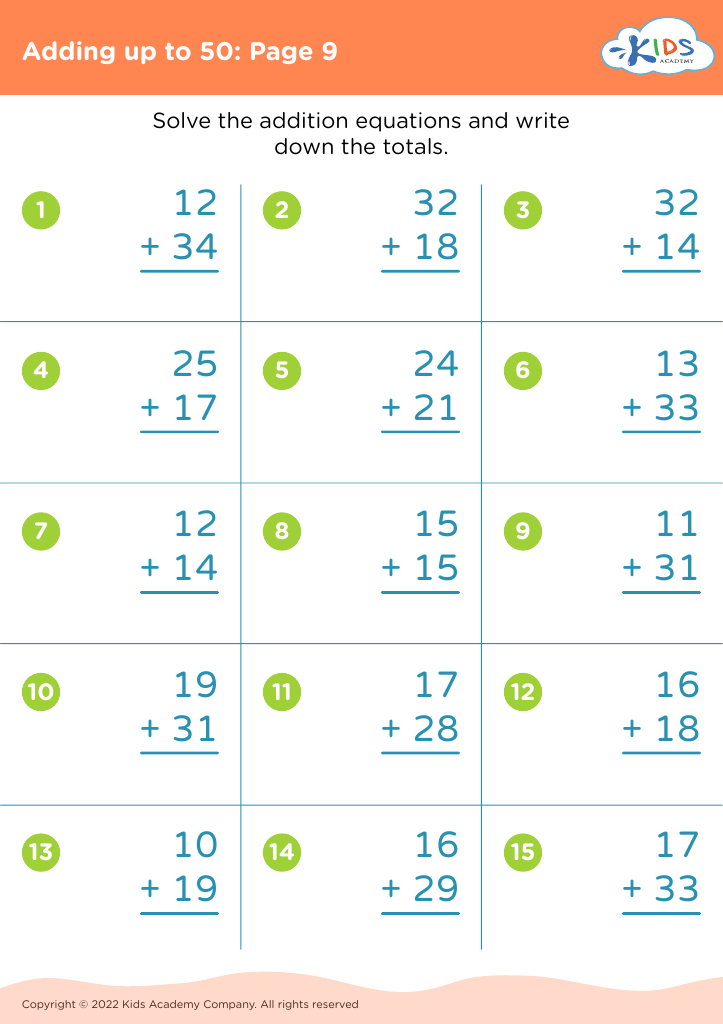
Adding up to 50: Page 9

Adding up to 50: Page 9

Adding up to 50: Page 9
Worksheet
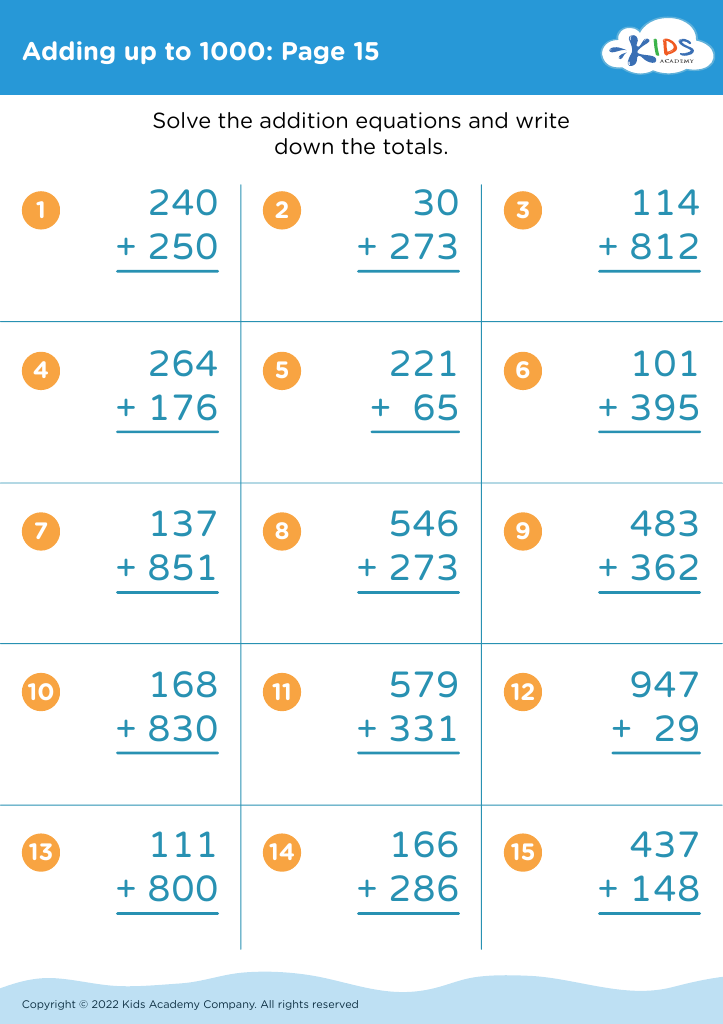
Adding up to 1000: Page 15

Adding up to 1000: Page 15

Adding up to 1000: Page 15
Worksheet
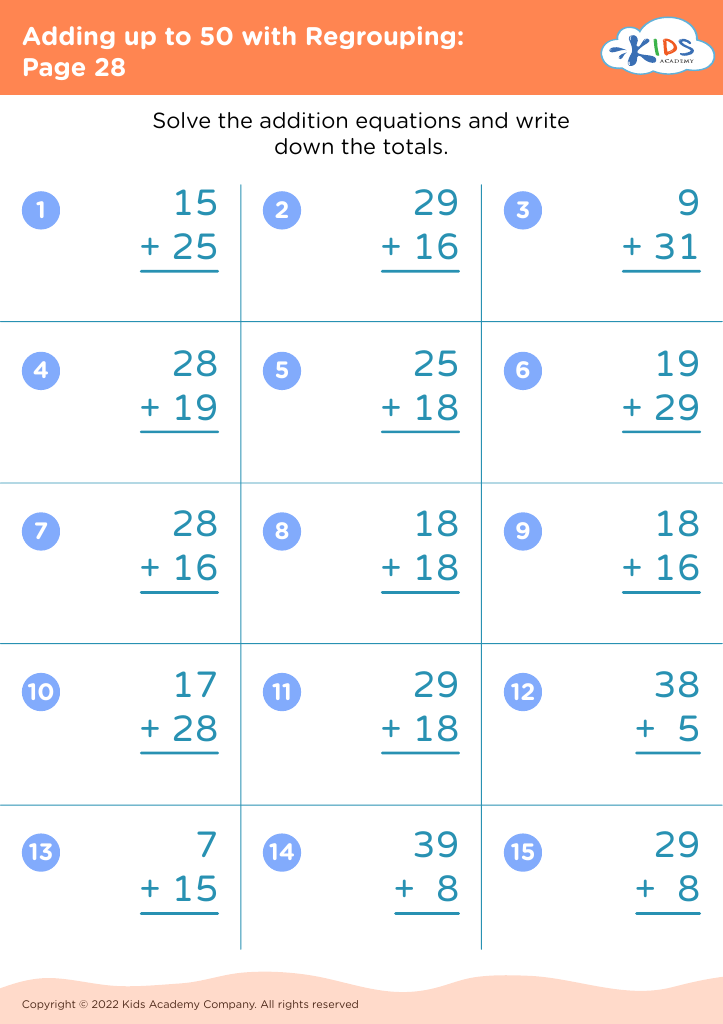
Adding up to 50 with Regrouping: Page 28
Worksheet
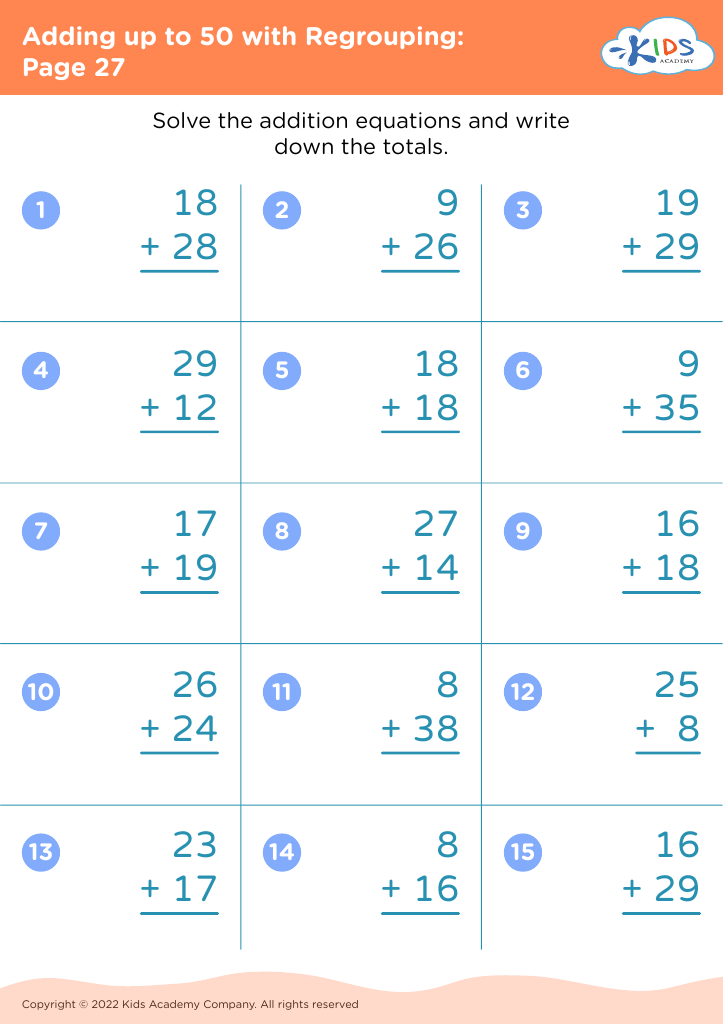
Adding up to 50 with Regrouping: Page 27
Worksheet
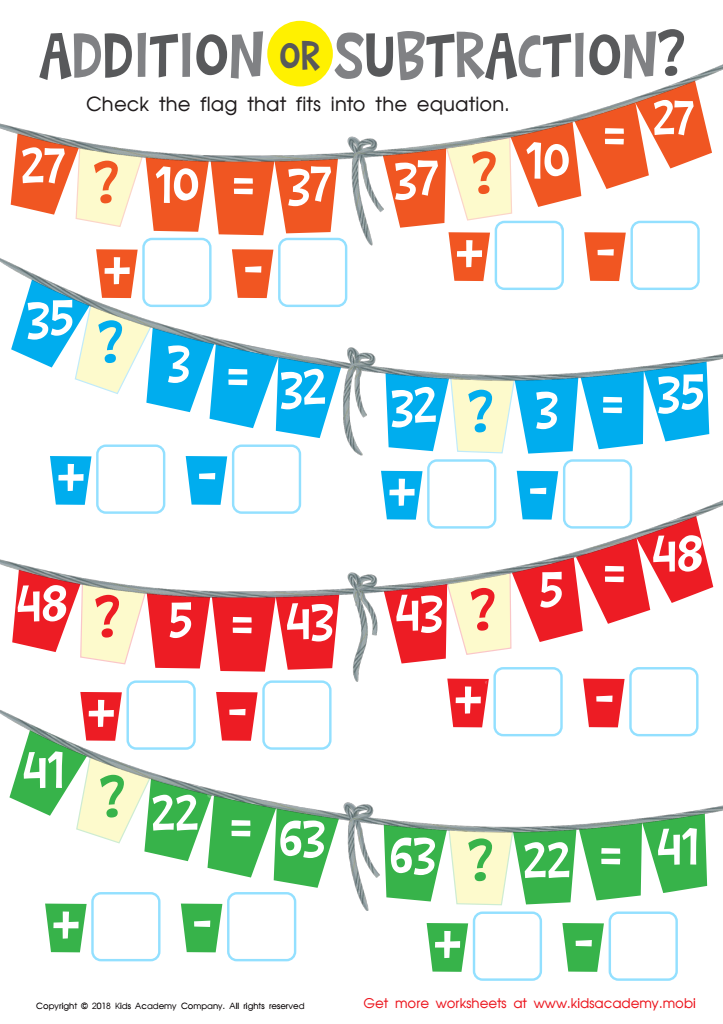
Addition or Subtraction? Worksheet

Addition or Subtraction? Worksheet

Help your math whiz's number skills advance with these colorful flag equations! With the free PDF, they'll learn to solve addition and subtraction facts by following the correct orders of operation. And the best part? They'll develop a deeper understanding of how the different operations work together within equations. Give it a try and watch their skills soar!
Addition or Subtraction? Worksheet

Worksheet
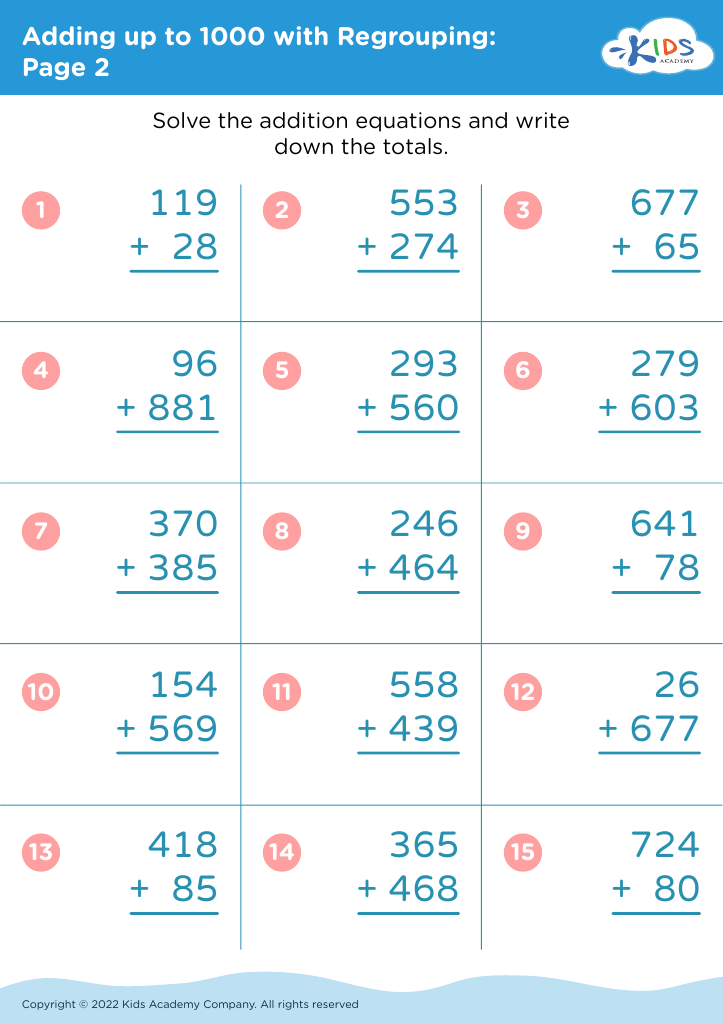
Adding up to 1000 with Regrouping: Page 2
Worksheet


Subtraction skills, along with addition, are fundamental building blocks for mathematical understanding, especially for children ages 6-8. At this stage, students begin to develop their cognitive abilities and logical thinking, which are critical for problem-solving in both mathematics and daily life. Mastering subtraction helps children understand the concept of 'taking away,' which is essential for grasping more complex mathematical ideas later on, such as fractions, decimals, and algebra.

Moreover, subtraction skills foster confidence and independence in children. When they can readily perform basic subtraction, children become more engaged in their learning, allowing them to tackle more challenging problems. This foundational literacy in math improves their academic performance and enhances their numerical fluency.

Furthermore, understanding subtraction is crucial for real-life applications. Children encounter subtraction in various situations, such as calculating change while shopping or determining the number of items left after sharing. Teachers and parents should prioritize developing these skills by integrating fun and interactive learning methods. Engaging them in games, hands-on activities, and real-world scenarios deepens their comprehension and retention, setting them on the path to becoming proficient and curious mathematicians.