Telling time Addition Worksheets for Ages 6-8
3 filtered results
-
From - To
Empower your young learner with our Telling Time Addition Worksheets designed for ages 6-8! Our engaging resources blend the essential skills of telling time and basic addition, fostering both mathematical and time management abilities. Each worksheet features colorful, intuitive clock designs and relatable, fun scenarios your child can easily understand. Perfect for classroom use or additional practice at home, these worksheets not only reinforce important math concepts but also build confidence in independent work. Make learning enjoyable and effective with Kids Academy’s tailored, age-appropriate materials. Download today and watch your child master telling time and addition effortlessly!
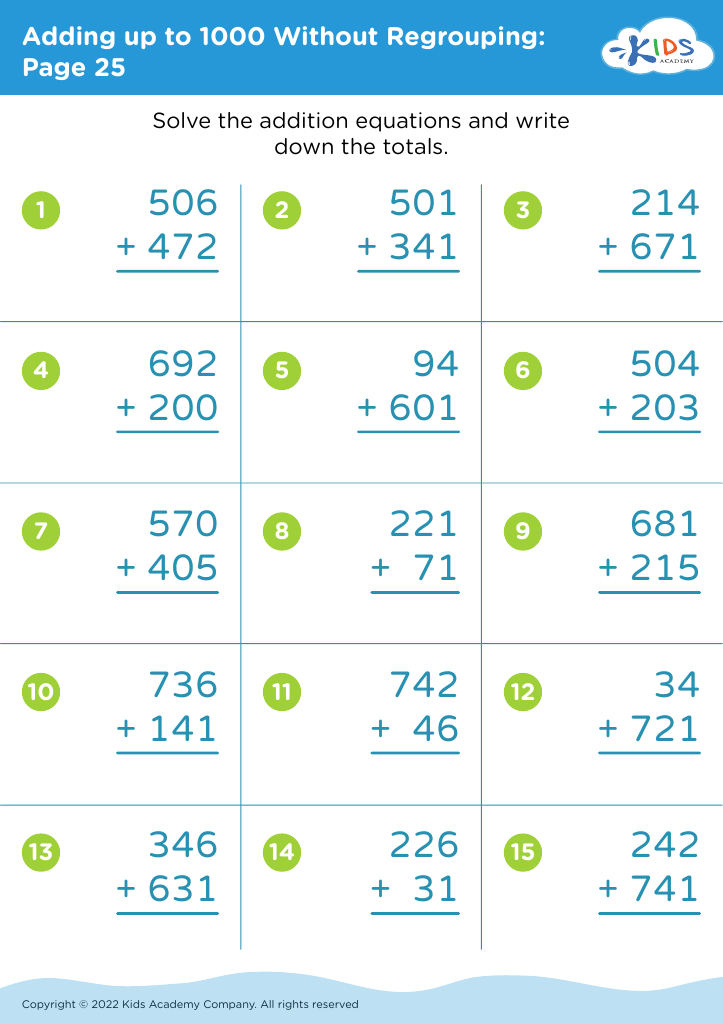
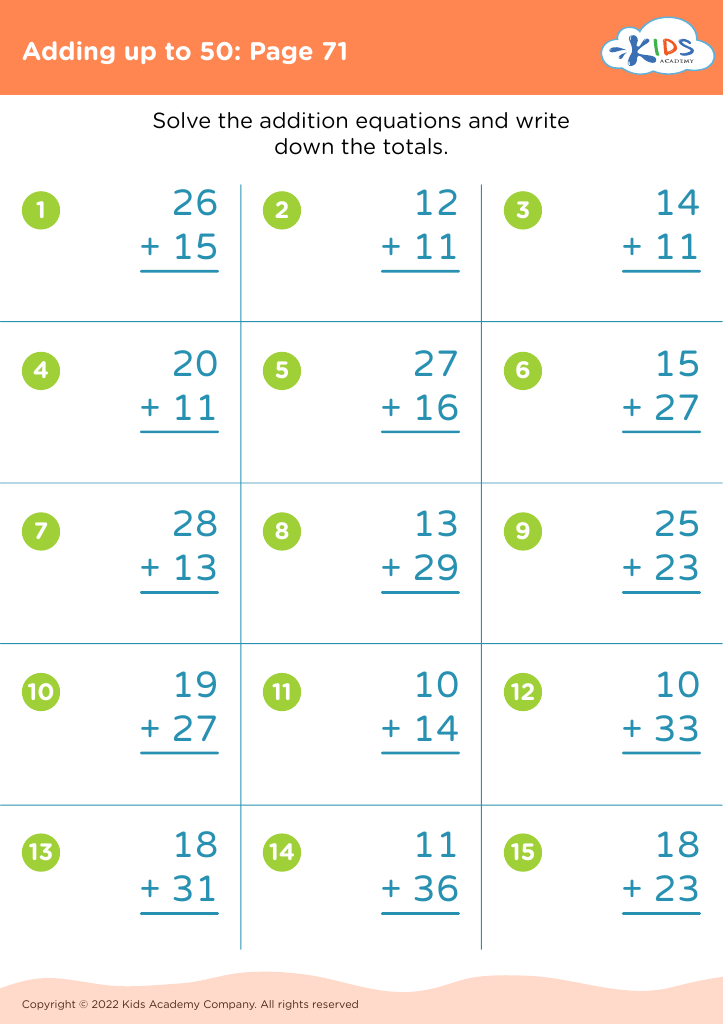
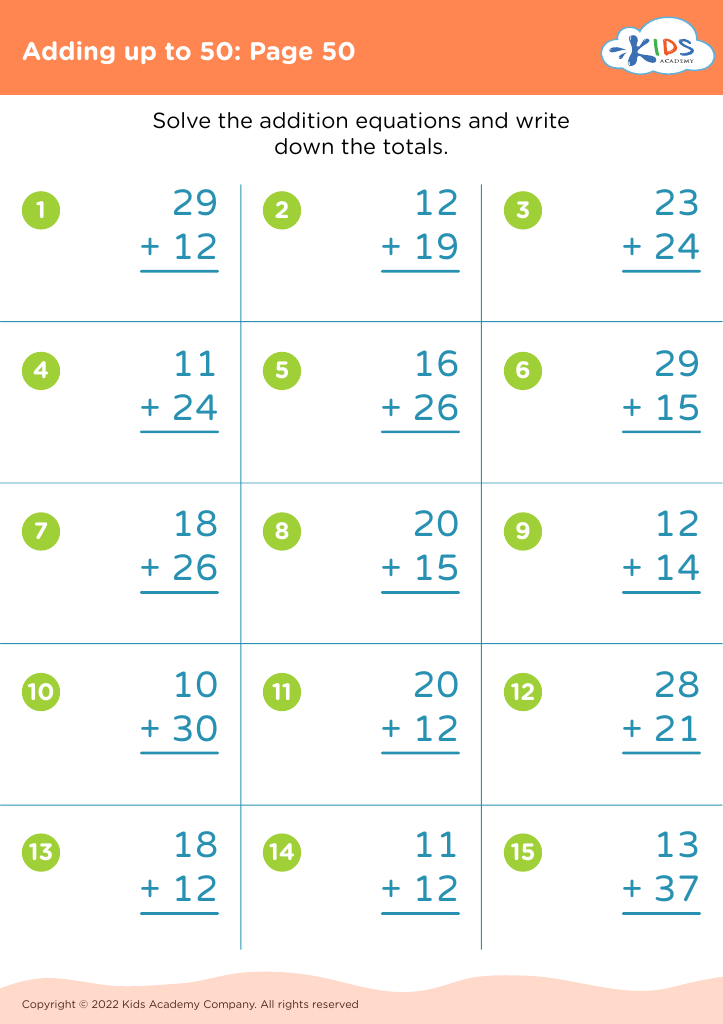








Telling time and addition are foundational skills for children ages 6-8, playing a crucial role in their overall cognitive development and daily life functioning. Parents and teachers should prioritize these skills to enhance children's academic and practical abilities, fostering independence and responsibility.
Understanding how to tell time helps children grasp the concept of time management, essential for effective daily planning. It allows them to establish routines, recognize the importance of schedules, and develop a sense of punctuality. Mastery of time-telling is also interlinked with better problem-solving skills and improved academic performance in subjects like science and history, which often depend on chronological understanding.
Similarly, addition is a fundamental mathematical skill that serves as the building block for advanced arithmetic operations such as subtraction, multiplication, and division. Proficiency in addition enhances numerical fluency and mental calculation abilities, essential for everyday tasks like budgeting and time management.
Combining these skills promotes logical thinking, analytical abilities, and boosts self-confidence in school-aged children. It prepares them for more complex challenges, encouraging a lifelong appreciation for learning. Therefore, parents and teachers should engage children in interactive activities like clock reading games and addition puzzles, nurturing both their academic growth and essential life skills.








