Understanding division Addition Worksheets for Ages 6-8
5 filtered results
-
From - To
Discover the importance of understanding division through our engaging Addition Worksheets designed specifically for ages 6-8. These worksheets offer a unique approach to mastering division concepts alongside addition skills. By using real-life scenarios and colorful images, children can better grasp how division relates to sharing and grouping. Our resources aim to enhance problem-solving skills and boost confidence in young learners, making math enjoyable and accessible. Perfect for classroom use or at-home practice, these worksheets provide the necessary foundation for future math success. Explore a variety of activities that support your child's journey in understanding division in a fun, interactive way!
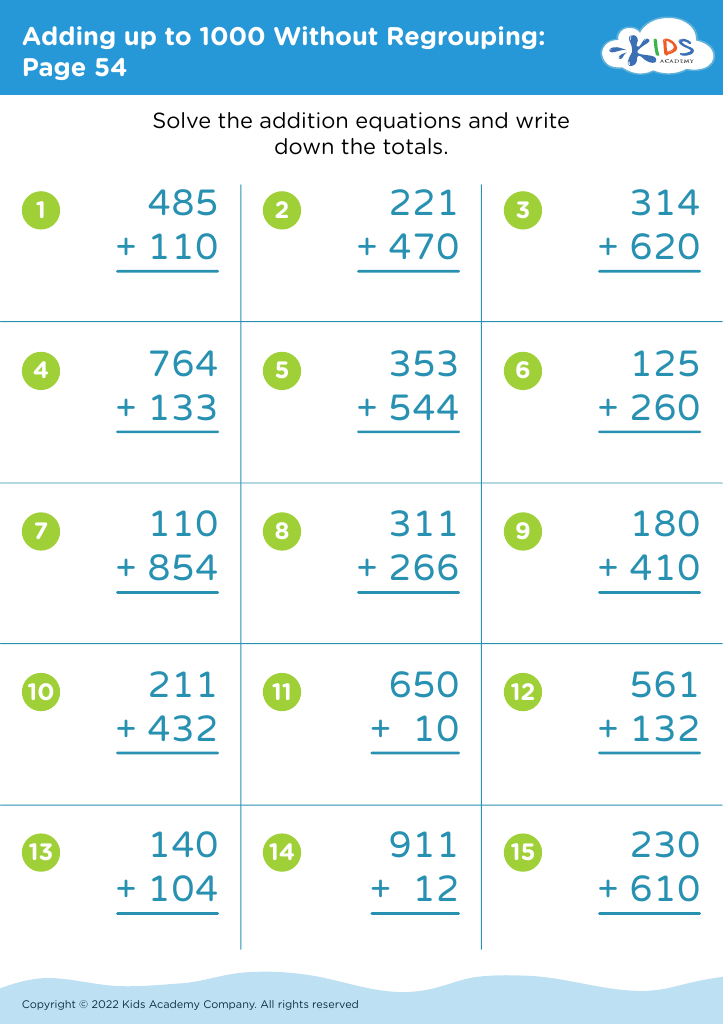
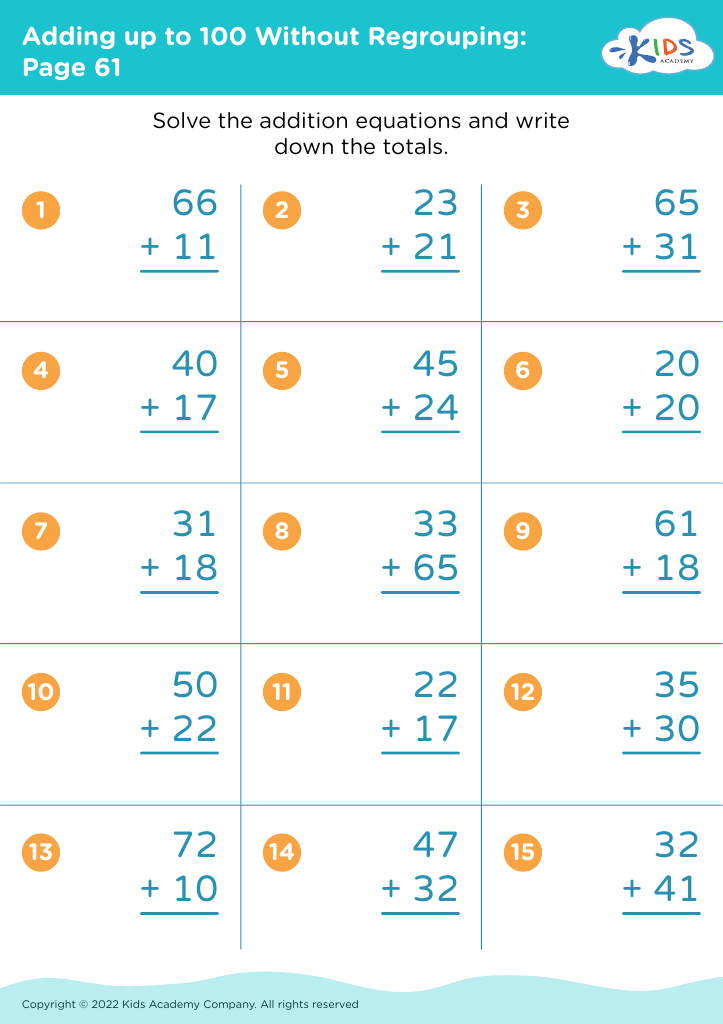
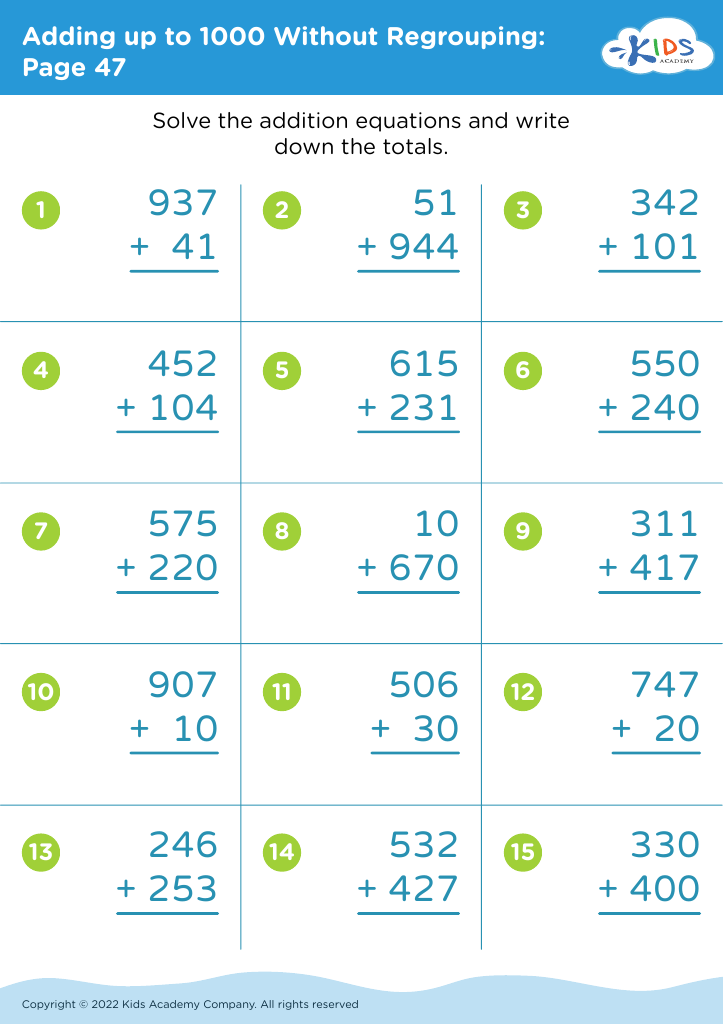
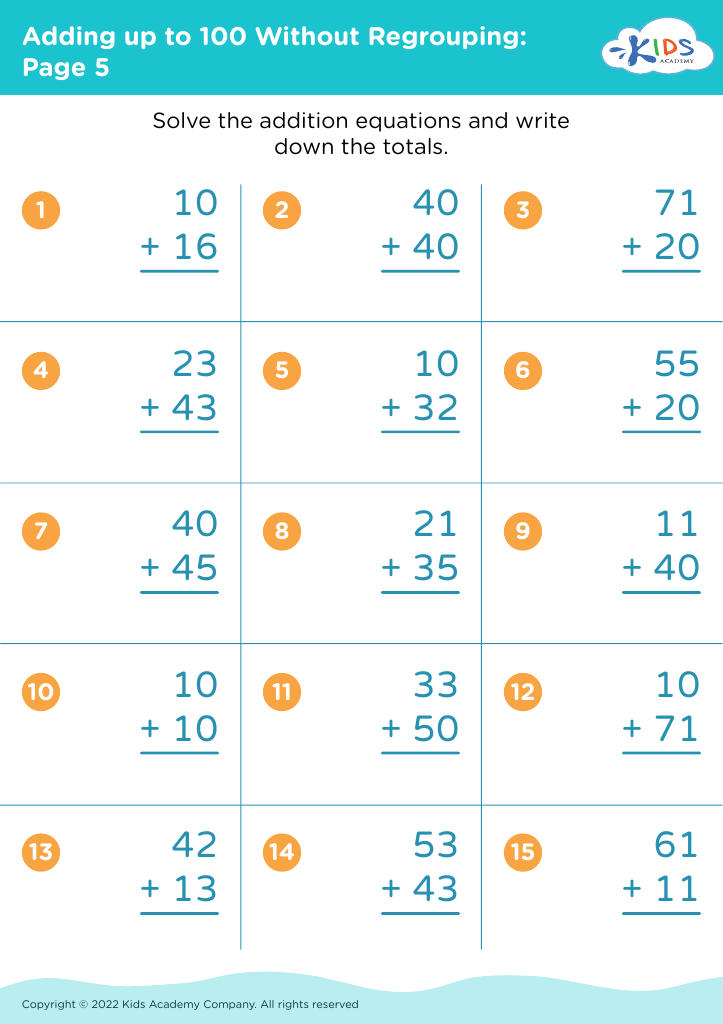
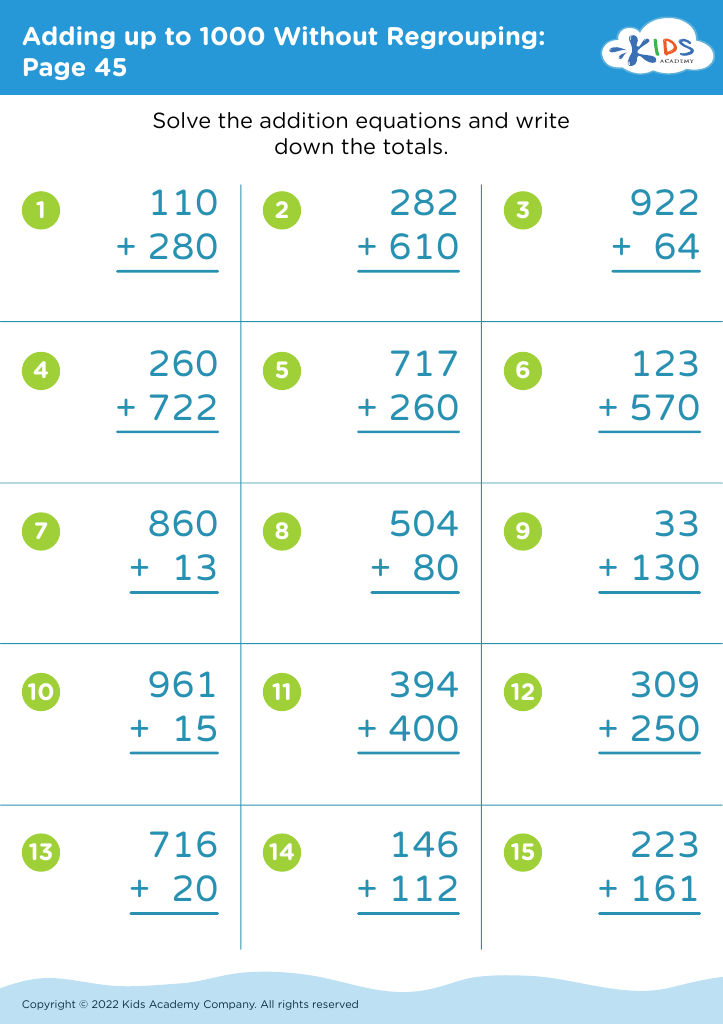








Understanding division and addition is crucial for children aged 6-8 as it forms the foundation for more advanced mathematical concepts. At this age, children are developing their critical thinking and problem-solving skills, and a strong grasp of these basic operations supports cognitive growth.
First, mastery of addition helps children comprehend the concept of grouping, which is vital for understanding division later on. When they see how numbers can be combined and separated, they begin to appreciate the relationships between quantities. For instance, knowing that 12 can be achieved through 4 + 4 + 4 lays the groundwork for understanding how to split 12 into 3 equal groups of 4.
Second, multiplication and division are often seen as the "inverse" operations of addition and subtraction. By fostering a deep understanding of addition, children can easily transition to division principles. This transition can prevent future mathematics anxieties and difficulties.
Moreover, strong foundational skills in addition and division promote confidence. When kids can quickly solve basic problems, they are more likely to engage with higher-level math positively. Ultimately, helping children understand these concepts enhances their academic performance and cultivates a lifelong appreciation for mathematics.








