Understanding patterns Addition Worksheets for Ages 6-8 - Page 2
29 filtered results
-
From - To
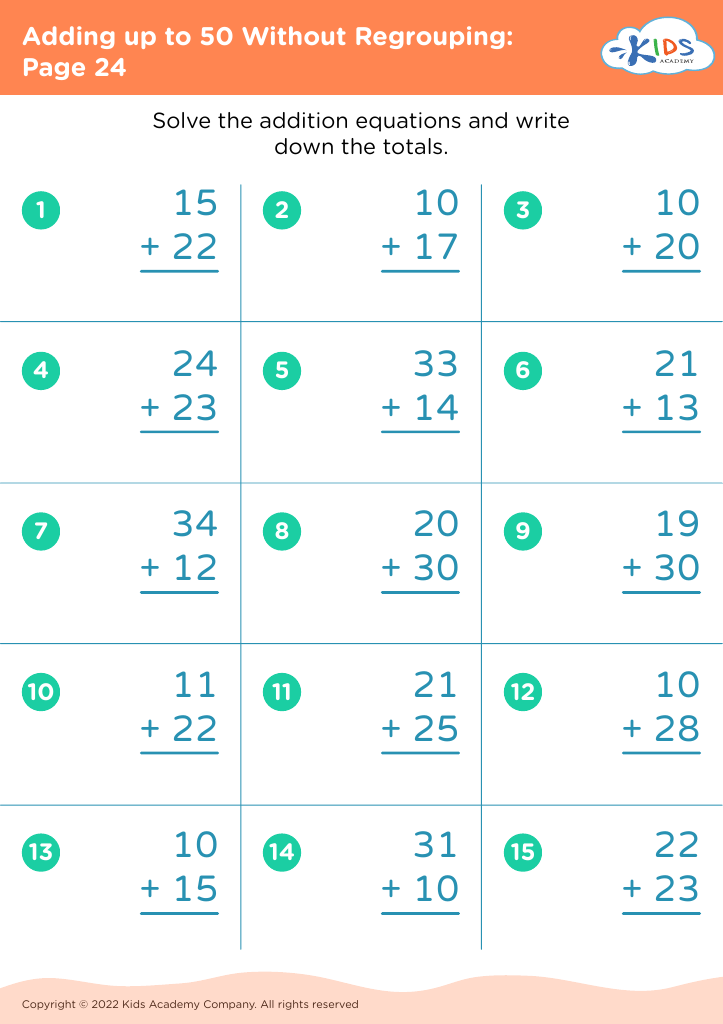
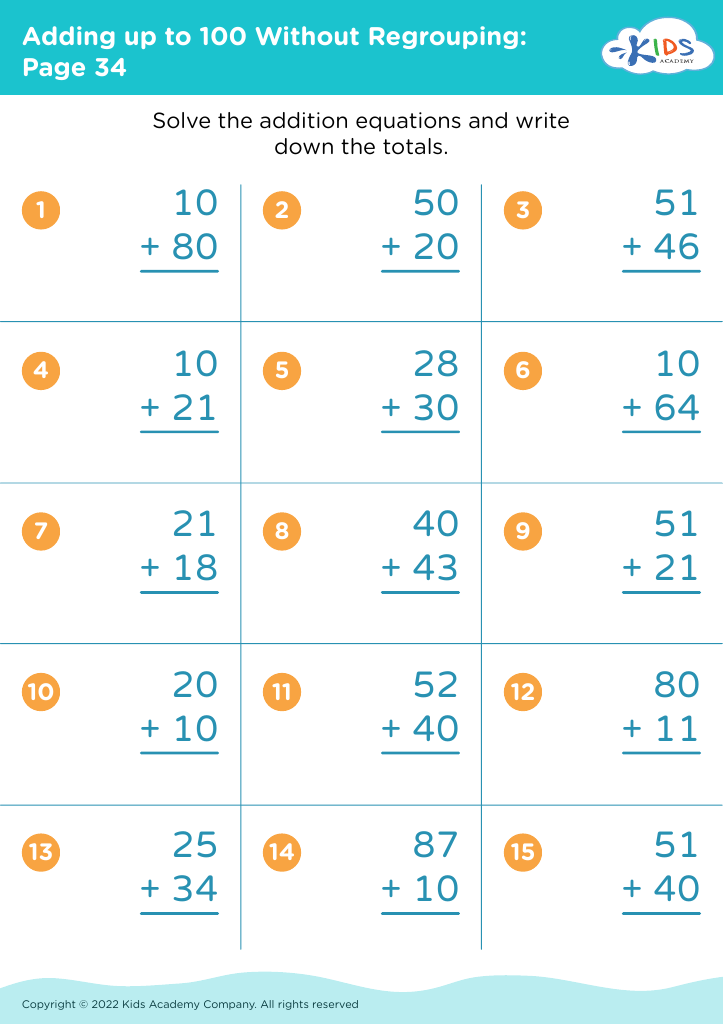
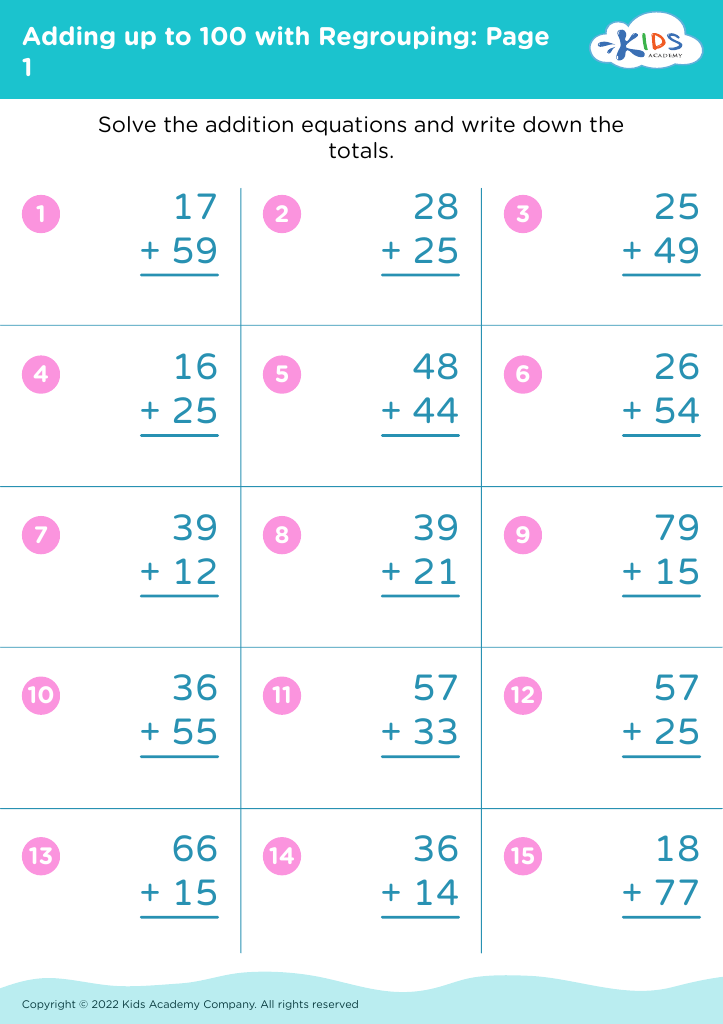
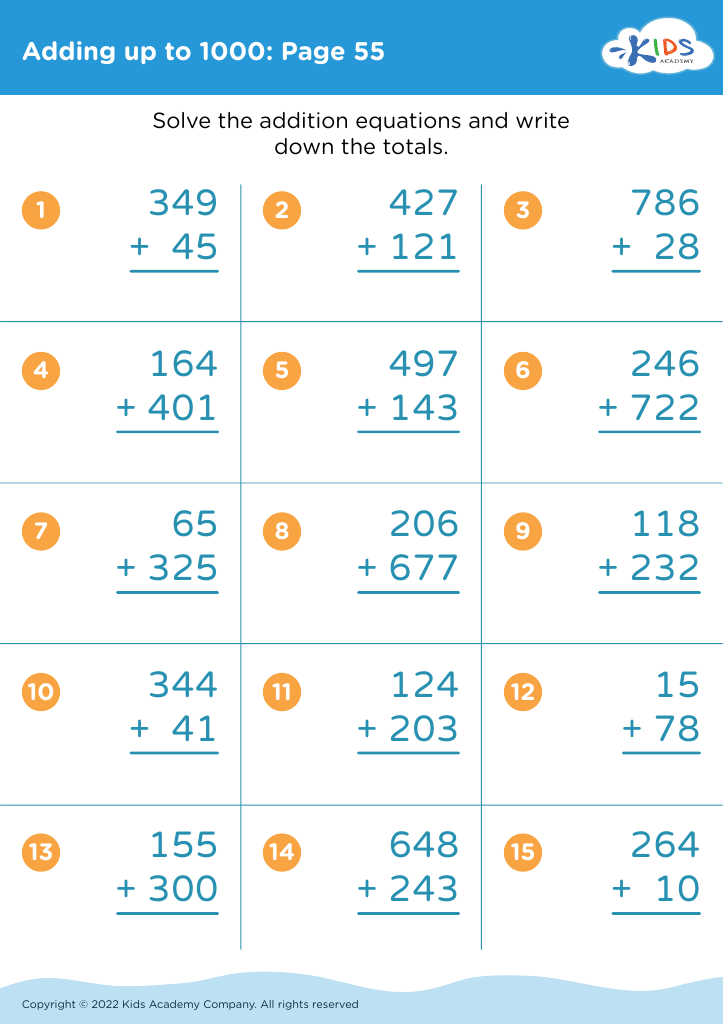
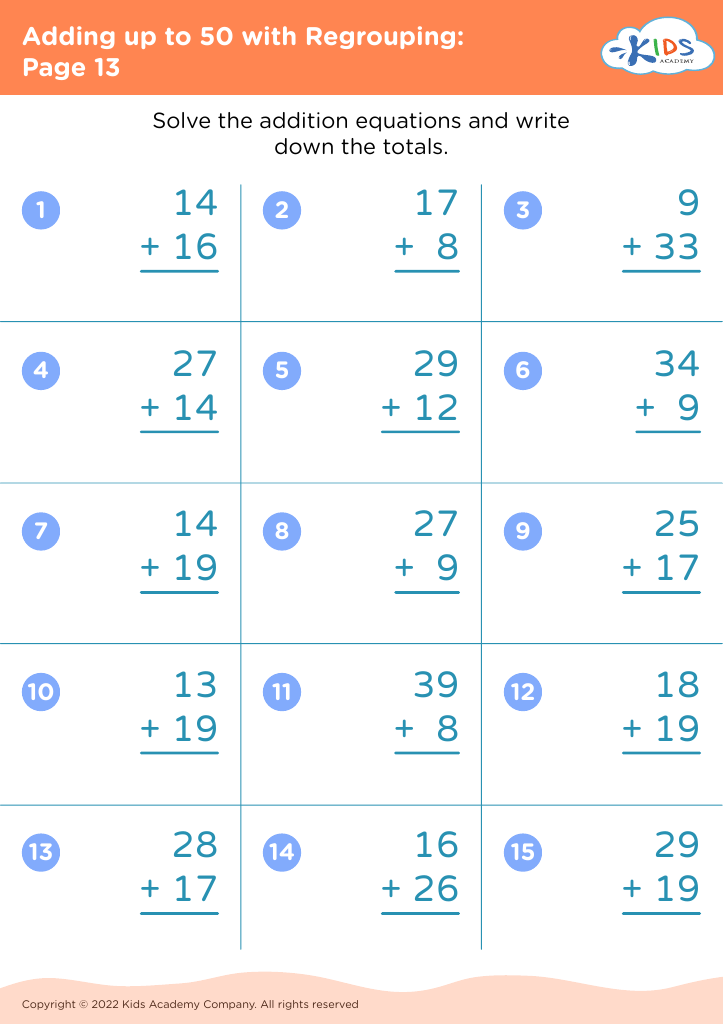








Understanding patterns in addition for ages 6-8 is crucial for several developmental reasons, which significantly impact both academic and everyday life skills. At this age, children are developing foundational cognitive abilities, and recognizing patterns is one of the key skills aiding in this crucial process.
Firstly, pattern recognition in addition helps children to grasp mathematical concepts more easily. When kids understand that 1 + 1 equals 2 and see this repeatedly, it forms a pattern in their minds, making them more comfortable with numbers and operations. This foundational knowledge greatly aids in future math learning, providing the groundwork for more complex operations like multiplication and division.
Additionally, learning to recognize and predict patterns enhances problem-solving abilities. It teaches children logical thinking, which is not only essential for mathematics but also for reading, science, and even social behavior. For example, understanding patterns in stories helps with reading comprehension and predicting outcomes, while recognizing patterns in the classroom environment aids in following rules and routines.
Moreover, linearly progressing through addition patterns builds a child's confidence. When they can predict what comes next, they feel more secure in their knowledge and skills. This self-assurance spills over into other areas of learning and social interaction, encouraging a positive attitude toward education in general.
By focusing on pattern recognition, parents and teachers nurture a holistic set of cognitive and emotional skills in children, paving the way for their ongoing academic success and personal development.








