Understanding sequence Addition Worksheets for Ages 6-8
4 filtered results
-
From - To
Explore our comprehensive "Understanding Sequence Addition Worksheets" designed for children ages 6-8! These engaging worksheets help young learners grasp the concept of addition through sequences, enhancing their mathematical skills in a fun and interactive way. By following number patterns and filling in missing values, kids will develop critical thinking and problem-solving abilities. Our carefully crafted activities cater to different learning styles and proficiency levels, ensuring every child can thrive in math. Perfect for at-home learning or classroom use, these worksheets make mastering addition fun and effective, laying a solid foundation for future math success. Start your child's learning journey today!
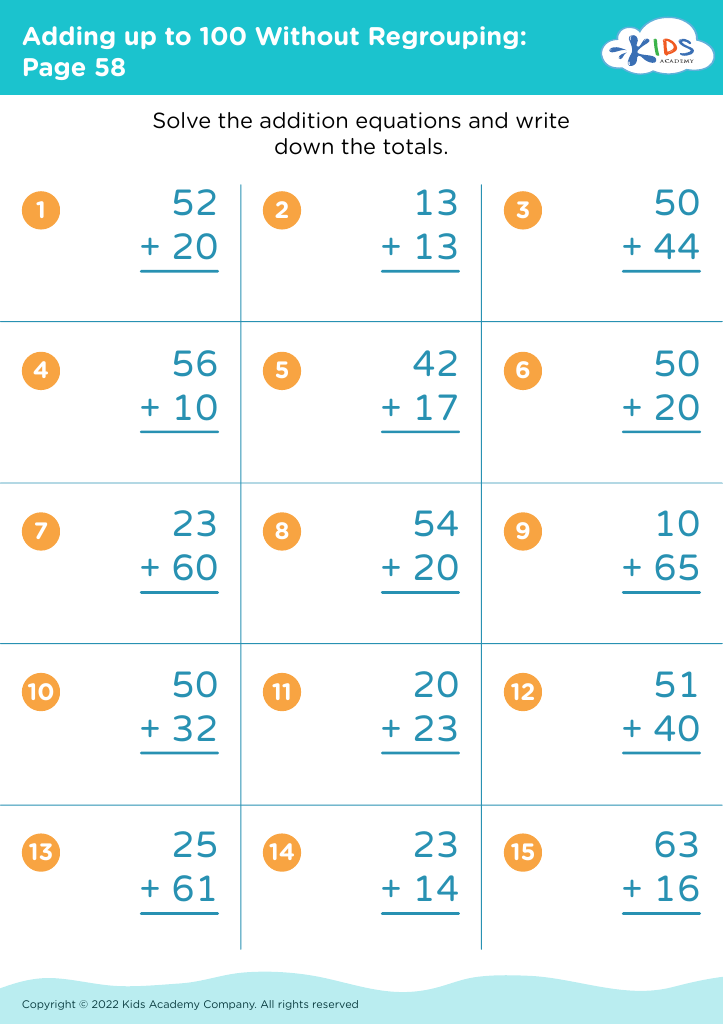
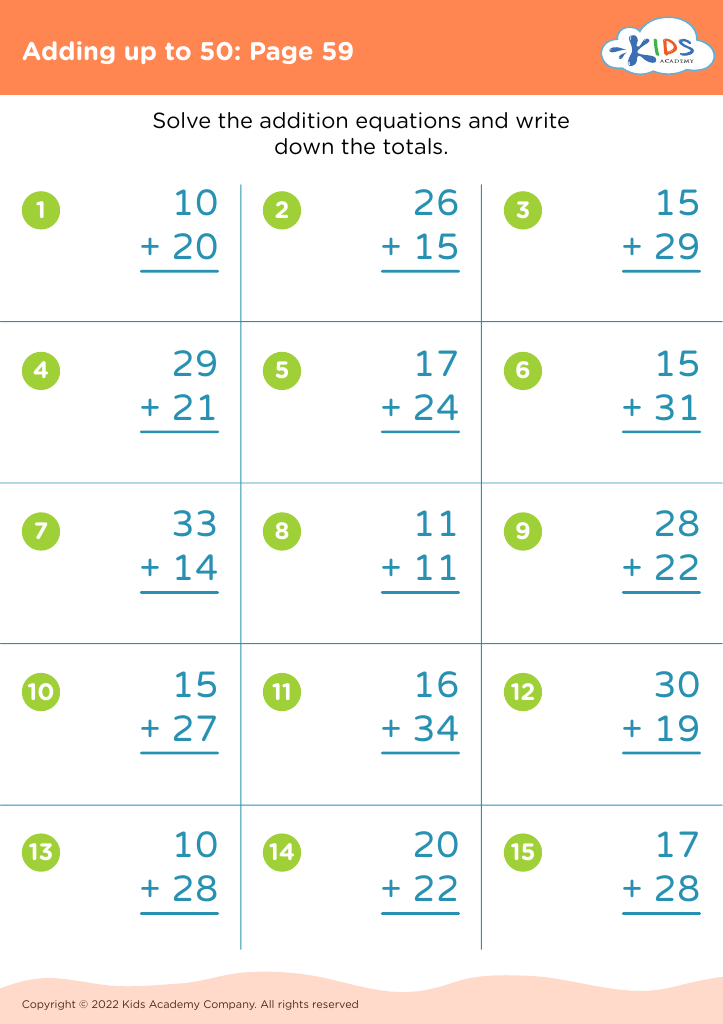
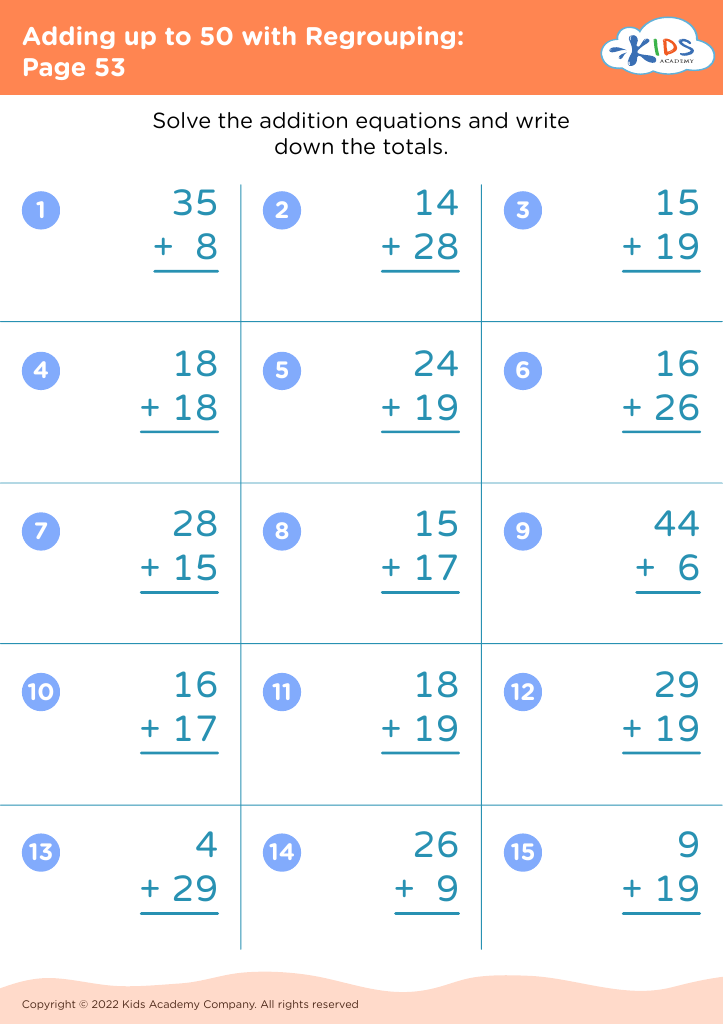
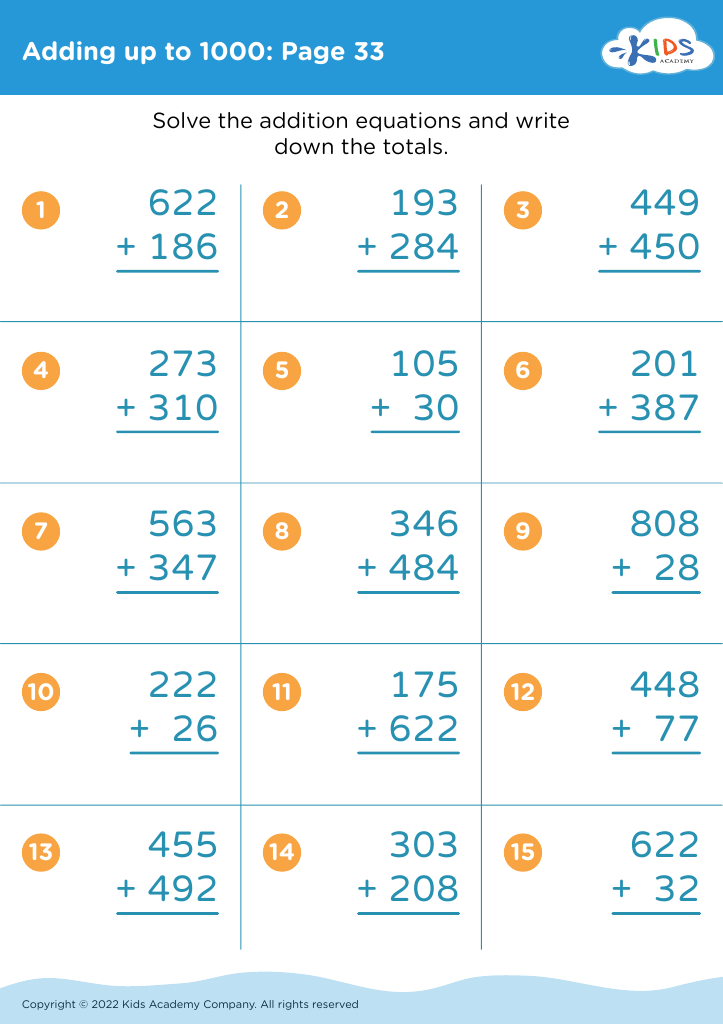








Understanding sequence addition is crucial for children aged 6-8 as it lays the foundation for their mathematical literacy. During these formative years, children are transitioning from basic number recognition to more complex arithmetic concepts. Sequence addition helps them grasp the idea of combining numbers in a systematic way, reinforcing their understanding of addition as both a mathematical operation and a real-world skill.
When parents and teachers focus on sequence addition, they enhance children's problem-solving abilities. Kids learn to identify patterns and use strategies in mental math—skills that are vital for future mathematical concepts such as subtraction, multiplication, and division. Furthermore, understanding sequences sets the stage for more advanced topics like algebra later on.
Engaging children in sequence addition through games, story problems, or creative activities makes learning fun. It encourages cooperative learning, allowing them to share strategies and techniques with peers. Ultimately, fostering a solid understanding of sequence addition empowers children to become confident learners, equipping them with essential skills they will use throughout their academic careers and everyday lives. In short, prioritizing sequence addition enables children to develop a strong mathematical foundation that supports their overall cognitive development.








