Visual Learning Addition Worksheets for Ages 6-8
3 filtered results
-
From - To
Boost your child's math skills with our vibrant Visual Learning Addition Worksheets designed for ages 6-8. These engaging, printable worksheets from Kids Academy incorporate visual aids and fun illustrations to make learning addition an enjoyable experience. Ideal for first and second graders, each worksheet fosters foundational math skills using visual cues that help young learners understand and master addition concepts. Perfect for classroom or home use, these resources support practice and reinforce learning through colorful, interactive activities. Elevate your child's confidence in math by diving into these expertly crafted worksheets today!
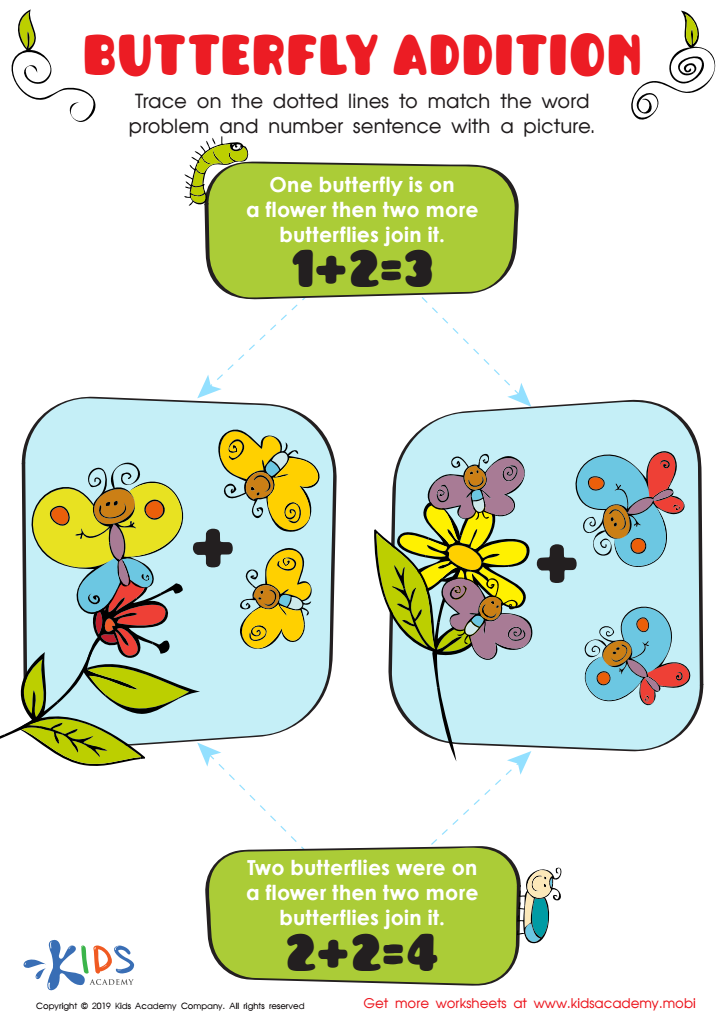
Butterfly Addition Worksheet
 Assign to My Students
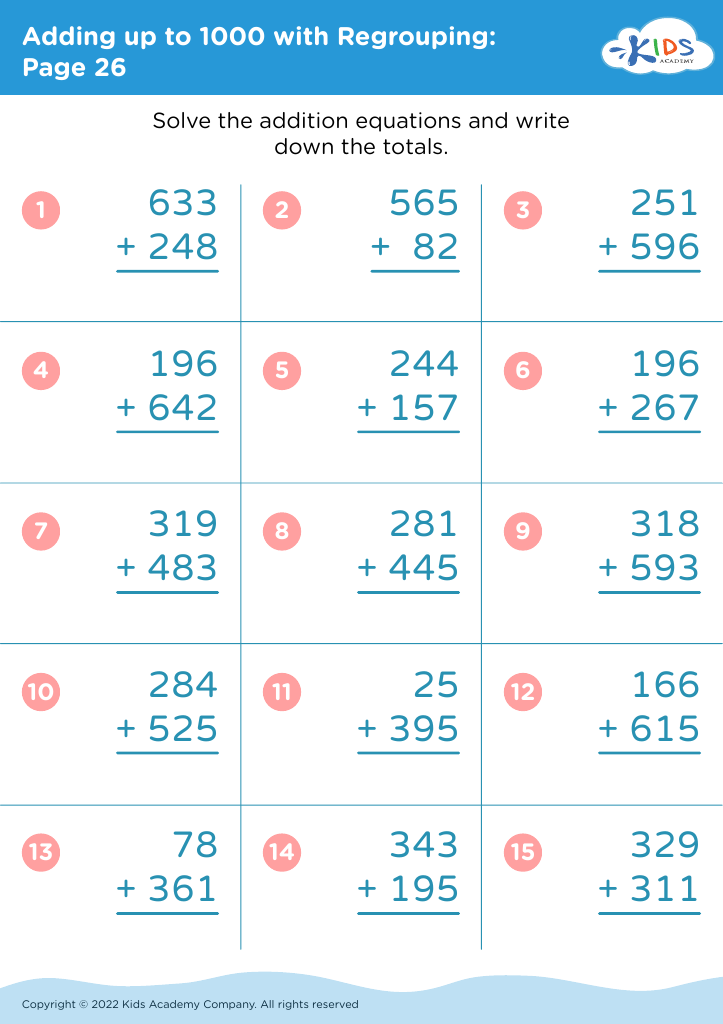
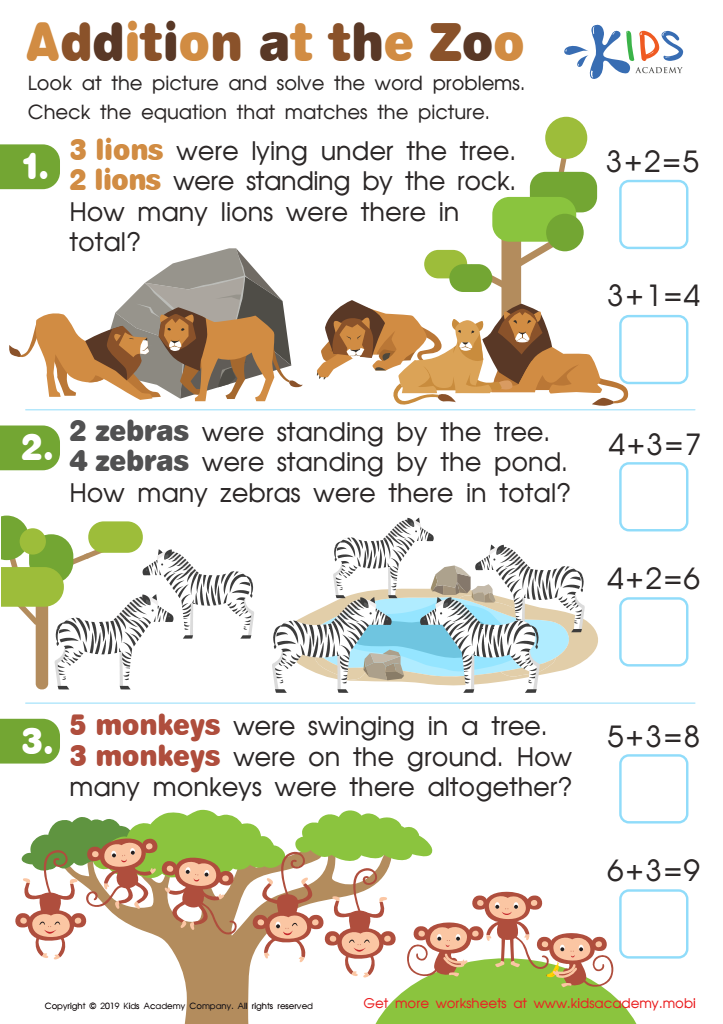
Addition at the Zoo Worksheet








Visual learning, particularly for addition, is crucial for children ages 6-8, as it leverages their developmental stage, where concrete visual aids significantly enhance understanding. At this age, children are transitioning from mere recognition of numbers to internalizing what these quantities mean and how they interact. Using visual tools like number lines, counters, and pictorial representations makes abstract concepts tangible.
Visual aids improve engagement and motivation. Children are naturally curious and are drawn to bright, colorful, and interactive materials, making the learning process enjoyable and stimulating. Furthermore, visual methods provide clarity and reduce confusion. For instance, a child can see the actual joining of groups of objects to grasp addition rather than just trying to memorize facts.
This approach caters to diverse learning styles, particularly benefiting visual and kinesthetic learners who may struggle with traditional rote memorization. Visual learning also fosters critical thinking and problem-solving skills by allowing children to manipulate and explore numbers in multiple ways, thus building a strong foundational understanding.
Moreover, early success in math can boost a child's confidence and encourage a positive attitude towards future learning. By supporting visual learning tools, parents and teachers set children on a path to mathematical proficiency and broader academic success, fostering skills that are vital for future education and everyday life.








