Visual representation comprehension Addition Worksheets for Ages 6-8
5 filtered results
-
From - To
Discover engaging addition worksheets designed specifically for children ages 6-8 to enhance their visual representation comprehension skills. Our interactive resources allow young learners to understand and solve addition problems using colorful diagrams, pictures, and graphs. These carefully crafted worksheets support kids in visualizing mathematical concepts, making it easier for them to grasp the fundamentals of addition. Every exercise provides a fun and educational experience, encouraging independent learning and boosting their confidence in math. Perfect for at-home learning or classroom use, these worksheets ensure children develop strong, foundational skills in arithmetic through engaging visual presentations.
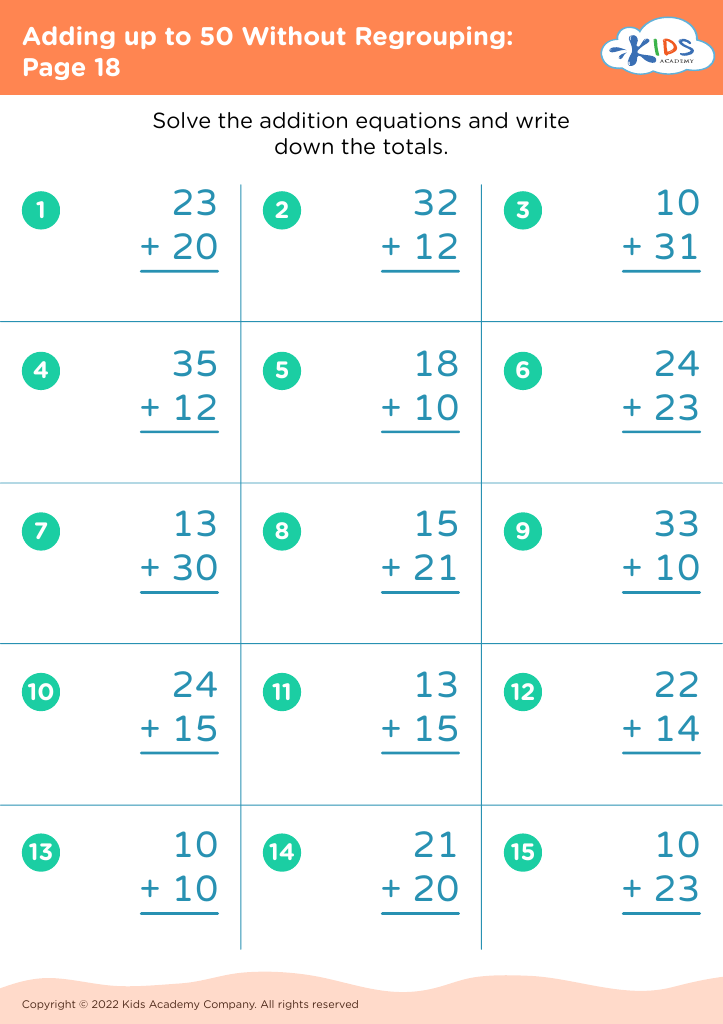
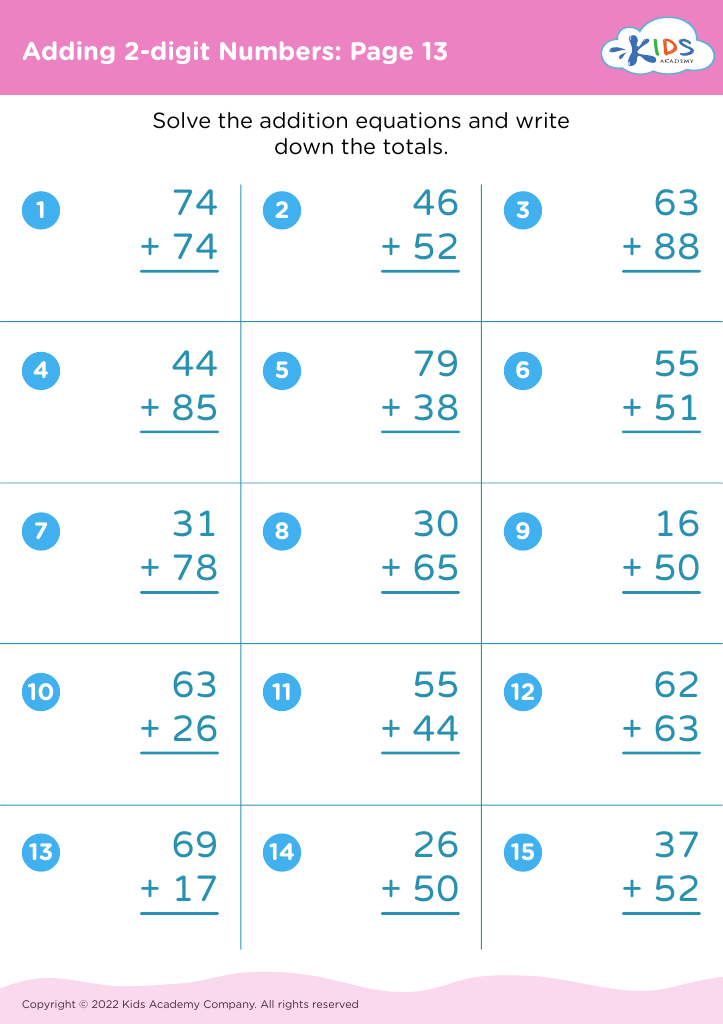
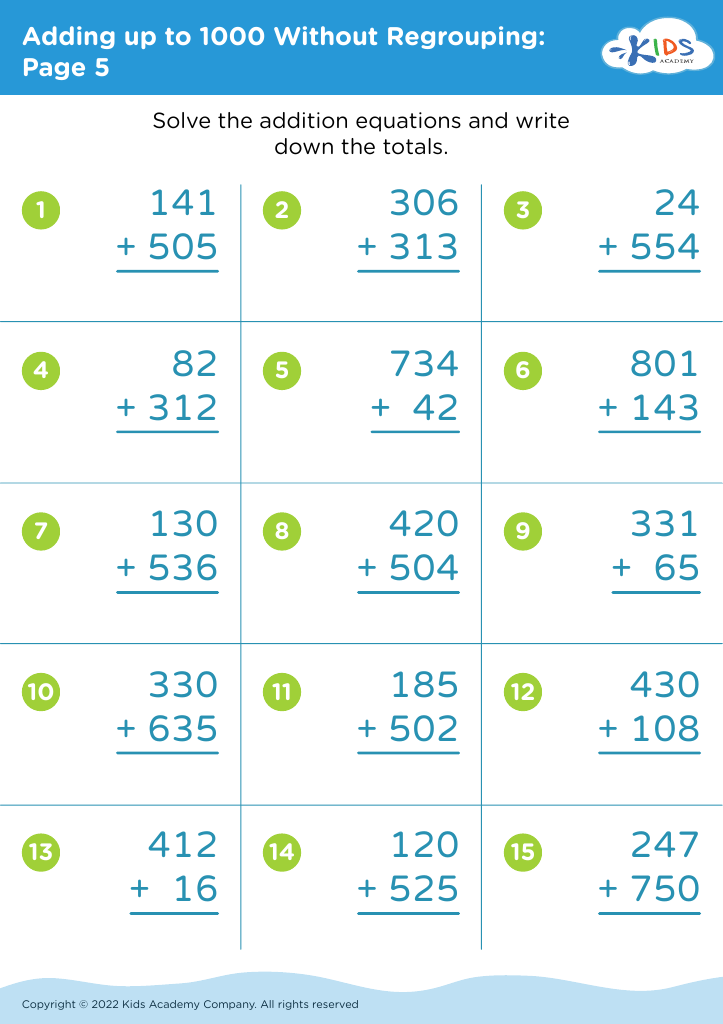
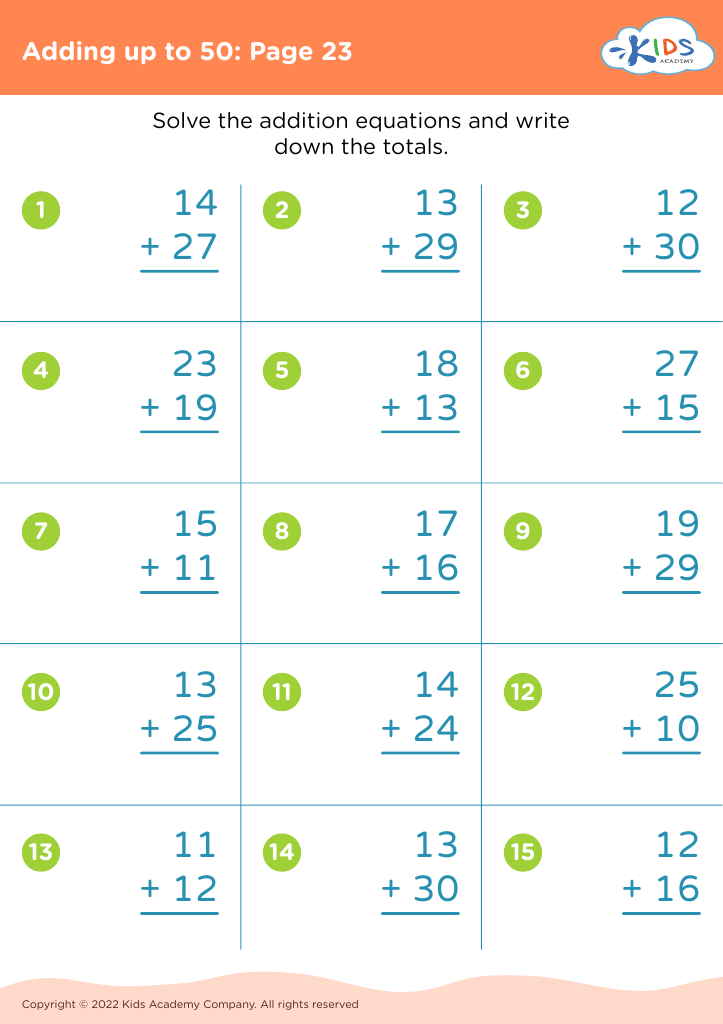
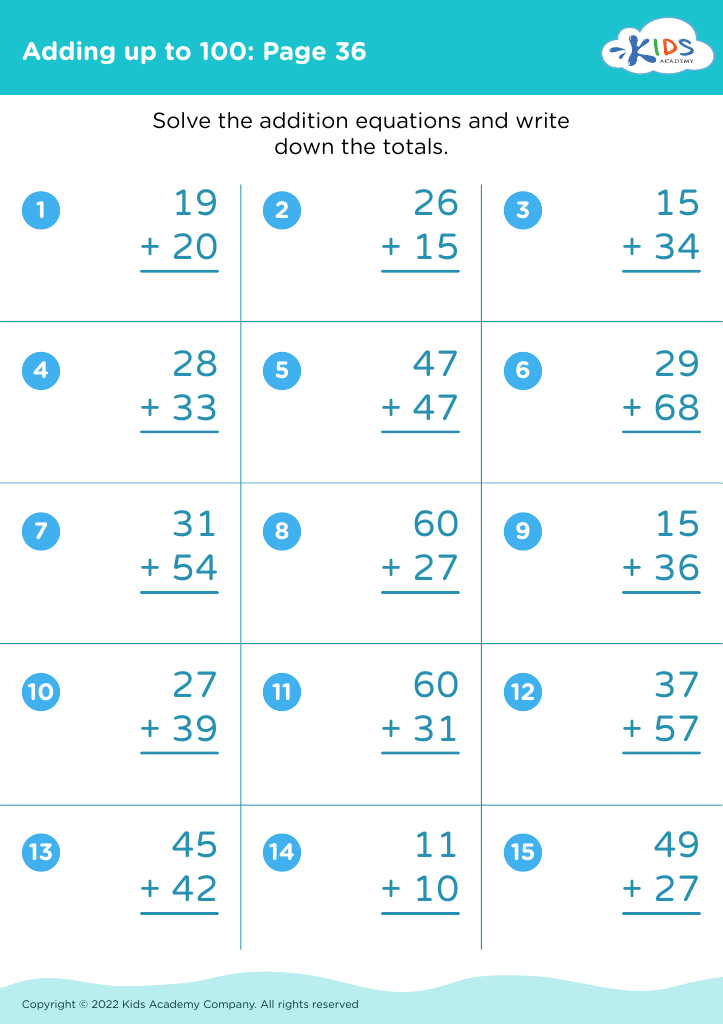








Children ages 6-8 are at a crucial developmental stage where they build foundational math skills, and comprehension of visual representations in addition greatly aids this process. Visual tools, like number lines, counters, and charts, translate abstract numerical concepts into concrete, understandable images. This visual interaction promotes a more intuitive grasp of how addition works.
For parents and teachers, investing in this method means fostering a more inclusive learning environment. Every child learns differently—while some might thrive on numerical practice alone, others understand better through visual stimuli. By incorporating visual aids, educators address various learning styles, making math accessible and fun for all students.
Furthermore, visual representations encourage critical thinking and problem-solving skills. When children manipulate visual aids to depict different addition scenarios, they not only reach correct solutions but also comprehend the rationale behind the answers. This deepens number sense, essential for future arithmetic and advanced math concepts.
Lastly, visually-presented addition problems can foster enthusiasm and engagement in young learners. Interactive activities involving colorful objects or digital tools capture their interest more than plain numbers, encouraging sustained focus and a positive attitude towards math. Ultimately, this builds a strong mathematical foundation, preparing children for more complex problem-solving tasks in later grades.








