
Historical Knowledge Arrays Worksheets for Ages 6-8
4 filtered results
Difficulty Level
Grade
Age
-
From - To
Subject
Activity
Standards
Enhance your child's learning with our "Historical Knowledge Arrays Worksheets" designed for ages 6-8! These engaging worksheets incorporate historical themes to teach counting, grouping, and array concepts. By connecting math with rich historical content, kids will not only develop essential math skills but also discover interesting facts about the past. Perfect for both classroom activities and home learning, these worksheets make learning enjoyable and informative. Explore the fantastic world of arrays while sparking curiosity about significant historical events and figures. Download our worksheets today to inspire a love for math and history in your young learners!
Favorites
With answer key
Interactive
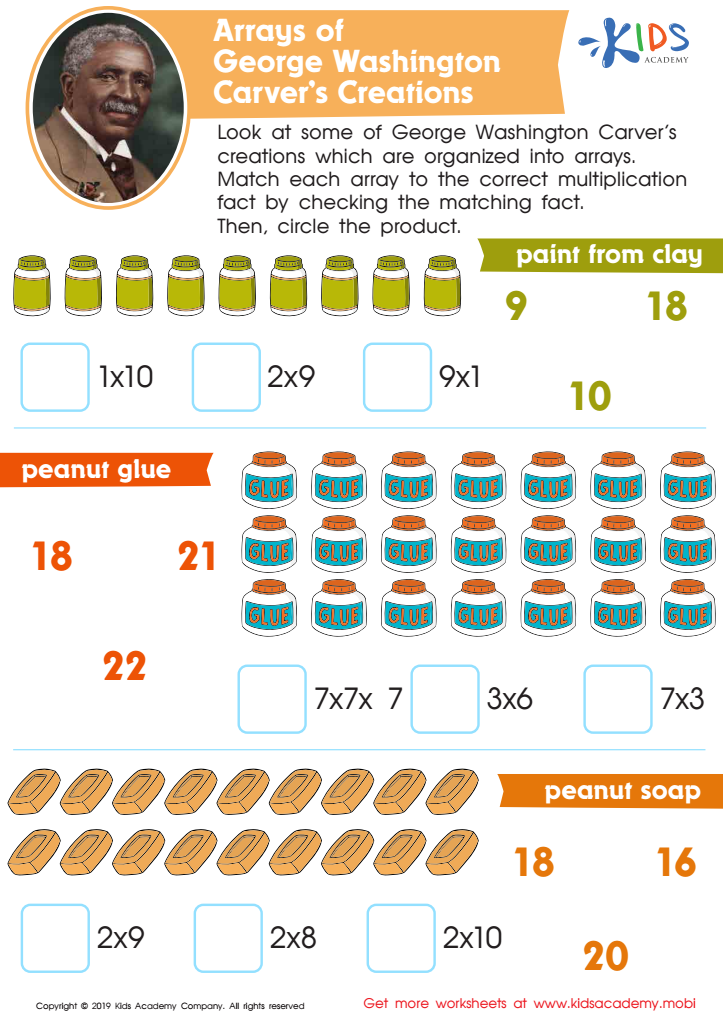
Arrays of George Washington Carver’s Creations Worksheet
Remind your child of what George Washington Carver created. Can they tell you? This worksheet has arrays with his creations. Match the array to the multiplication fact and help your child to circle the product.
 Assign to My Students
Arrays of George Washington Carver’s Creations Worksheet
Worksheet
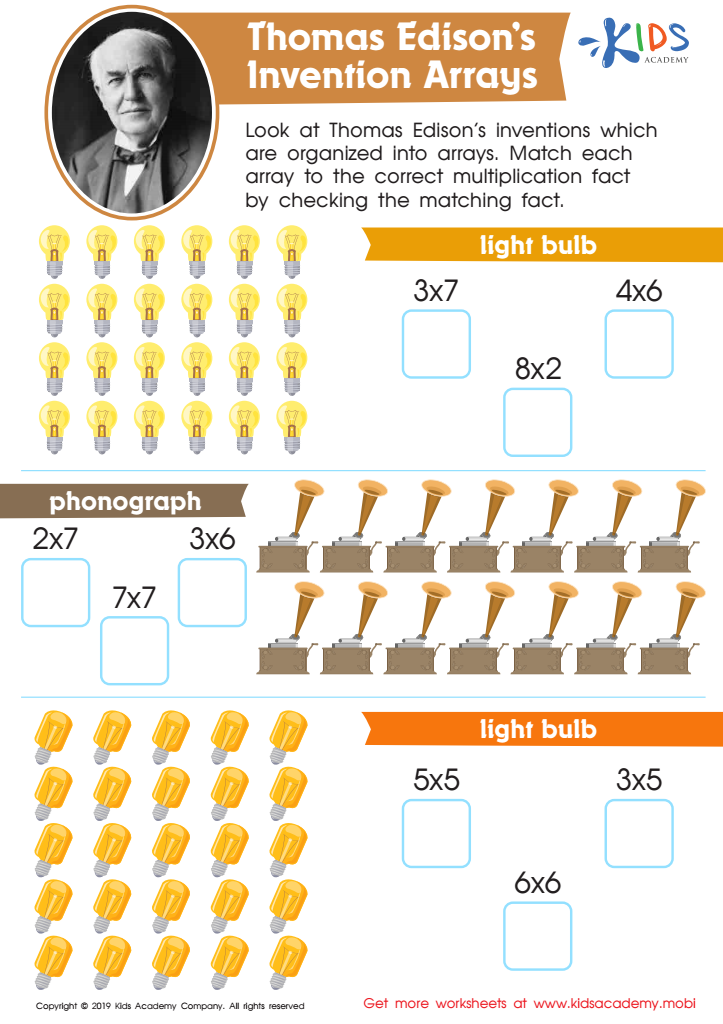
Thomas Edison’s Invention Arrays Worksheet
Test your students' knowledge on history by asking them what Thomas Edison invented. If they get the right answer, provide more information on other inventors. Check out this printout of Edison's light bulb inventions laid out in arrays. Get them to match each array to the correct multiplication fact.
Thomas Edison’s Invention Arrays Worksheet
Worksheet
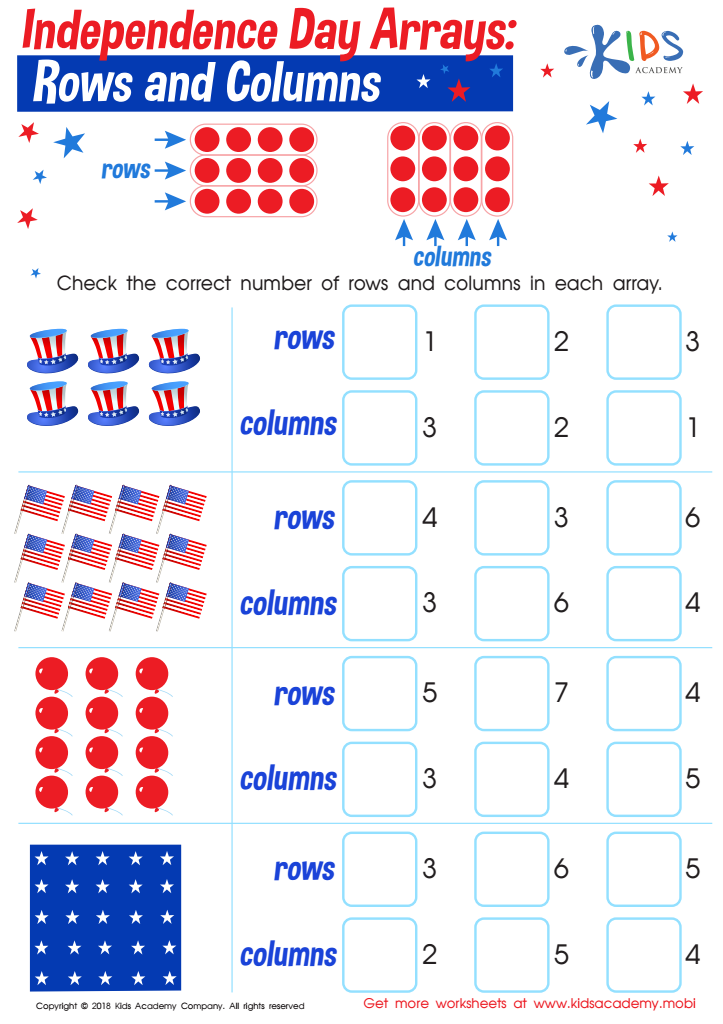
Independence Day Arrays: Rows and Columns Worksheet
Does your child know when Independence Day is? They might love the family picnics and fireworks, or they may not understand the significance of the holiday. After this worksheet, they'll comprehend it better. Help them look at the images and count the number of rows and columns in each array.
Independence Day Arrays: Rows and Columns Worksheet
Worksheet
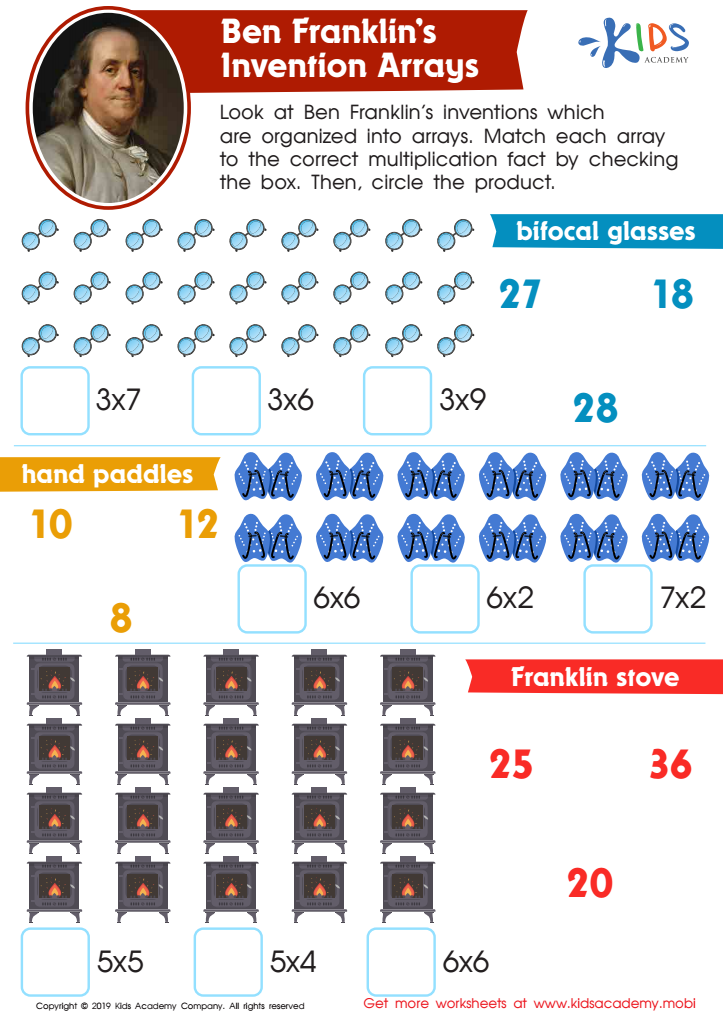
Ben Franklin’s Invention Arrays Worksheet
Have your child guess some of the inventors of the popular items we use today. For instance, the light bulb was invented by Thomas Edison. Look at Ben Franklin's inventions and help your kids match the arrays to the correct multiplication fact. Check the box and circle the product.
Ben Franklin’s Invention Arrays Worksheet
Worksheet
Join Kids Academy for Free
Who is primarily going to use this learning content?








Historical Knowledge Arrays (HKAs) are vital tools for young learners, particularly those aged 6-8, as they help to structure and simplify complex historical concepts into accessible formats. Parents and teachers should care about HKAs because they foster a foundational understanding of history at an impressionable age, promoting critical thinking and context recognition. By organizing historical facts, events, and figures into more digestible arrays, children can better grasp timelines and relationships between different historical phenomena.
Engaging with HKAs also nurtures cognitive skills such as memory, categorization, and synthesis, as children learn to connect various historical threads. This structured approach encourages children to ask questions and foster a sense of curiosity about the past. Furthermore, instilling historical awareness at an early age empowers children to comprehend contemporary issues through the lens of history, cultivating informed decision-making and citizenship in their future.
Moreover, research indicates that early historical knowledge is linked to improved literacy and communication skills. By utilizing HKAs in their curriculum, educators and parents can create a rich learning environment, preparing children not only to understand their past but also to engage thoughtfully with the world around them. This foundational knowledge is essential in shaping well-rounded and socially-conscious future generations.








