Reading comprehension Arrays Worksheets for Ages 6-8
5 filtered results
-
From - To
Explore our engaging Reading Comprehension Arrays Worksheets designed specifically for children ages 6-8! These interactive resources help young learners develop vital reading and critical thinking skills through the use of visual arrays. Each worksheet combines fun visuals with simple text, prompting students to analyze arrays and answer comprehension questions effectively. Perfect for classroom or home learning, these worksheets support foundational literacy and mathematical concepts, fostering confidence in reading and understanding. Encourage your child’s love for learning while enhancing their comprehension abilities! Start your journey to reading success today with our fun, educational worksheets tailored to young readers.
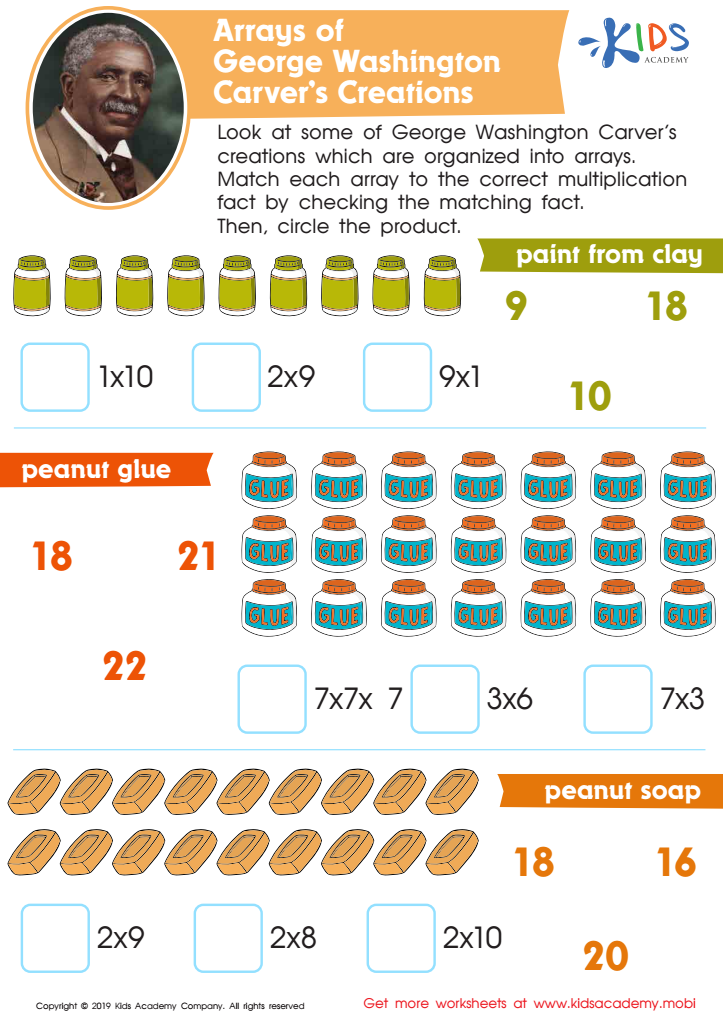
Arrays of George Washington Carver’s Creations Worksheet
 Assign to My Students
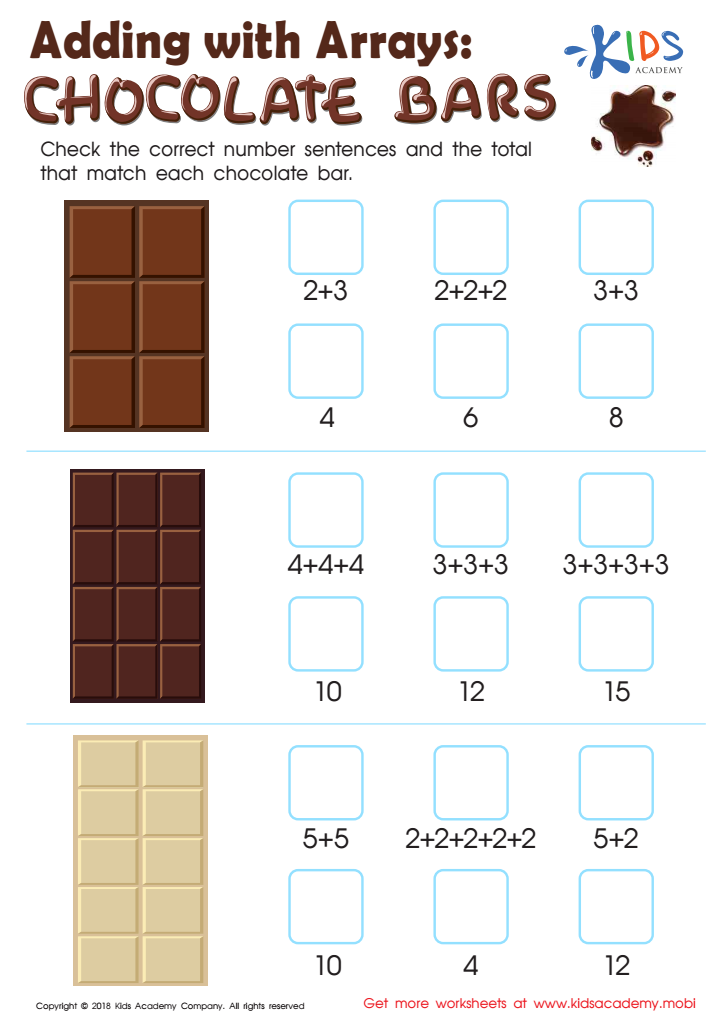
Adding with Arrays: Chocolate Bars Worksheet
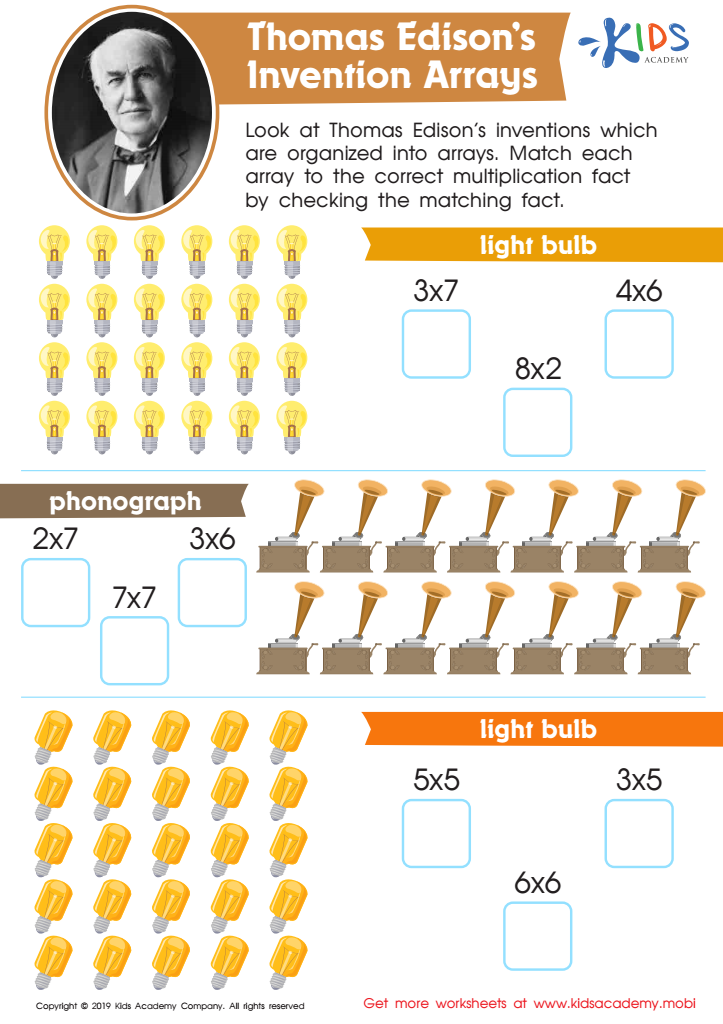
Thomas Edison’s Invention Arrays Worksheet
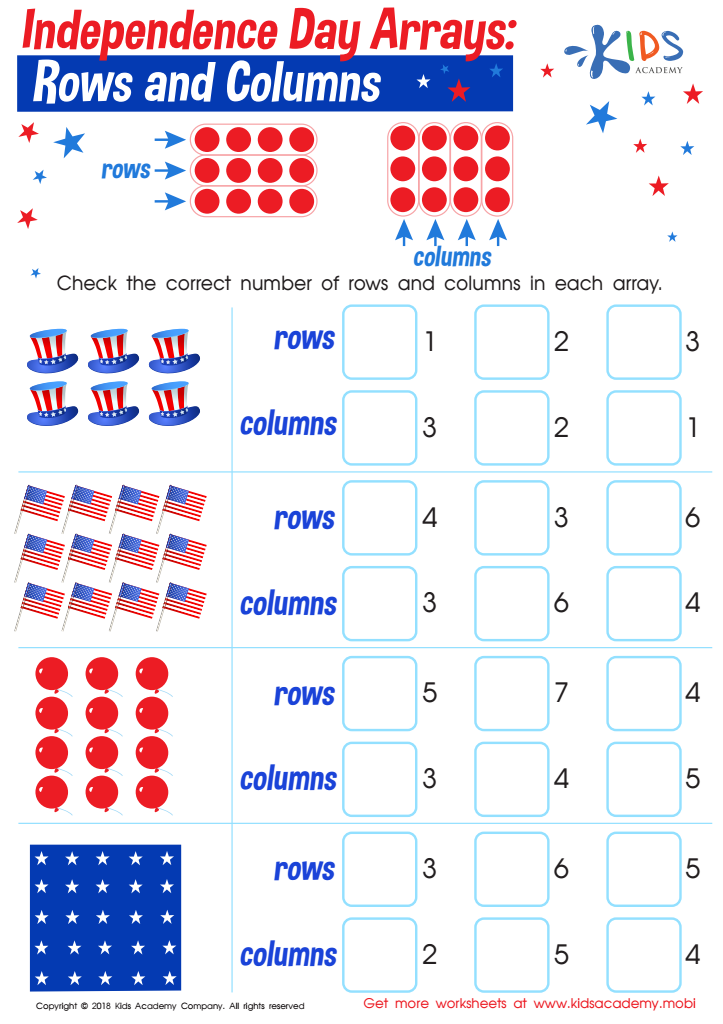
Independence Day Arrays: Rows and Columns Worksheet
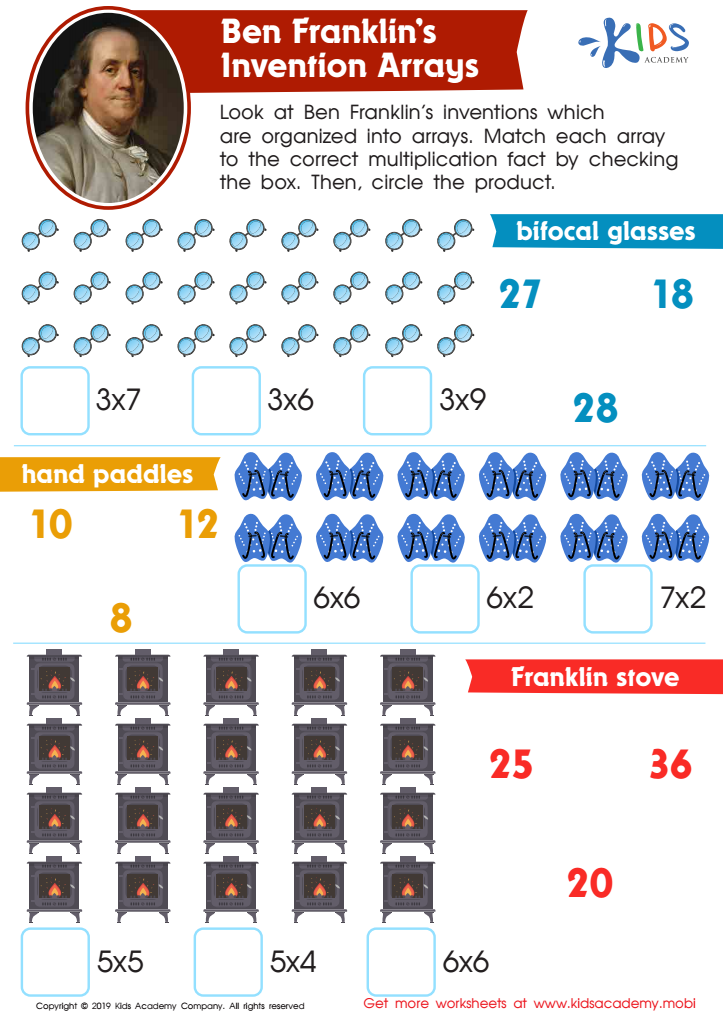
Ben Franklin’s Invention Arrays Worksheet








Reading comprehension arrays for ages 6-8 are vital tools for helping children enhance their understanding of texts. At this developmental stage, children typically begin to transition from learning to read to reading to learn. Reading comprehension arrays support this journey by providing structured methods to dissect and analyze texts, enabling students to grasp main ideas, identify supporting details, and recognize the relationships between concepts.
Parents and teachers should care about these arrays because they foster critical thinking skills and encourage interactive reading experiences. By breaking texts into manageable segments, children can better focus on understanding content, which in turn builds confidence and fosters a love for reading. Additionally, early proficiency in reading comprehension sets a strong foundation for success in future academic endeavors, influencing performance across all subjects.
Integrating comprehension strategies not only aids in retention and recall but also nurtures a child's ability to engage with literature at a deeper level. As children learn to articulate their thoughts and ask questions about what they read, they develop essential communication skills. Thus, implementing comprehension arrays is crucial for effectively guiding young learners toward becoming articulate, thoughtful readers. Parents and teachers play significant roles in this developmental journey, and their support is invaluable.








