Understanding patterns Basic Times Tables up to 12 Worksheets for Ages 6-8
3 filtered results
-
From - To
Dive into our "Understanding Patterns: Basic Times Tables up to 12" worksheets, perfect for children ages 6-8! These engaging and fun activities help young learners grasp the fundamentals of multiplication by recognizing patterns in times tables. Designed by educational experts, the worksheets provide a solid foundation for future math success. Easy-to-follow tasks, colorful illustrations, and interactive exercises ensure children stay motivated while enhancing their problem-solving skills. Suitable for classroom and home use, these worksheets support both independent learning and guided instruction. Empower your child to build confidence and mastery in basic times tables up to 12!
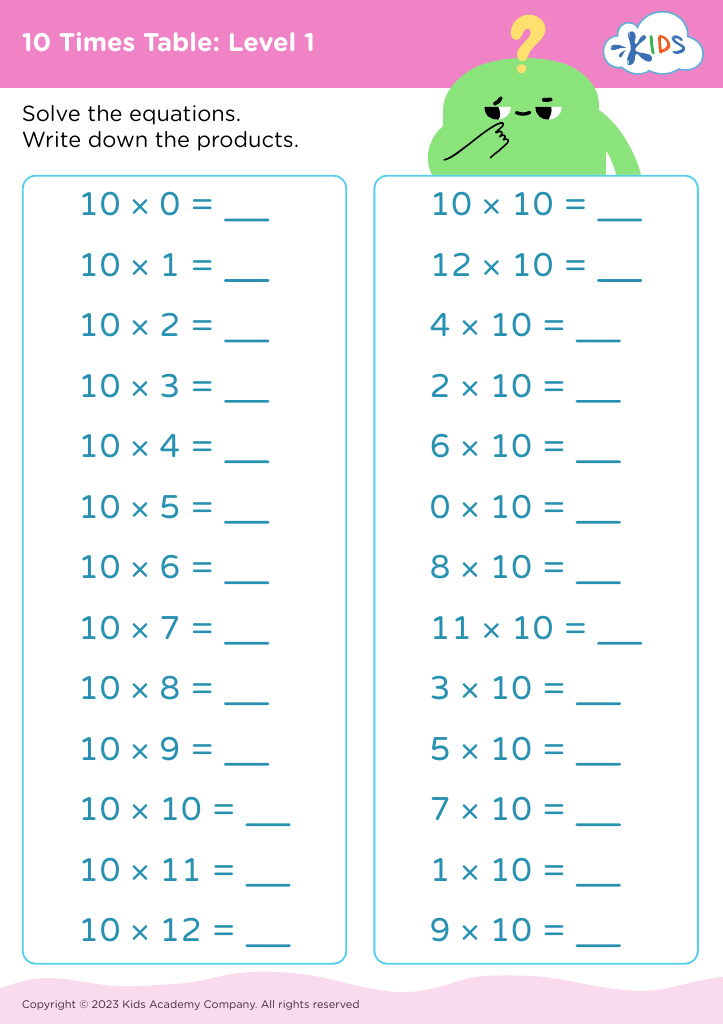
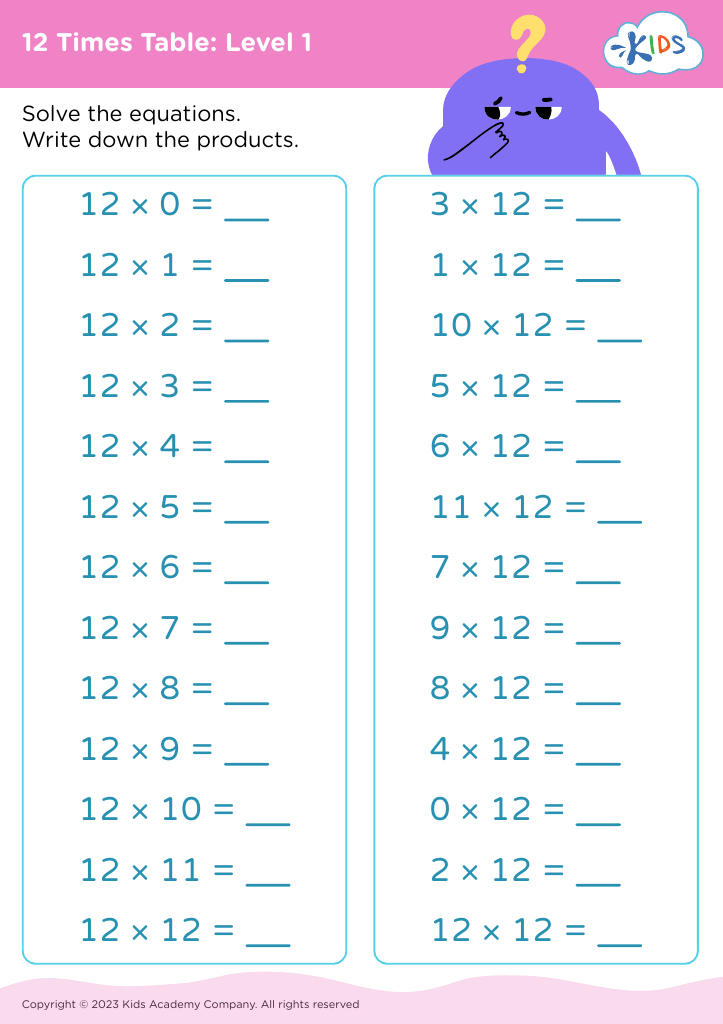
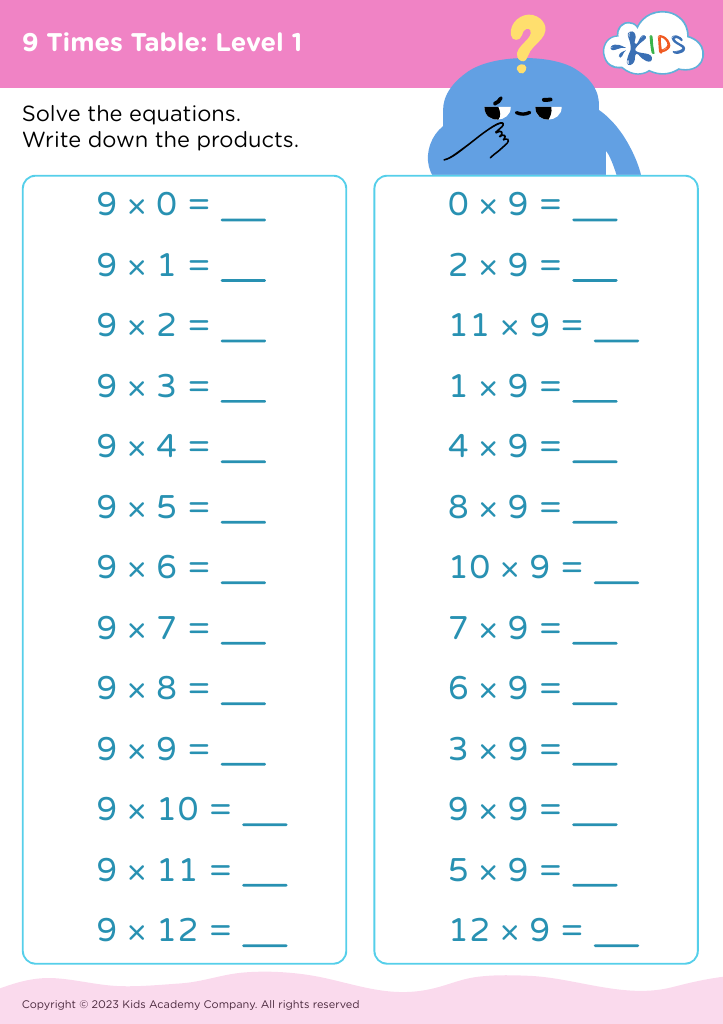


Understanding basic times tables and patterns is crucial for children between the ages of 6 and 8 for several reasons. Firstly, mastering times tables up to 12 establishes a strong mathematical foundation that is essential for more advanced arithmetic and problem-solving tasks. It helps children develop number sense and improves their ability to perform calculations quickly and accurately.
Secondly, recognizing patterns in times tables fosters logical thinking and critical reasoning skills. When children begin to see the relationships between numbers, such as noticing that multiplying by 2 always results in even numbers or recognizing the unique properties of multiples of 5, they start to develop important cognitive skills that transcend mathematics.
Moreover, these foundational skills boost confidence and reduce math anxiety. Children who have internalized basic multiplication facts can approach more complex problems with greater ease, leading to a more positive attitude towards math as a subject.
Lastly, real-world applications of multiplication abound. Whether managing money, cooking, or understanding time, a solid grasp of times tables aids children in everyday life tasks. Thus, for comprehensive cognitive development, practical life skills, and academic success, it is essential for parents and teachers to focus on helping young learners understand and memorize basic times tables through engaging methods and consistent practice.








