Fraction visualization Fractions of Shapes Worksheets for Ages 6-8
5 filtered results
-
From - To
Unlock the world of fractions for your child with our engaging "Fraction Visualization Fractions of Shapes Worksheets" designed for ages 6-8. Our expertly crafted worksheets make learning about fractions fun and interactive by using vibrant shapes and easy-to-follow exercises. Kids will master the skill of dividing various shapes into equal parts, enhancing their understanding of basic fraction concepts. Perfect for in-class activities or supplemental at-home practice, these worksheets build crucial math skills while keeping young learners engaged. Dive into the world of fractions with confidence and turn learning into a playful experience!
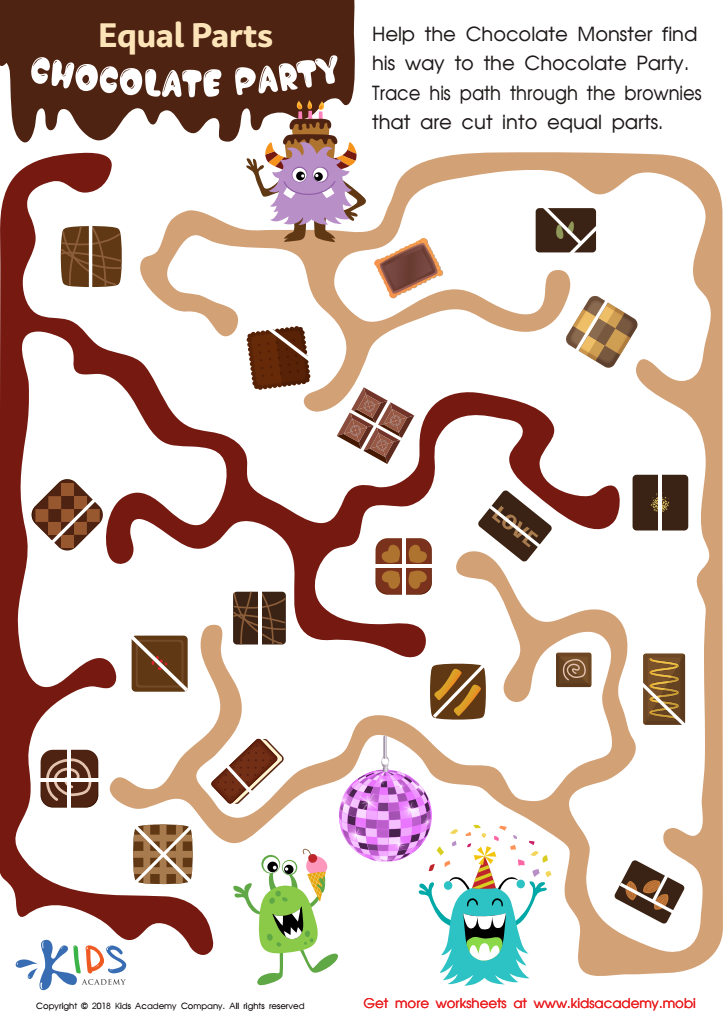
Equal Parts: Chocolate Party Worksheet
 Assign to My Students
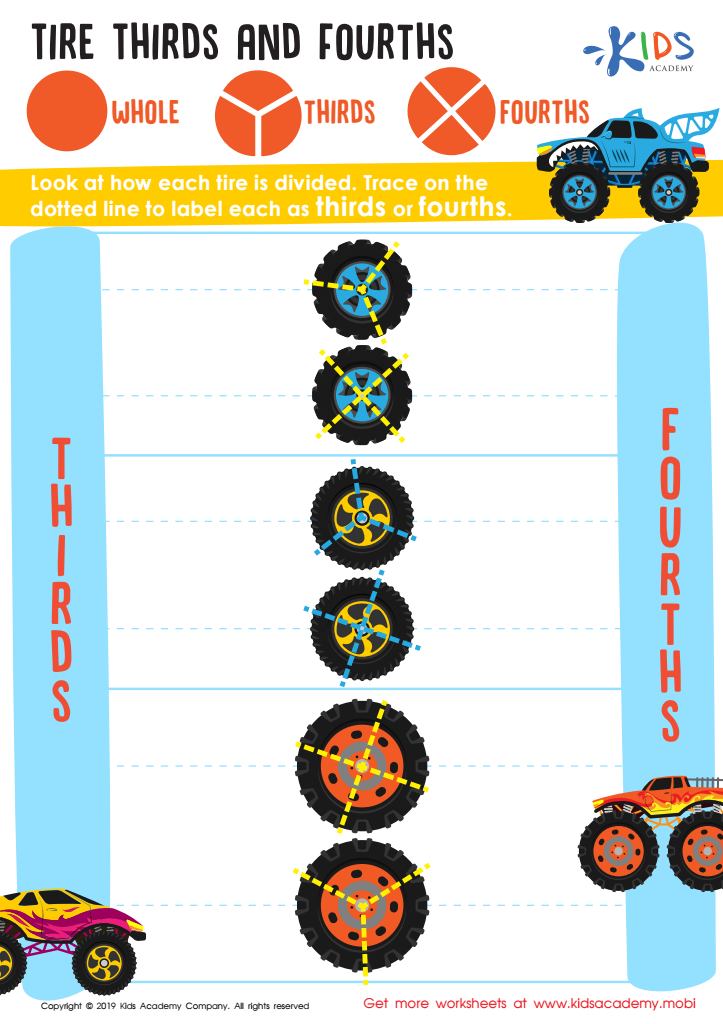
Tire Thirds and Fourths Worksheet
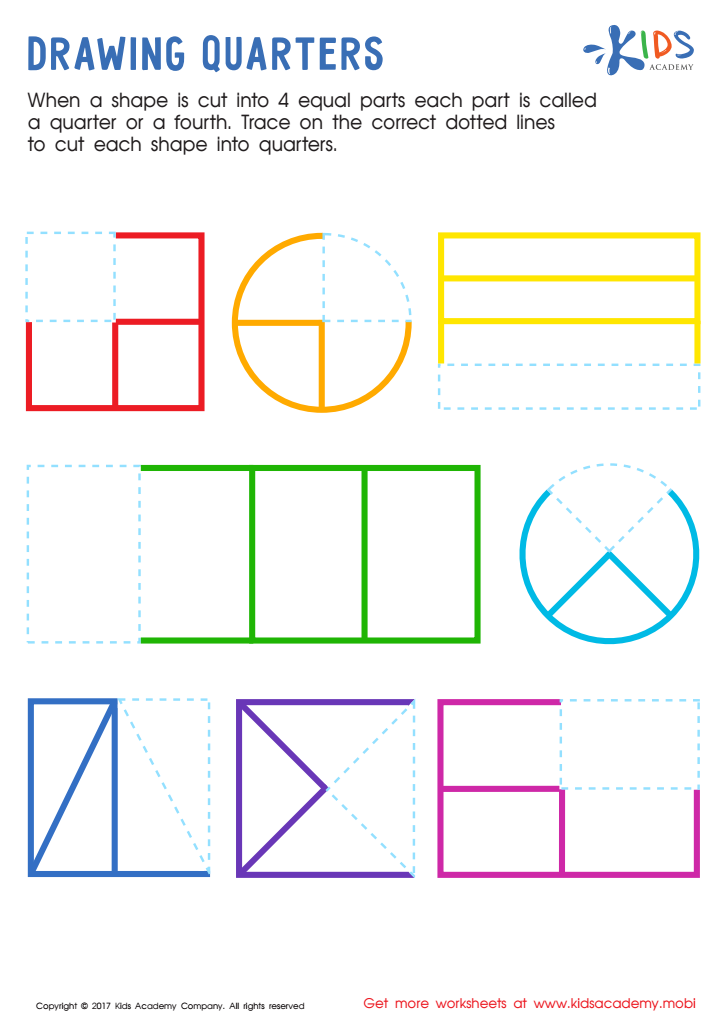
Drawing Quarters Worksheet
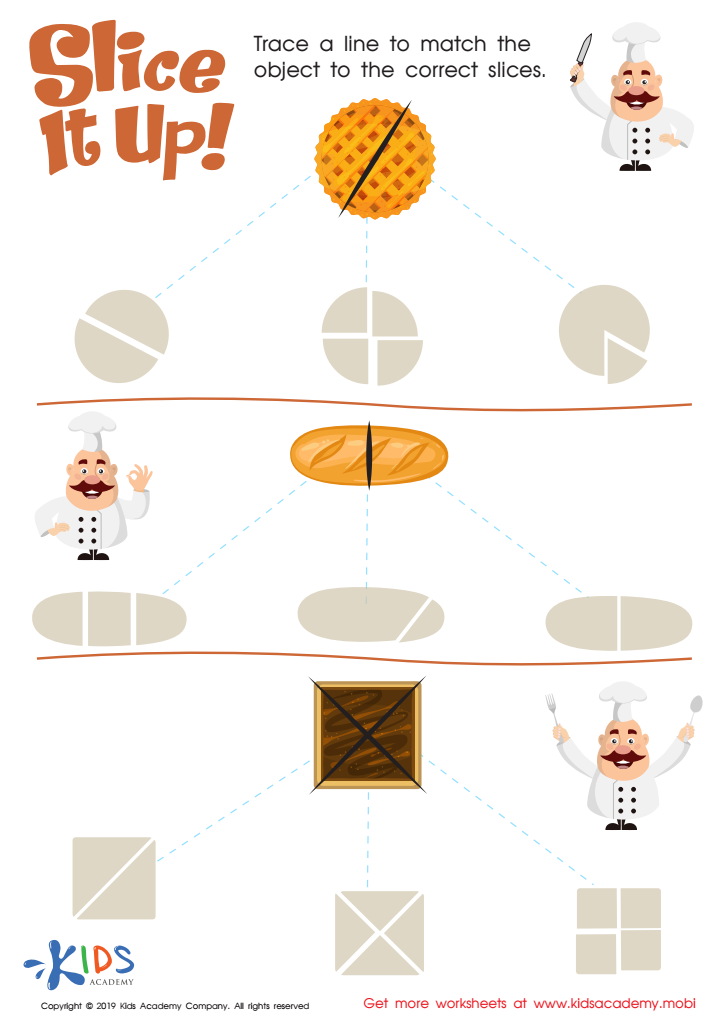
Slice It Up Worksheet
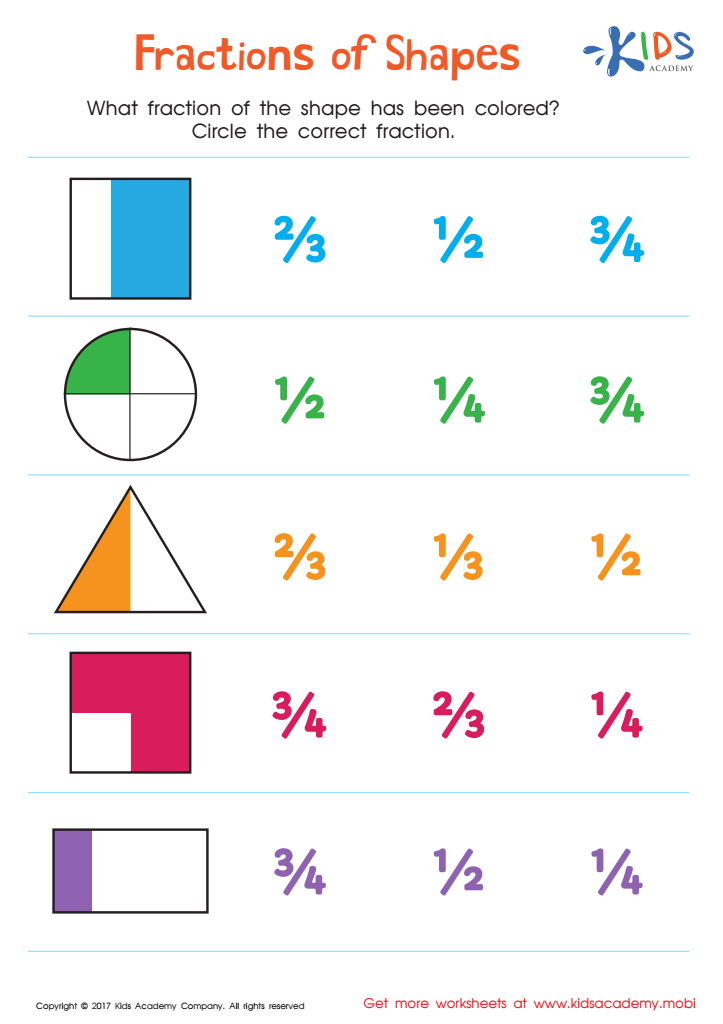
Fractions of Shapes: Math Concept Worksheet








Understanding fractions is a fundamental aspect of early mathematics education, and visualization of fractions of shapes can be particularly effective for children aged 6-8. At this developmental stage, young learners often grasp concepts better through visual and hands-on activities. Visualizing fractions with shapes helps make the concept tangible, turning abstract numbers into something concrete that can be seen and manipulated.
Using shapes to illustrate fractions helps children develop a deeper understanding of how parts relate to a whole. For example, dividing a circle into equal parts and shading some parts allows kids to visually see what a fraction like 3/4 represents. This visual approach serves as a bridge from a child's intuitive understanding of sharing and dividing to more advanced numerical concepts.
Moreover, early exposure to fractions through shapes lays the groundwork for future math skills. As students move on to more complex arithmetic, geometry, and even algebra, a robust understanding of fractions will serve them well. It helps in enhancing their problem-solving skills and logical thinking.
For parents and teachers, investing time in teaching fractions with visual aids and shapes at an early age ensures a smooth transition for children into more advanced areas of mathematics. It empowers young learners to become confident in their math skills and better prepared for academic success.