Visual representation comprehension Fractions of Shapes Worksheets for Ages 6-8
3 filtered results
-
From - To
Our "Fractions of Shapes Worksheets for Ages 6-8" are designed to enhance the visual representation comprehension skills of young learners. These engaging worksheets help children understand fractions by visually dividing and coloring shapes, making complex concepts simple and fun. Perfectly tailored for ages 6-8, they offer an interactive approach to learning basic fractions, improving both mathematical abilities and visual-spatial reasoning. Each worksheet is thoughtfully created to ensure step-by-step progression, building a solid foundation in fractions. Empower your child’s learning journey with these practical and enjoyable printables available at Kids Academy!
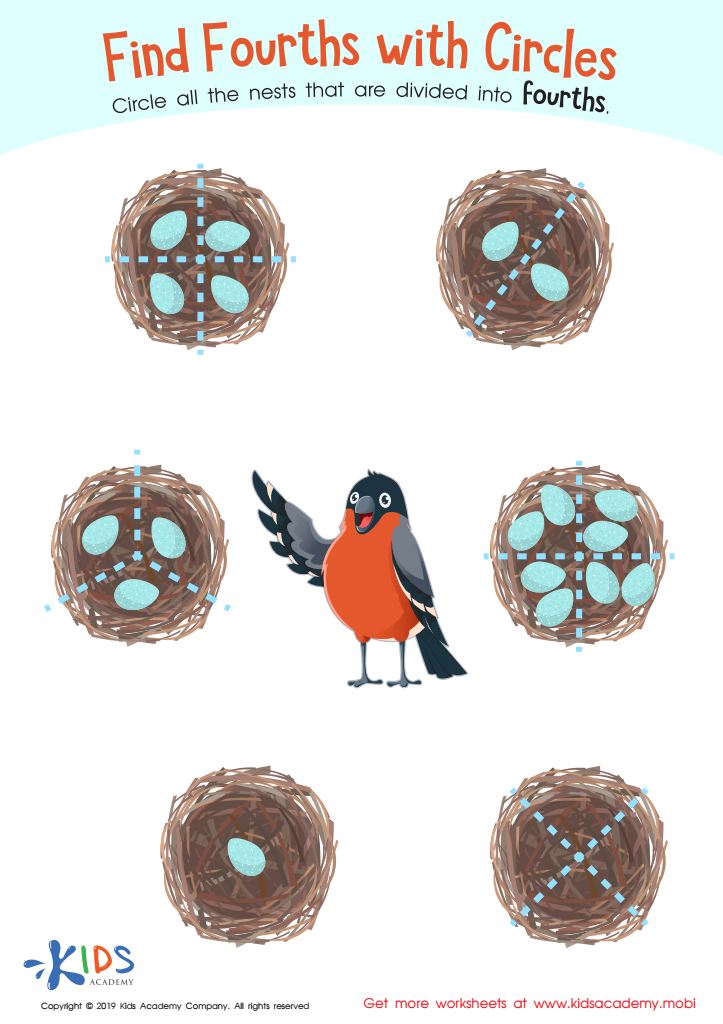
Find Fourths Circles Worksheet
 Assign to My Students
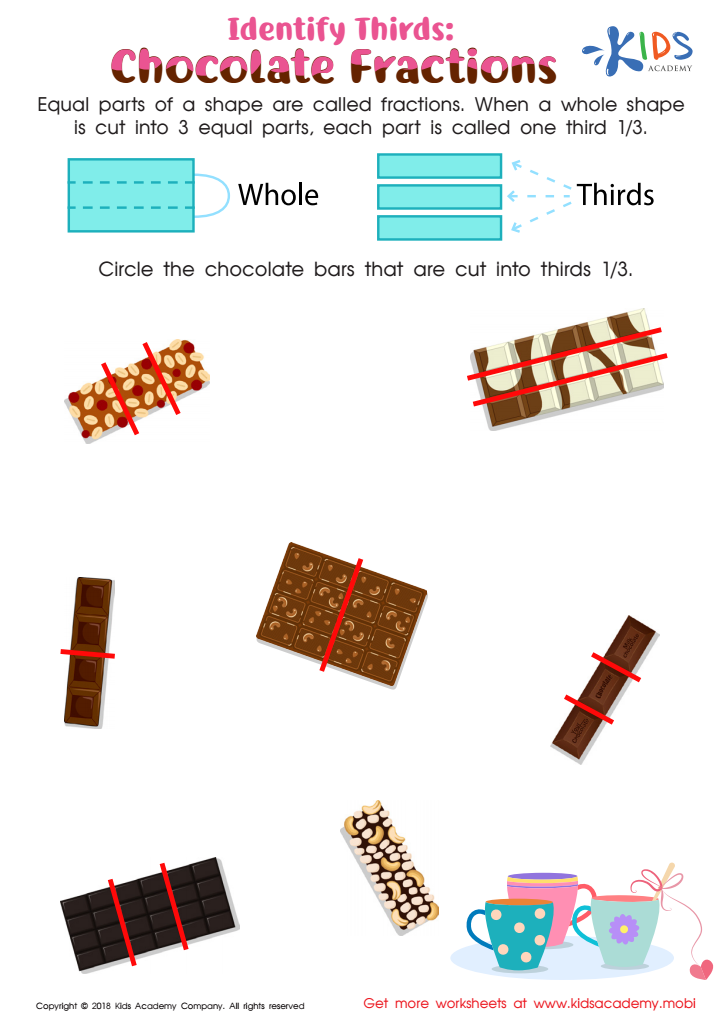
Identify Thirds: Chocolate Fractions Worksheet
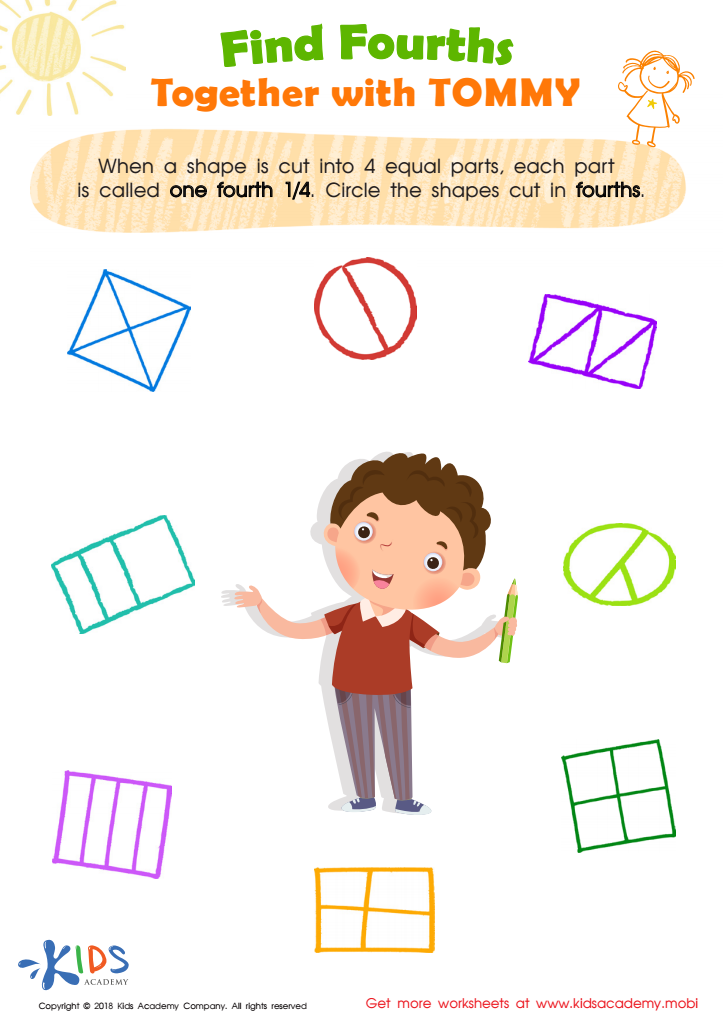
Find Fourths Together with Tommy Worksheet








Understanding visual representation comprehension of fractions of shapes is vital for children aged 6-8 because it lays the foundation for more advanced mathematical concepts they will encounter later. At this early stage, children are developing their cognitive and spatial reasoning skills. By interpreting fractions through visual representations like shapes, they can better grasp the idea that fractions represent parts of a whole.
Visual learning is an essential tool at this age because it makes abstract concepts more tangible. For example, seeing a pie chart divided into equal parts helps children understand that a fraction like 1/4 means one out of four equal sections. Such visual aids make complex ideas accessible and engaging, which fosters a positive attitude towards math.
Parents and teachers should prioritize this learning because it enhances problem-solving skills and promotes a deeper understanding of numerical relationships. Proficiency in fractions is crucial not only for higher-level math but also for real-life applications like cooking or dividing tasks.
Moreover, mastering visual fractions in early grades can significantly boost a child’s confidence as they advance in their education. Overall, the ability to comprehend visual fractions equips children with essential skills that support their academic growth and everyday life, making it an educational priority for both parents and teachers.