Basic Math Skills Fractions Worksheets for Ages 6-8
3 filtered results
-
From - To
Unlock the world of fractions with our engaging Basic Math Skills Fractions Worksheets, designed specifically for children aged 6-8! These worksheets provide a fun and interactive way for young learners to grasp the fundamental concepts of fractions. Through colorful exercises and relatable examples, kids will develop essential skills such as understanding parts of a whole, comparing fractions, and performing simple addition and subtraction with fractions. Ideal for classrooms or home learning, our resources cater to varying skill levels, ensuring every child progresses at their own pace. Empower your child’s mathematical journey and watch their confidence soar with these engaging fraction worksheets!
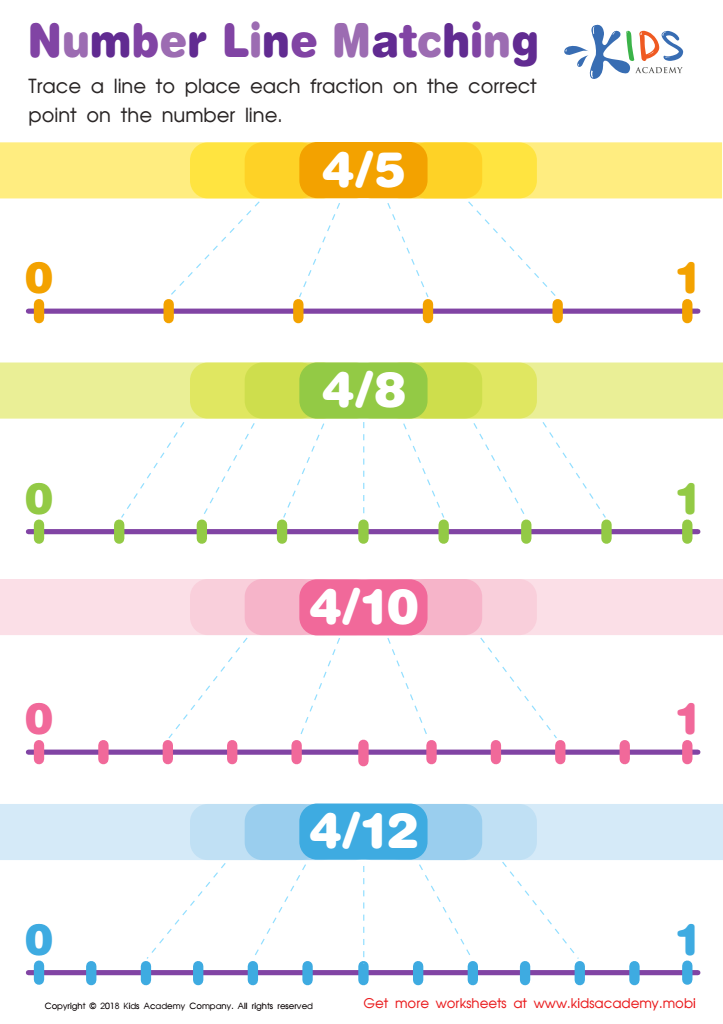
Number Line Matching Worksheet
 Assign to My Students
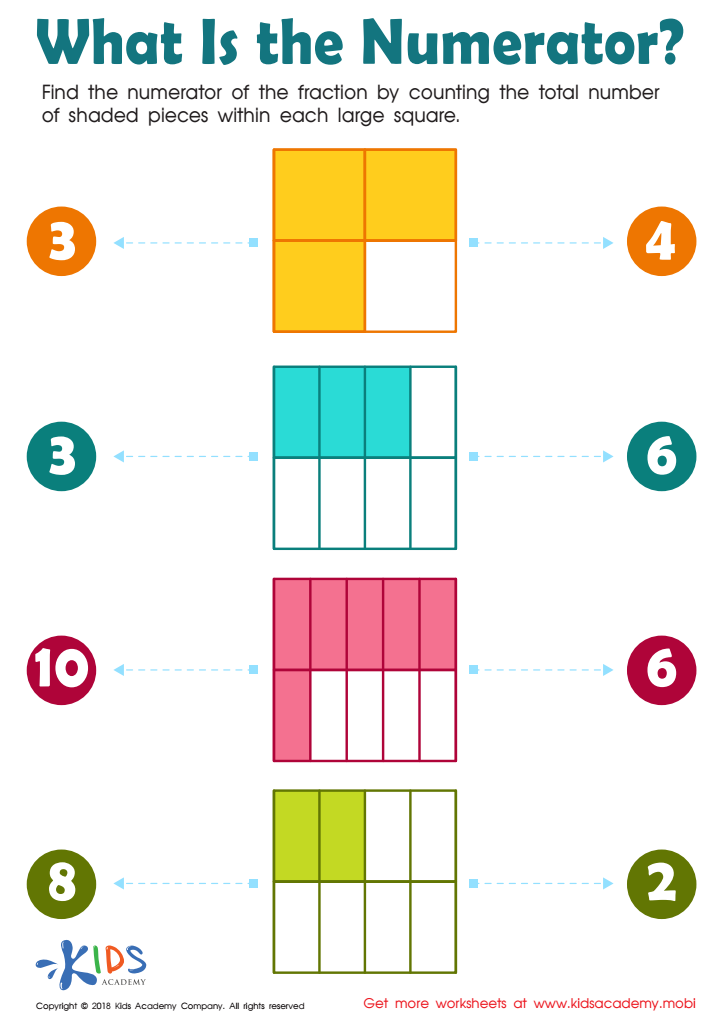
What Is the Numerator? Worksheet
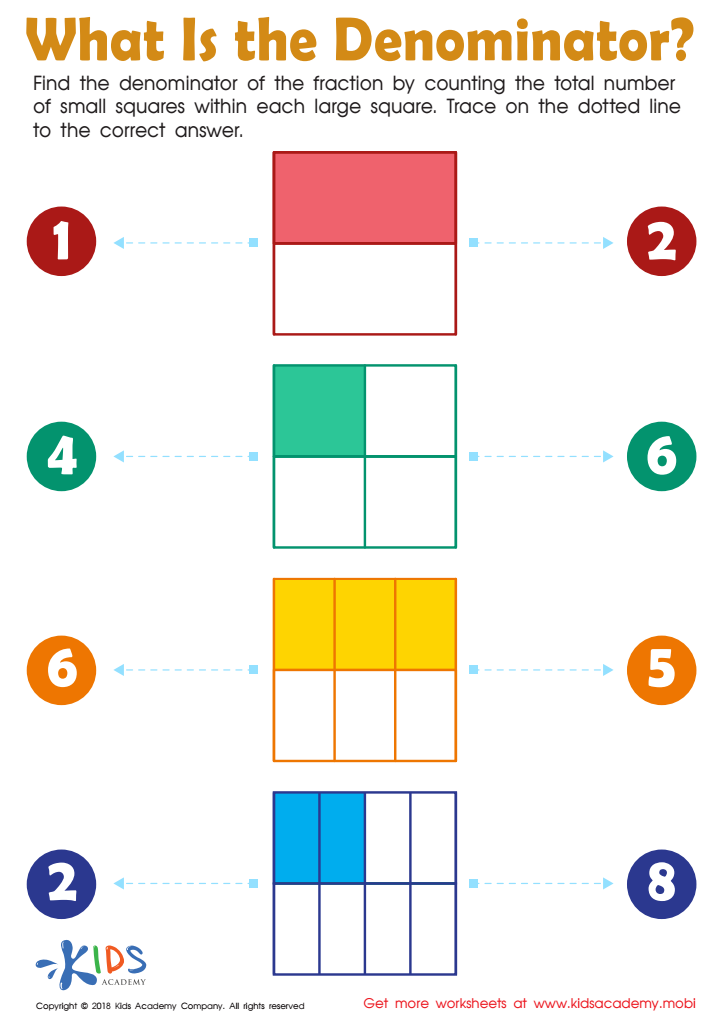
What Is the Denominator? Worksheet




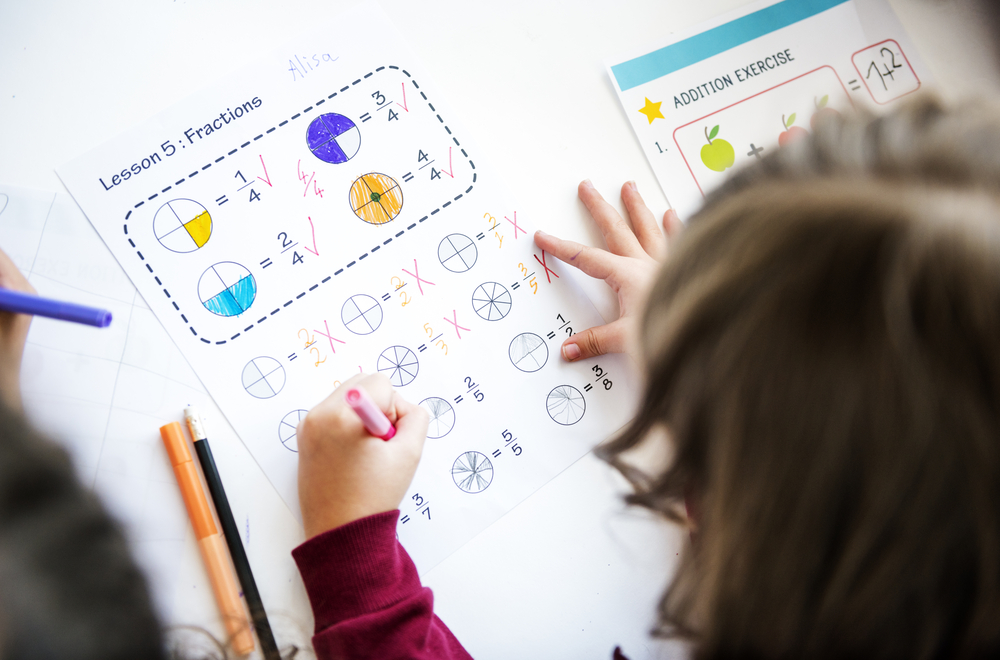



Basic math skills, particularly understanding fractions, are crucial for children aged 6-8 as they form the foundation for more complex mathematical concepts. During this developmental stage, children are beginning to expand their understanding of numbers and operations, and fractions introduce them to the idea of parts and wholes—a concept that is essential in their everyday lives.
Recognizing fractional relationships helps children grasp comparative concepts, such as size and quantity, which are vital for problem-solving. Early exposure to fractions prepares students for future challenges in topics like ratios, percentages, and measurements. Moreover, mastering fractions boosts critical thinking skills, contributing to overall cognitive development.
For parents and teachers, promoting basic math skills fosters a supportive learning environment. Understanding fractions cultivates confidence in young learners, reducing math anxiety as they progress to higher levels of education. Additionally, reinforcing these skills at home and in the classroom creates a positive attitude towards mathematics, showing children that math is relevant and applicable in real-life scenarios, like cooking or shopping.
In essence, prioritizing fraction fluency during these formative years solidifies essential math skills that lead to academic success and enrich everyday activities, ultimately preparing children for lifelong learning.








