Differentiating shapes Geometry Worksheets for Ages 6-8
3 filtered results
-
From - To
Introduce young learners to the exciting world of geometry with our Differentiating Shapes Geometry Worksheets tailored for ages 6-8! These engaging, printable worksheets are designed to help kids identify, sort, and differentiate between various shapes. Through fun activities and exercises, children will enhance their observational skills and geometric understanding, laying a strong foundation for future math success. Ideal for both classroom and home learning, our worksheets cater to diverse learning styles, making shape recognition and geometry enjoyable and accessible. Download now and watch your child’s confidence and competence in geometry soar!
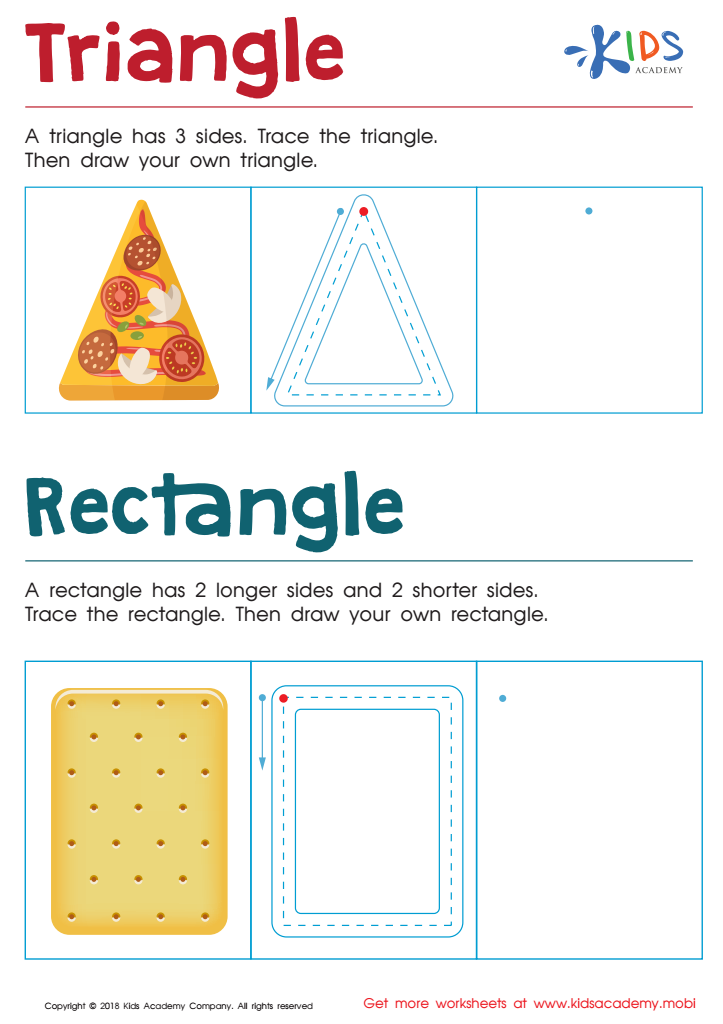
Triangle Rectangle Worksheet
 Assign to My Students











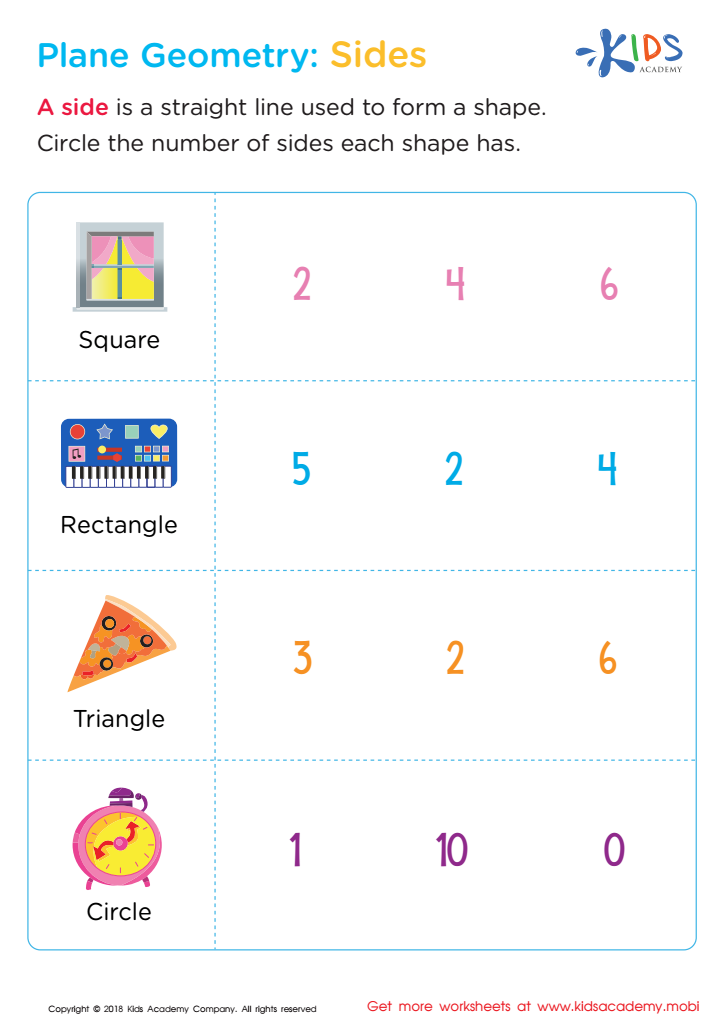
Plane Geometry: Sides Worksheet
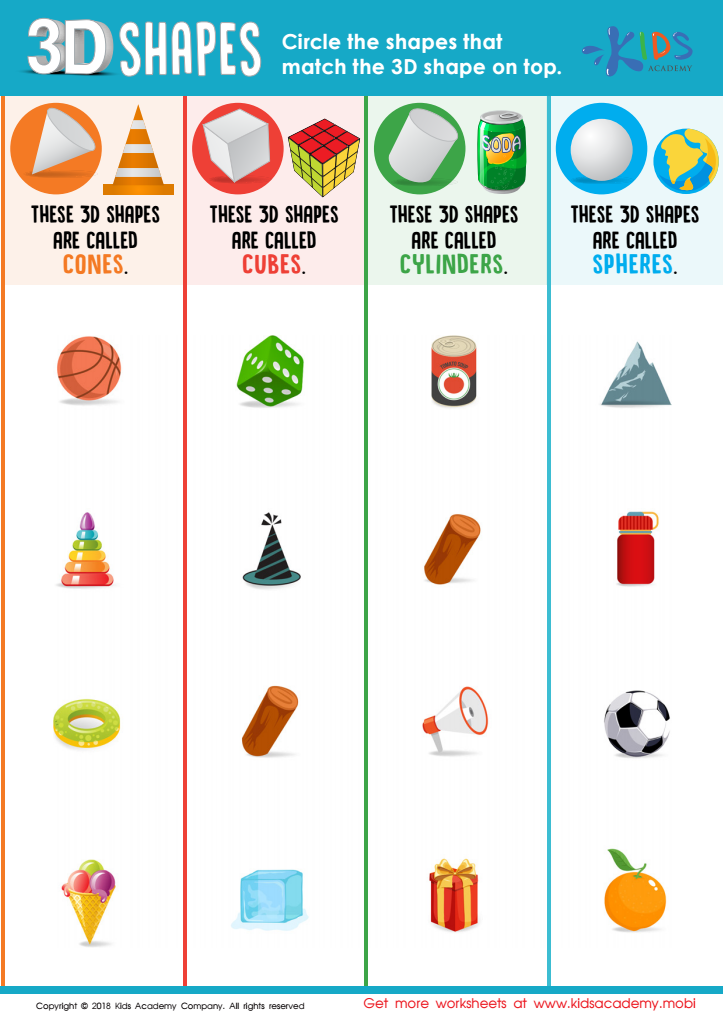
3D Shapes Worksheet








Understanding and differentiating shapes is a fundamental building block in geometry, which is a vital component of early mathematical education for children ages 6-8. Early exposure to geometric concepts helps young learners develop spatial awareness, critical thinking, and problem-solving skills.
When parents and teachers invest time in teaching children to identify and differentiate shapes, they are enabling their students to make sense of the world around them. Shapes form the foundation for recognizing patterns, which is crucial not only in math but also in understanding science, reading, and the arts. For instance, distinguishing shapes can eventually assist in recognizing letters and numbers, aiding early reading and writing skills.
Differentiating shapes is also critical for developing fine motor skills. Activities like drawing, cutting, and constructing shapes require precision and hand-eye coordination, which are important for handwriting and general motor skill development.
Furthermore, introducing geometric vocabulary such as "triangle," "sphere,” or “hexagon” expands children's language abilities and supports better communication of their ideas and perceptions.
Ultimately, teaching children to differentiate shapes in geometry primes them for more complex mathematical concepts in later years and instills a lifelong appreciation and curiosity for math and the world’s structure. By embedding these foundational skills early, parents and teachers are setting children on a path to academic success and a deeper understanding of their surroundings.








