Matching skills Geometry Worksheets for Ages 6-8
6 filtered results
-
From - To
Introducing our engaging Matching Skills Geometry Worksheets for Ages 6-8! Designed to foster essential geometric understanding, these worksheets offer young learners the opportunity to match shapes with their names, identify similar figures, and develop spatial awareness through fun, interactive activities. Each worksheet is carefully crafted to align with educational standards, ensuring your child both learns and enjoys their math journey. Perfect for classroom use or at-home practice, these worksheets not only enhance geometry skills but also boost problem-solving abilities. Unlock your child's potential in math today with our vibrant and intuitive matching skills resources! Explore now and watch them thrive!
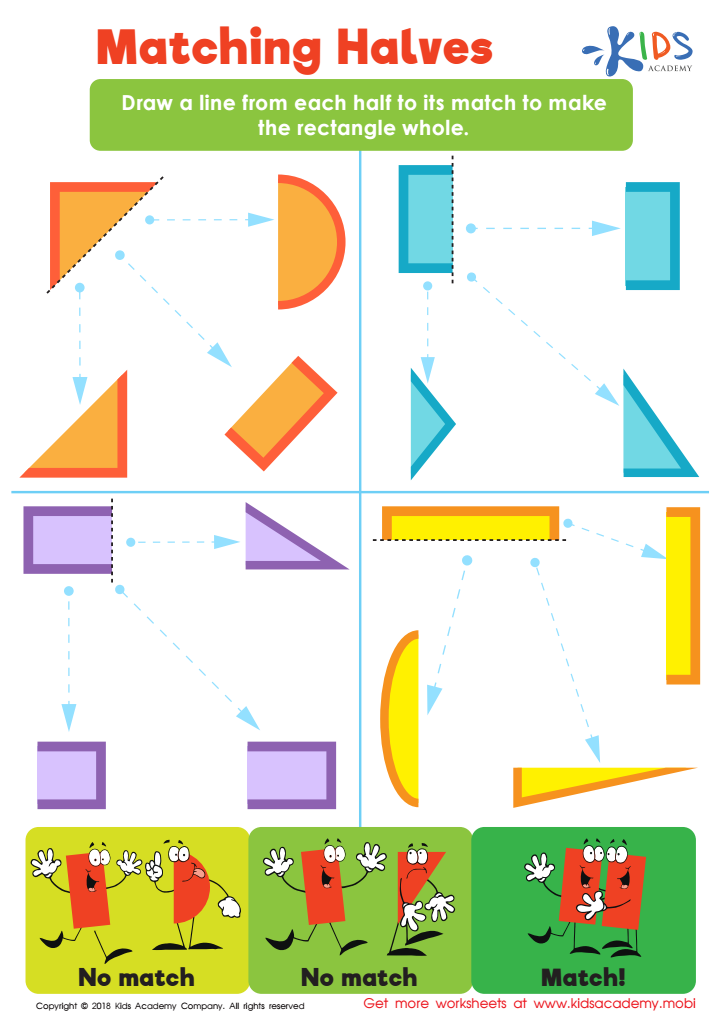
Matching Halves Worksheet
 Assign to My Students











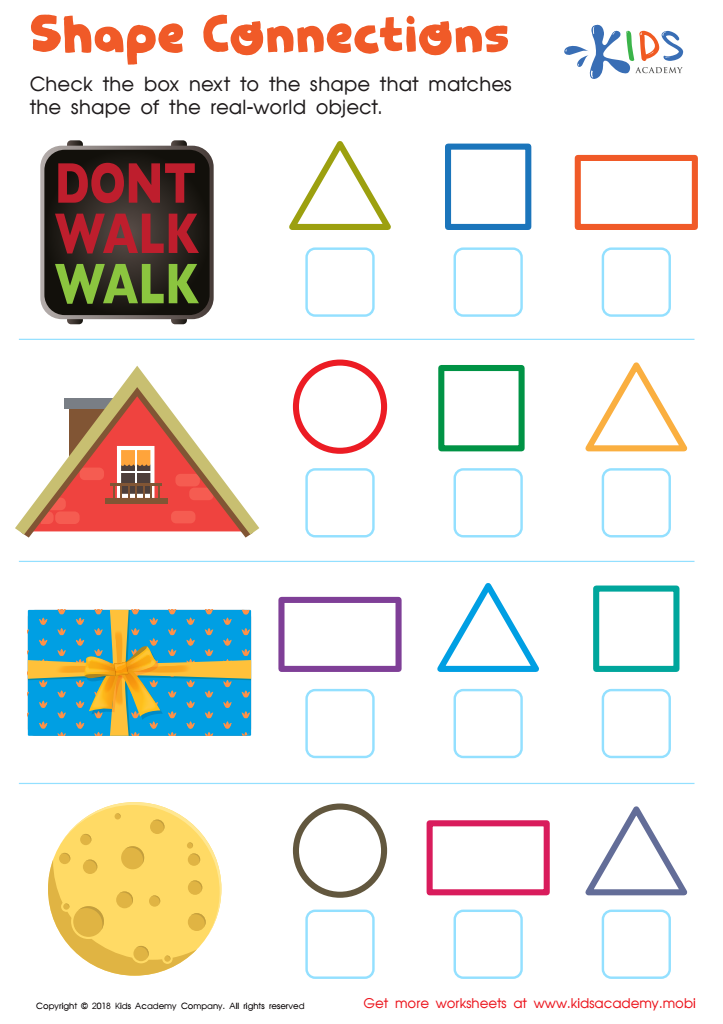
Shape Connections Worksheet
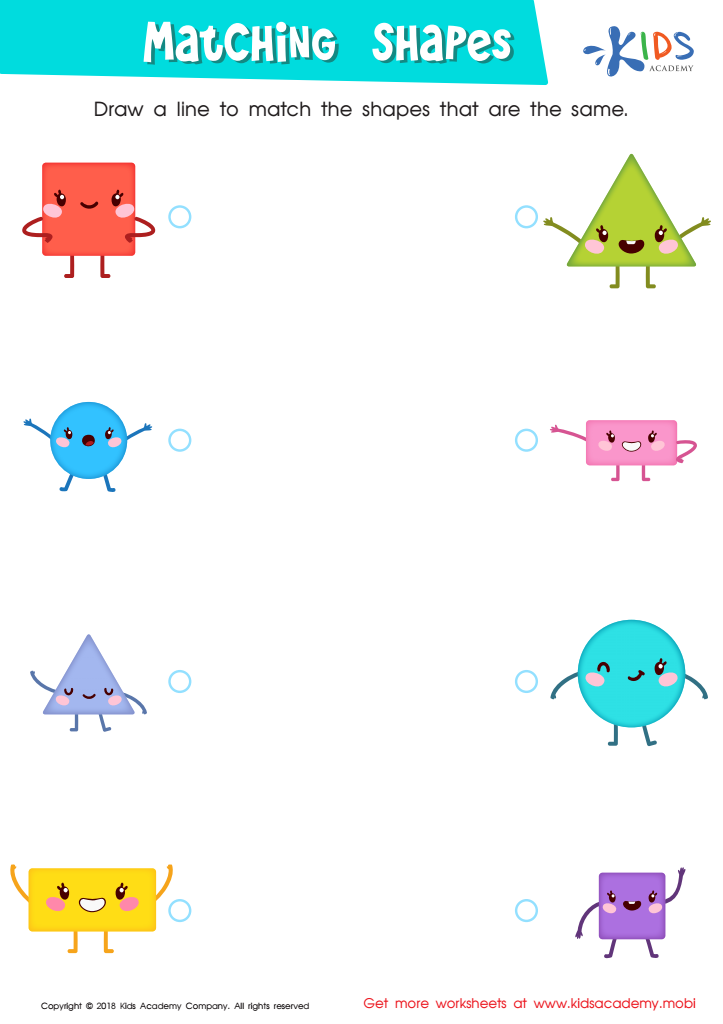
Matching Shapes Worksheet
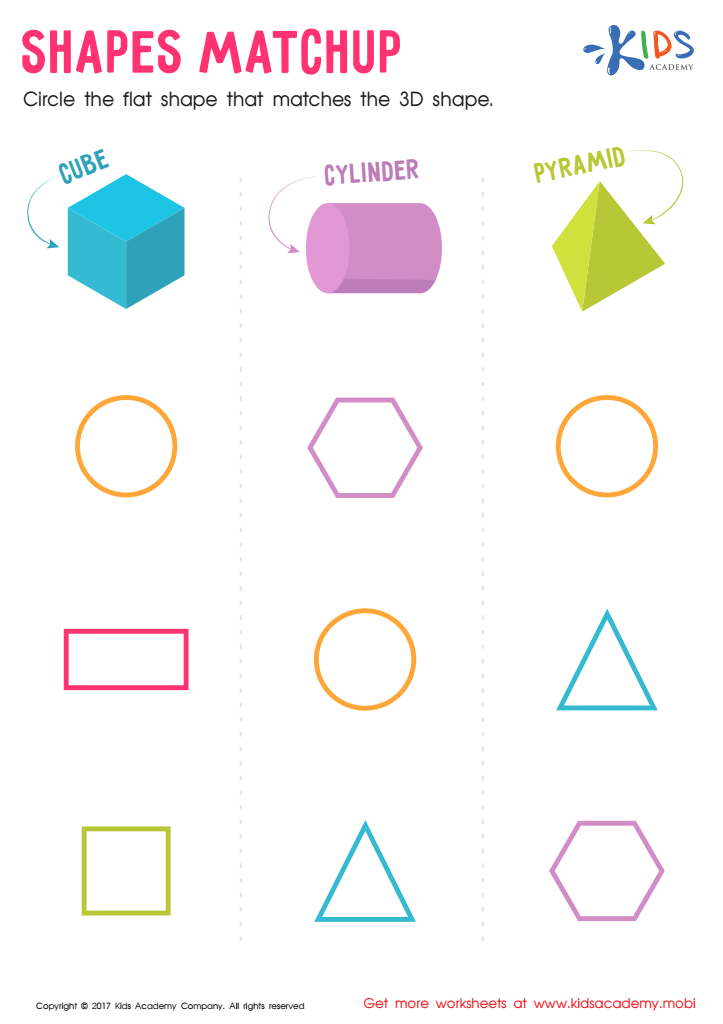
Shapes Matchup Worksheet
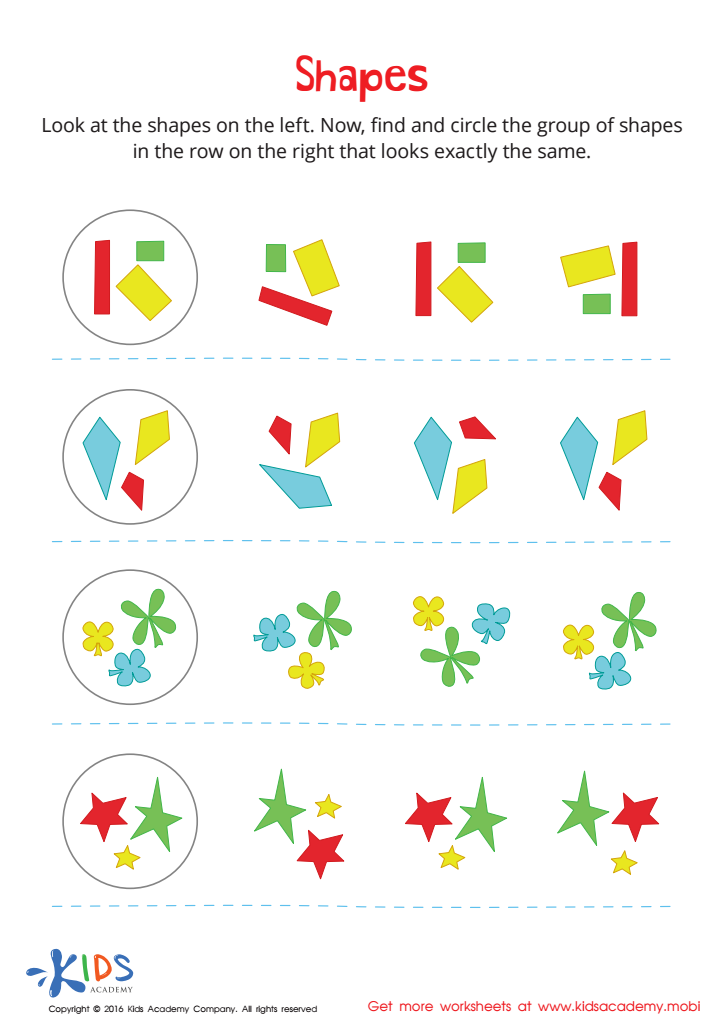
Shapes Worksheet
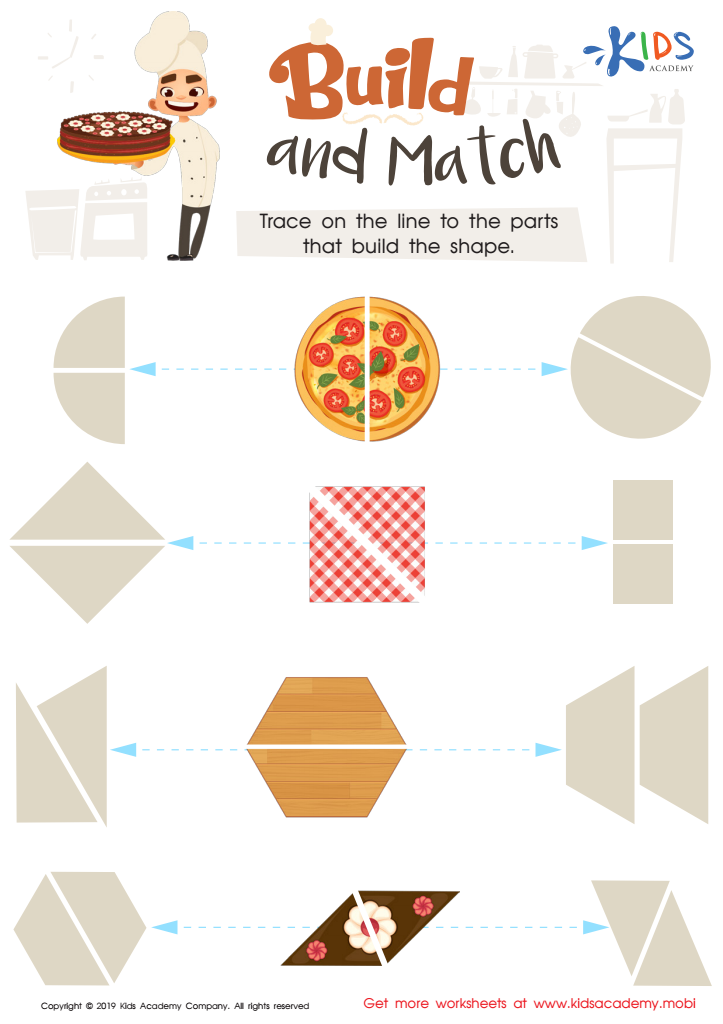
Build and Match Worksheet








Parents and teachers should care about matching skills in geometry for children ages 6-8 because these foundational concepts are crucial for cognitive development and real-world application. At this age, children begin to engage with shapes, spatial reasoning, and patterns which are essential building blocks for mathematics and problem-solving. By introducing matching skills—such as recognizing shapes, comparing sizes, and understanding geometric relationships—children develop critical thinking and analytical skills that are applicable across various subjects.
Furthermore, a strong understanding of geometry enhances a child's ability to visualize and manipulate objects, skills that are important not only in math but also in sciences, art, and even daily tasks. Incorporating geometry early helps foster a positive attitude towards math, laying the groundwork for more advanced concepts in later years.
Additionally, activities that involve matching skills in geometry can make learning engaging and fun, encouraging collaboration among peers and promoting communication skills. Parents and teachers play a vital role in facilitating these experiences, ensuring that children build confidence and competence in their abilities. Investing in geometric skills at this developmental stage can lead to a lifelong appreciation for mathematics and improved academic performance across the curriculum.








