Sorting skills Geometry Worksheets for Ages 6-8
5 filtered results
-
From - To
Enhance your child's mathematical abilities with our "Sorting Skills Geometry Worksheets for Ages 6-8." These engaging and educational worksheets, designed by experts, help young learners strengthen their geometry skills by classifying and organizing shapes, patterns, and objects. Through fun activities and colorful illustrations, your child will develop critical thinking and cognitive skills in a playful manner. Perfect for home or classroom use, these worksheets provide a strong foundation for future math success. Ideal for ages 6-8, they align with core curriculum standards, ensuring your child stays ahead. Start empowering their learning journey today!
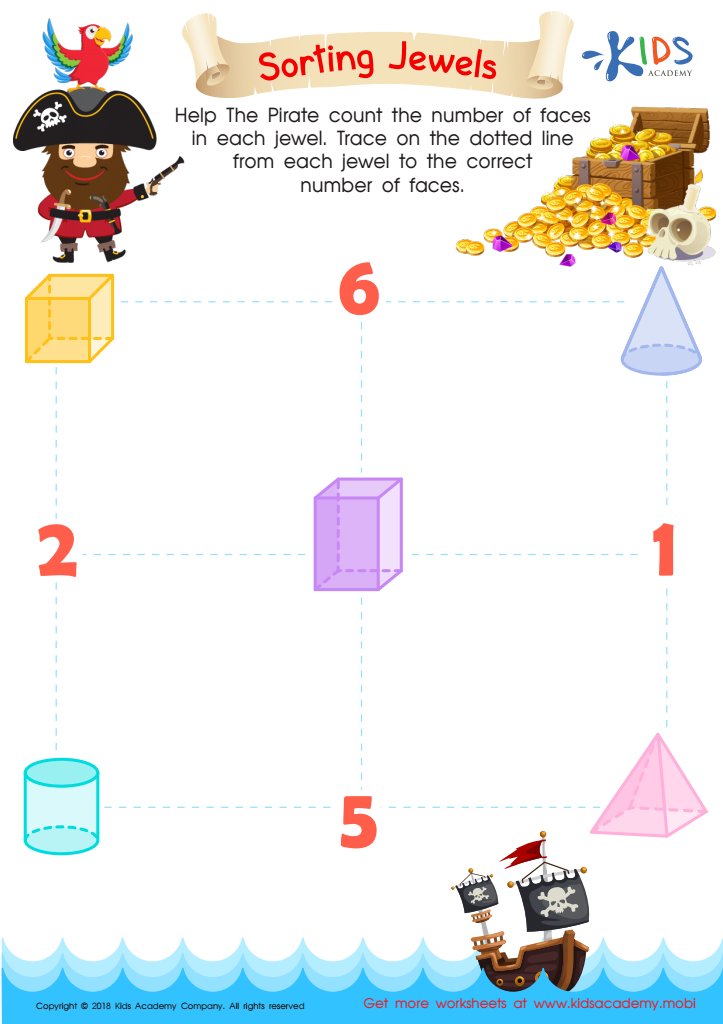
Sorting Jewels Worksheet
 Assign to My Students











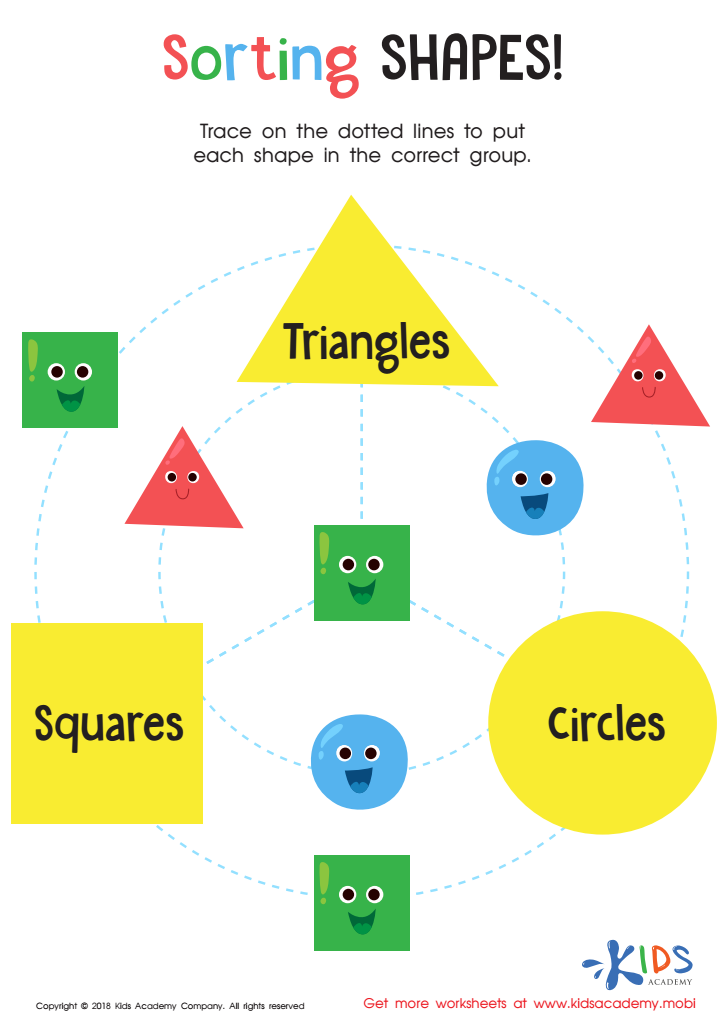
Sorting Shapes - Part 3 Worksheet
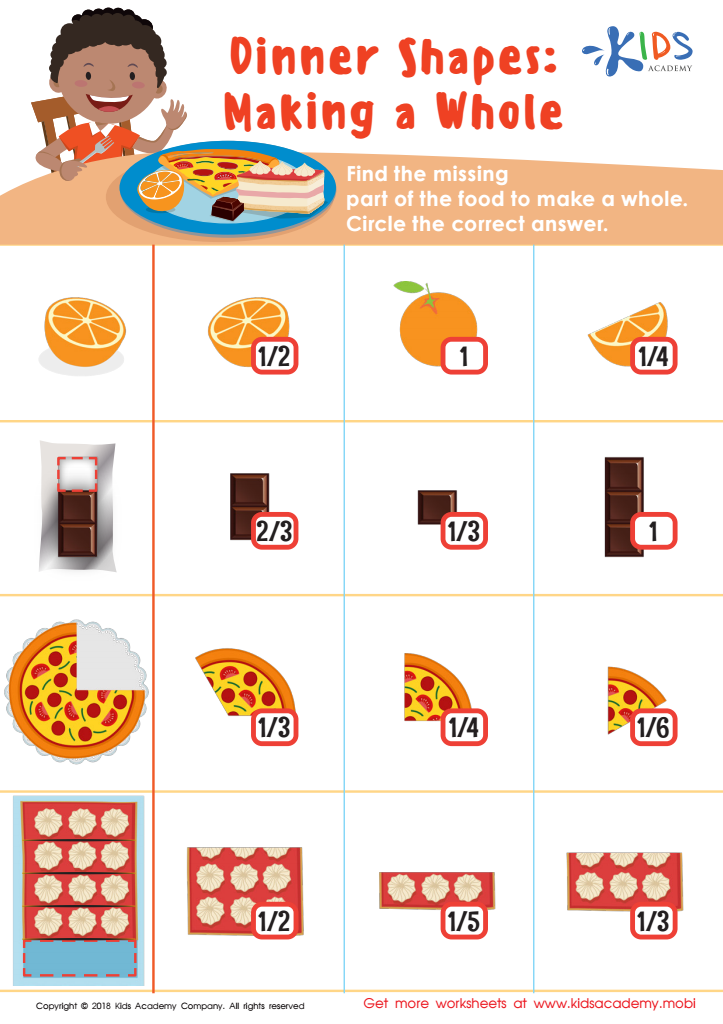
Dinner Shapes: Making a Whole Worksheet
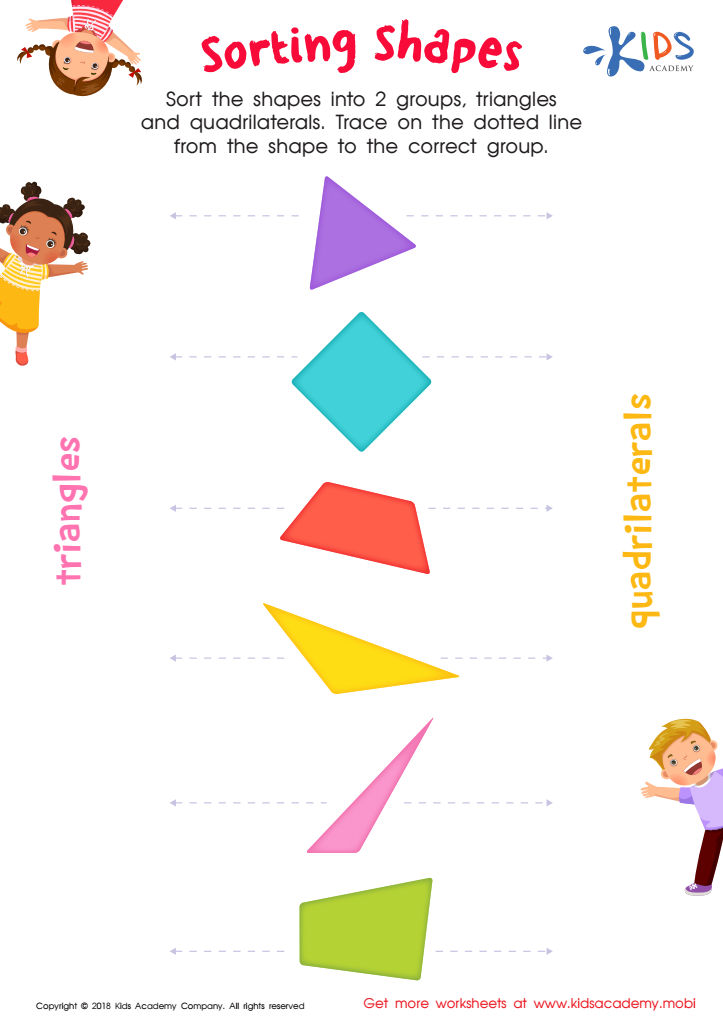
Sorting Shapes Worksheet
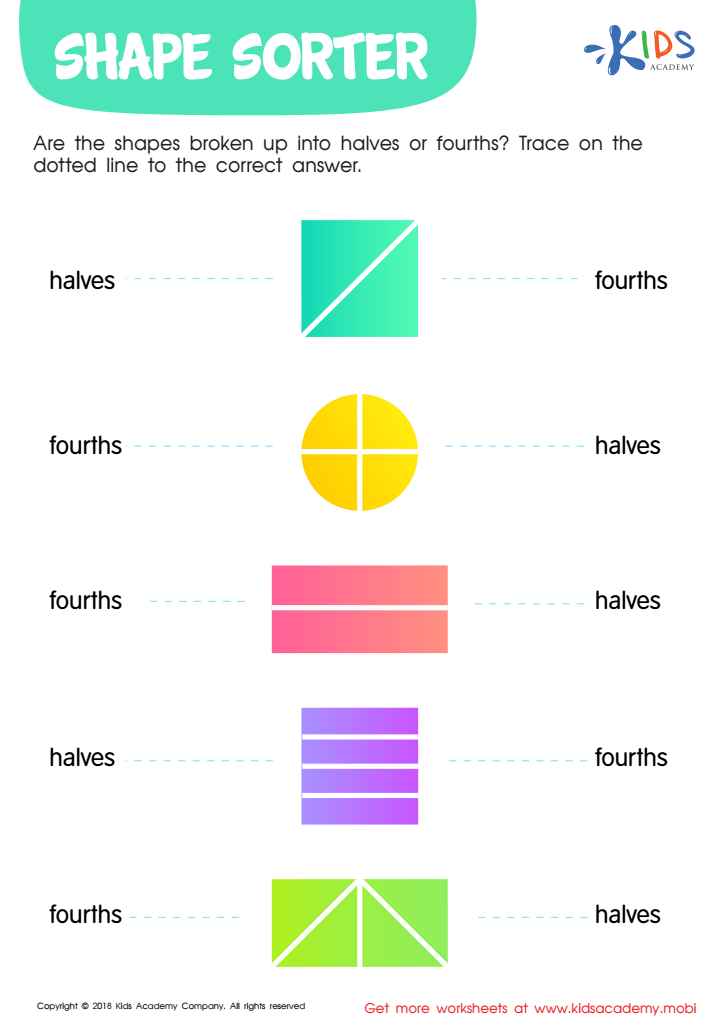
Shape Sorter Worksheet








Parents and teachers should care about sorting skills and geometry for ages 6-8 because these foundational concepts are critical for cognitive development and future academic success. Sorting skills help young children develop critical thinking by enabling them to categorize and organize information based on attributes like color, size, and shape. This ability forms the basis for logical reasoning and problem-solving skills, essential components of mathematical and scientific thinking.
Geometry, on the other hand, introduces children to spatial awareness and shapes, which are everywhere in their daily environment. Understanding geometric concepts allows children to make sense of the world around them. Learning about shapes and their properties not only enhances their ability to recognize patterns but also improves their fine motor skills, particularly through activities involving drawing or constructing shapes.
Both sorting and geometry skills are linked to higher levels of mathematical achievement as children age. These early competencies lay the groundwork for mastering more complex math topics such as algebra and calculus. Additionally, fostering these skills in a supportive environment helps children build confidence in their abilities, encouraging a positive attitude toward learning and intellectual curiosity.
Therefore, incorporating sorting and geometry activities into early education enriches children's overall development and equips them with the tools needed for academic and everyday success.








