Counting skills Graphs Worksheets for Ages 6-8
6 filtered results
-
From - To
Enhance your child's counting skills with our engaging Graphs Worksheets designed specifically for ages 6-8. These worksheets utilize vibrant graphs to make counting fun and interactive. Young learners will enjoy exploring various graph types while practicing essential math concepts such as number recognition, counting objects, and visual data interpretation. Each worksheet is thoughtfully crafted to reinforce learning through exciting activities that encourage both independent and collaborative exploration. Perfect for at-home practice or classroom use, these Counting Skills Graphs Worksheets will help your child develop a strong foundation in math while building their confidence. Access printable resources today and watch your child's skills soar!
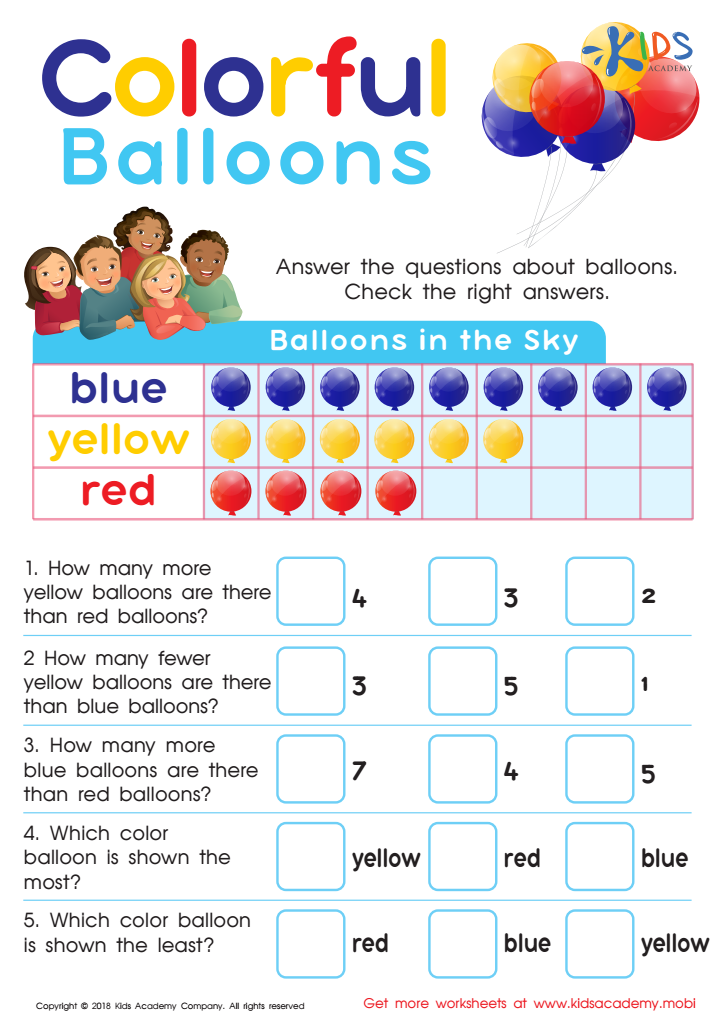
Picture Graphs: Colorful Balloons Worksheet
 Assign to My Students
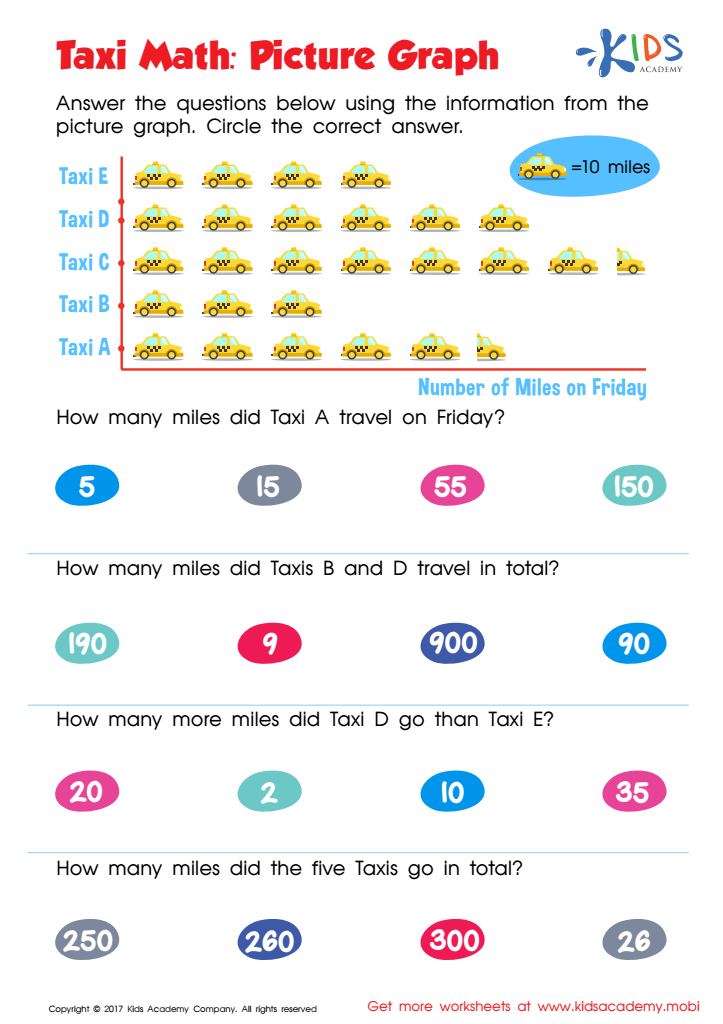
Taxi Math Worksheet
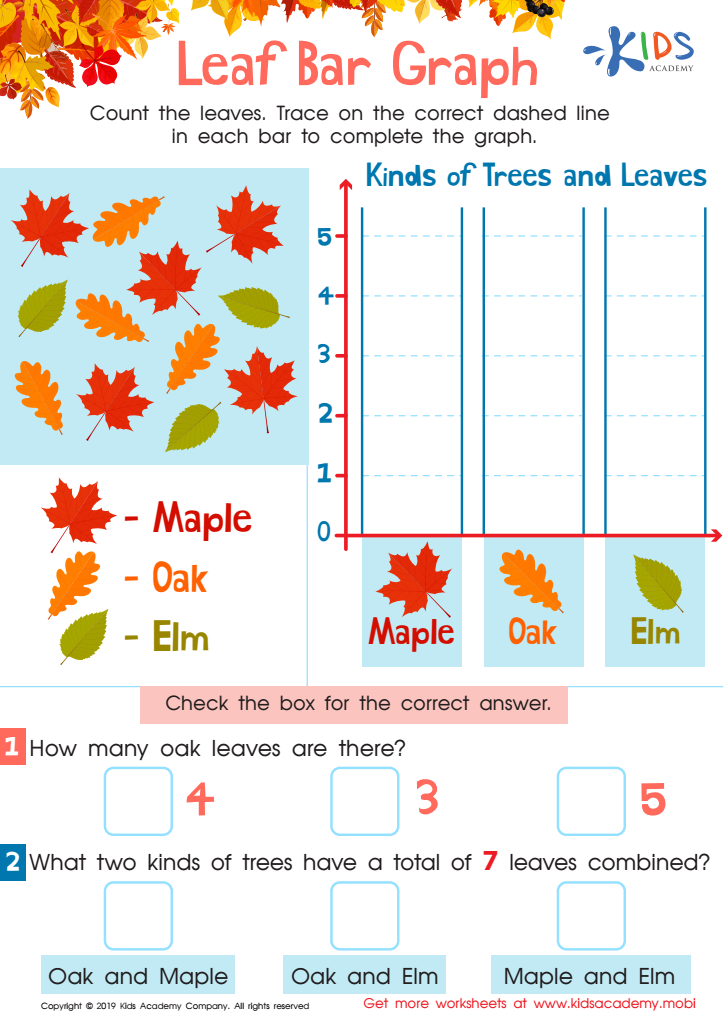
Leaf Bar Graph Worksheet
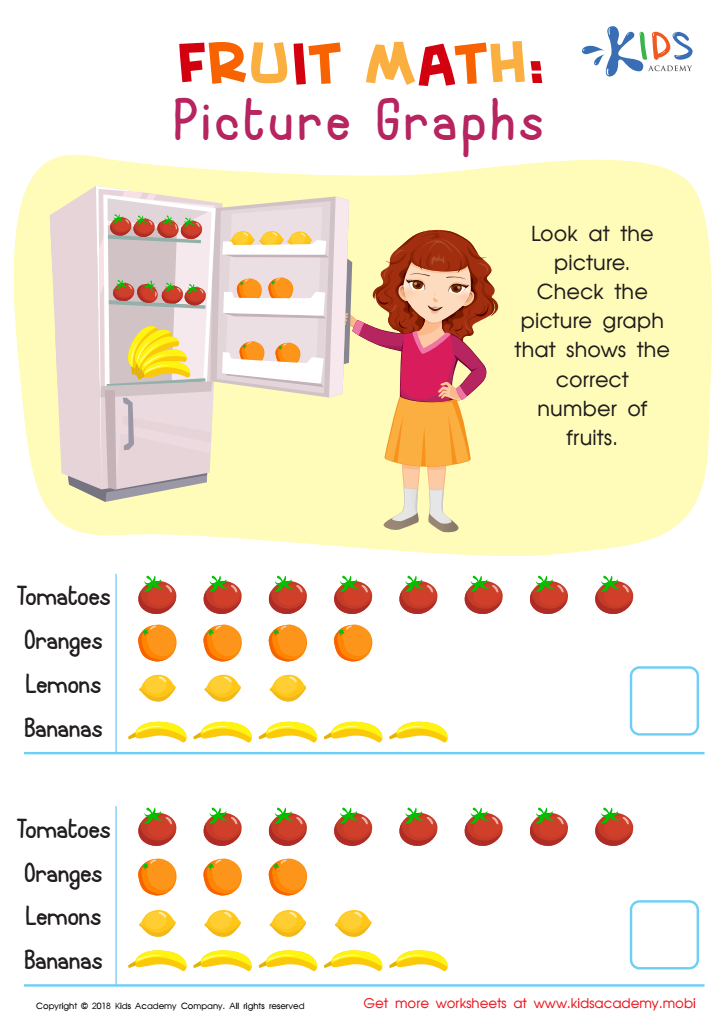
Fruit Math: Picture Graphs Worksheet
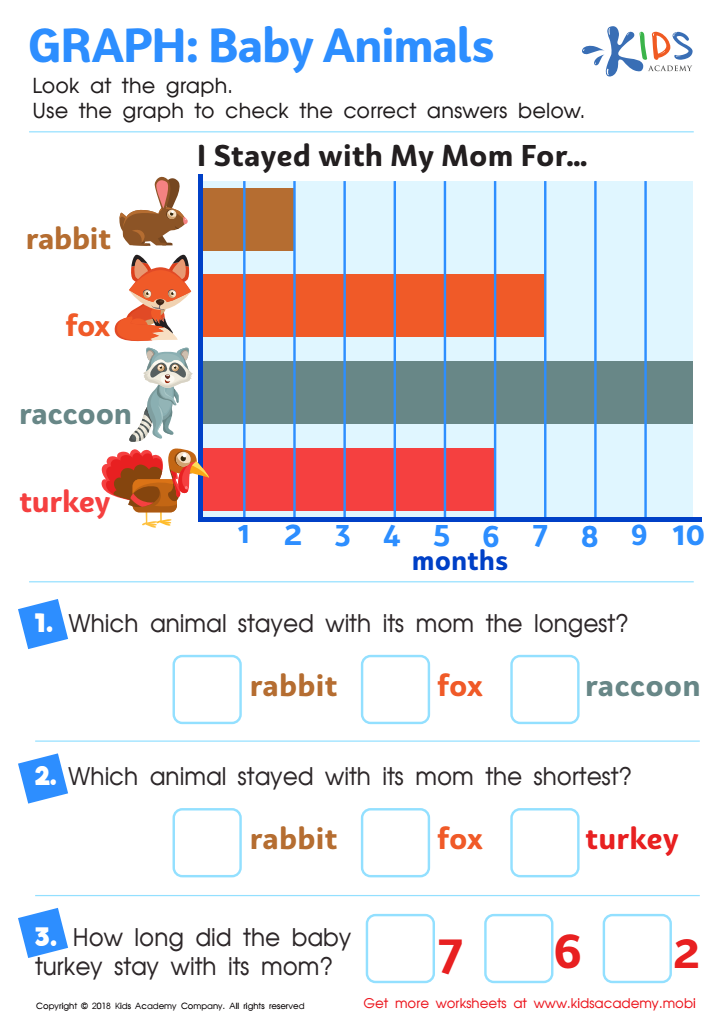
Graph: Baby Animals Worksheet

Aircraft Carrier Picture Graphs Worksheet







Counting skills and understanding graphs are foundational components of early mathematics education for children aged 6 to 8. Parents and teachers should prioritize these skills for several reasons.
Firstly, counting is the basis for basic arithmetic, serving as a critical building block for problem-solving and quantitative reasoning. Mastering counting not only empowers children to perform addition and subtraction but also enhances their ability to compare and measure quantities in real-life situations.
Secondly, graphing skills encourage data literacy, teaching children how to visualize and interpret information. In an increasingly data-driven world, the ability to read and construct graphs equips children with essential skills, fostering analytical thinking and informed decision-making.
Moreover, engaging in counting and graphing activities supports development in other areas such as critical thinking and cognitive development. When children learn to collect data, represent it graphically and draw conclusions, they build confidence in their mathematical abilities.
Encouraging counting and graph skills promotes a positive attitude towards mathematics, preparing children for more complex topics in later grades. Thus, parents and teachers play a crucial role in nurturing these skills, laying a robust foundation for future learning and personal growth.








