Interpreting data Graphs Worksheets for Ages 6-8
3 filtered results
-
From - To
Unlock your child's mathematical potential with our engaging "Interpreting Data Graphs Worksheets" designed specifically for ages 6-8. These vibrant and interactive worksheets help young learners grasp the essential concepts of data interpretation through fun activities involving bar graphs, pie charts, and pictograms. As students visualize and analyze data, they'll enhance their critical thinking and analytical skills while exploring real-world applications. Perfect for classrooms or at-home learning, our worksheets make math enjoyable and interactive. Encourage curiosity and boost confidence in problem-solving as your kids embark on an exciting journey through the world of graphs and data interpretation!
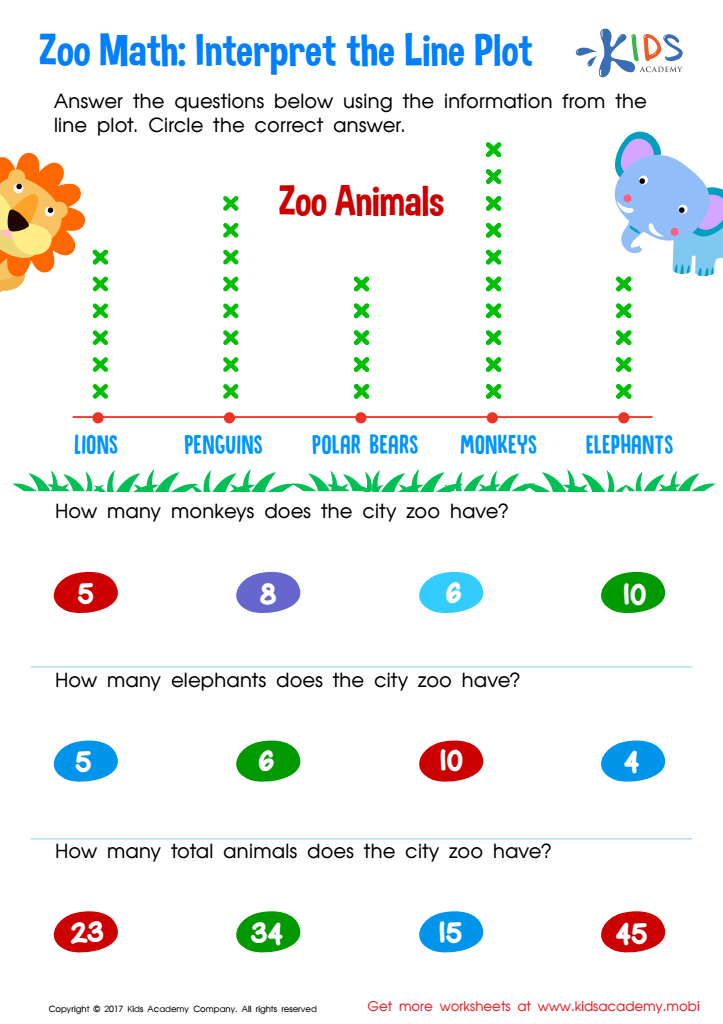
Interpret Line Plot Worksheet
 Assign to My Students
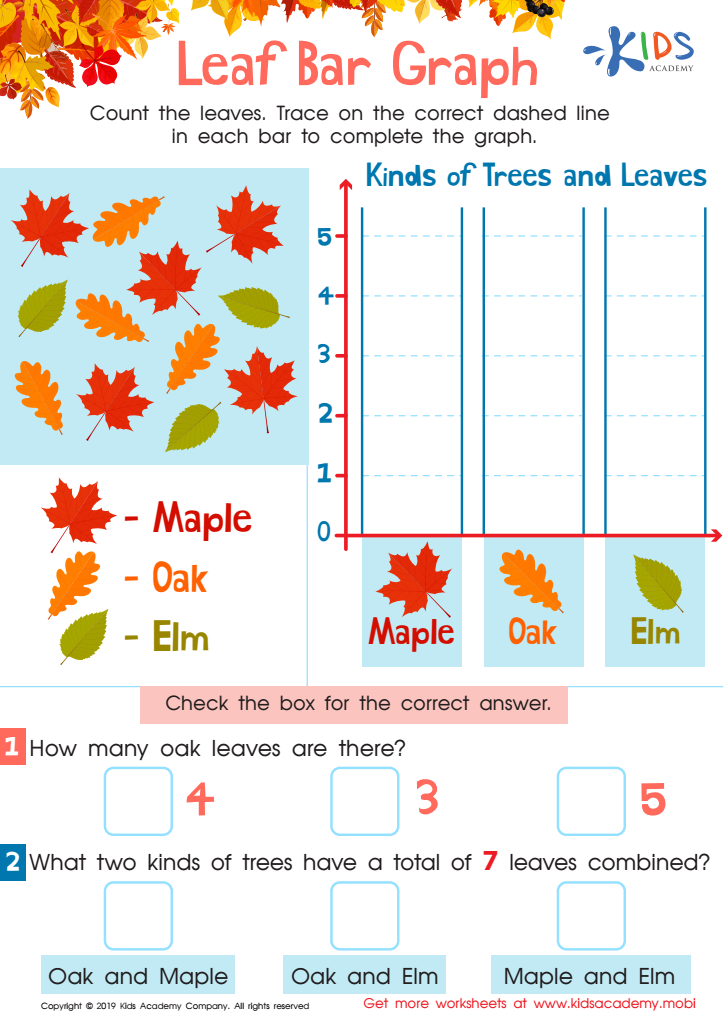
Leaf Bar Graph Worksheet
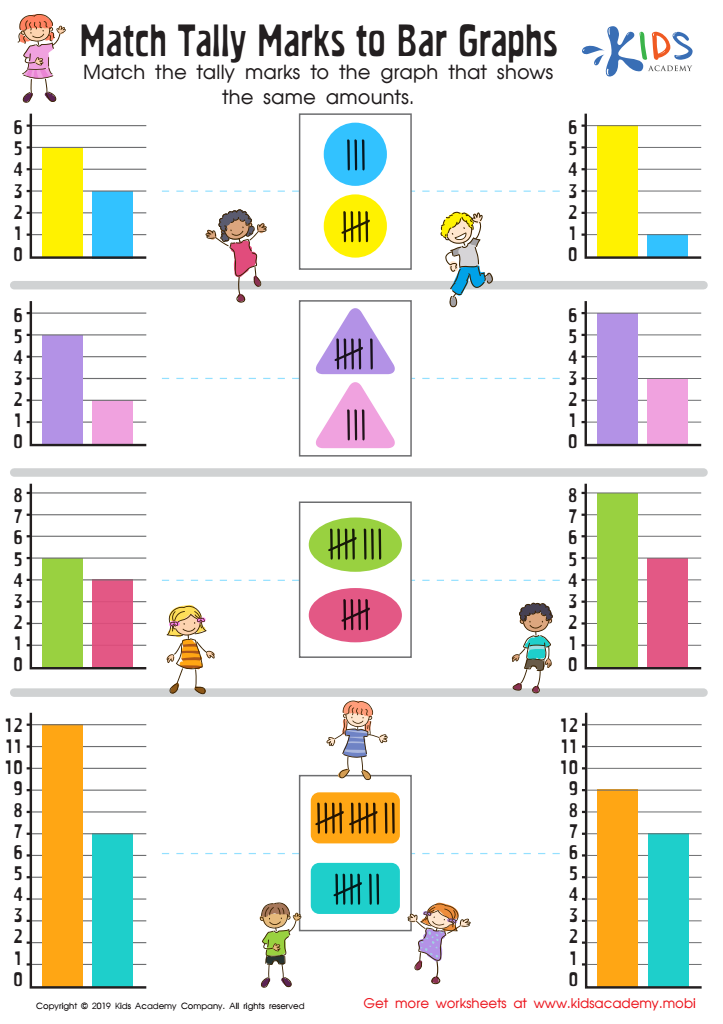
Match Tally Marks to Bar Graphs Worksheet








Interpreting data graphs is a crucial skill for children aged 6-8, and it is important for both parents and teachers to prioritize this in early education. First, understanding graphs enhances a child's critical thinking and analytical skills. Children learn to analyze visual representations of data, which helps them make sense of the information around them. This skill also encourages them to ask questions, evaluate trends, and draw logical conclusions.
Moreover, familiarity with graphs aids in subjects like mathematics and science, where data representation is prevalent. As students become more comfortable with interpreting graphs, they build a foundation for higher-level analytical skills needed in their future education and daily life.
Engaging with data graphs also promotes curiosity and observation, encouraging children to explore their surroundings and engage in real-world problem-solving. By discussing graphs together, parents and teachers can help children connect learning to everyday scenarios, fostering a deeper love for learning.
Ultimately, developing graph interpretation skills at an early age equips children with tools to succeed academically. It prepares them for a world increasingly driven by data, empowering them to navigate and understand information effectively as they grow. Building this skill early encourages lifelong learning and informed decision-making.








