Basic geometry Math Worksheets for Ages 6-8
3 filtered results
-
From - To
Our Basic Geometry Math Worksheets for Ages 6-8 are perfect for young learners ready to explore shapes, patterns, and spatial understanding. These engaging and educational worksheets help children master fundamental geometry concepts through fun activities like shape identification, symmetry, and 3D shape recognition. Designed by experienced educators, each worksheet aims to build strong geometric intuition and boost math confidence. Tailored to fit your child's learning pace, these resources are ideal for both classroom and home use. Equip your child with the essential geometry skills they need for their educational journey through our specially crafted worksheets!
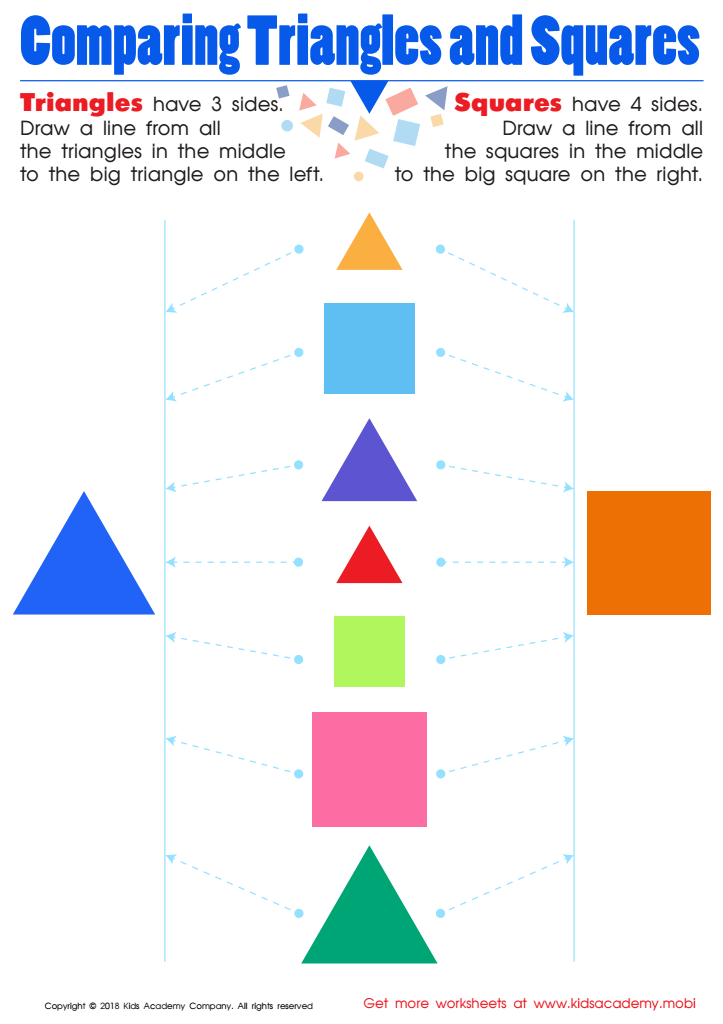
Comparing Triangles Squares Worksheet
 Assign to My Students
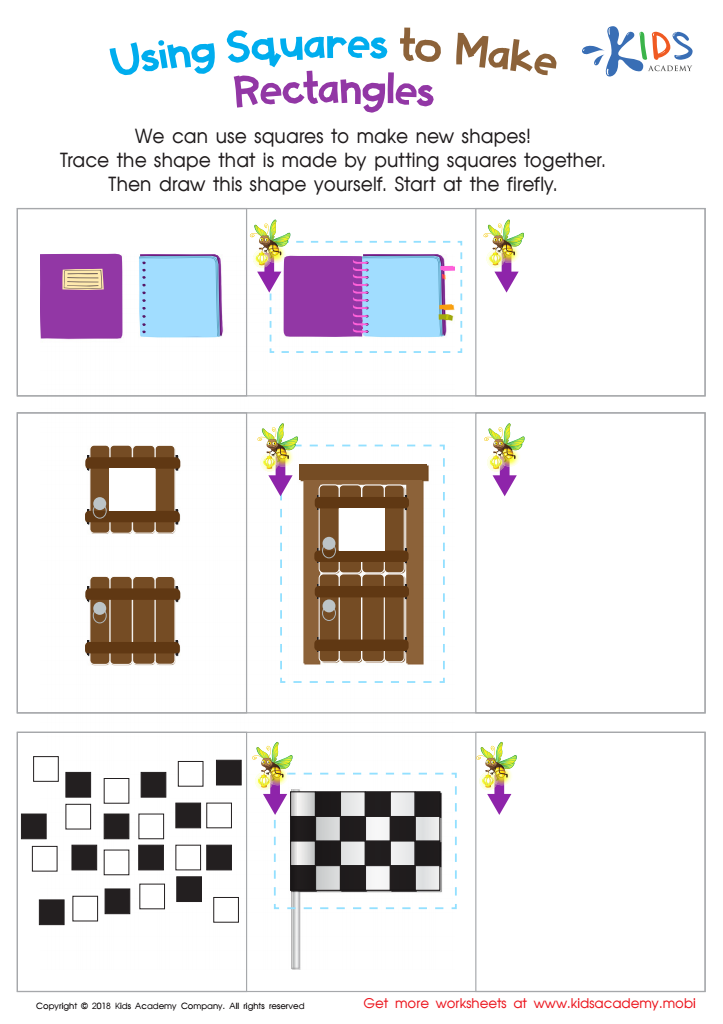
Using Squares to Make Rectangles Worksheet
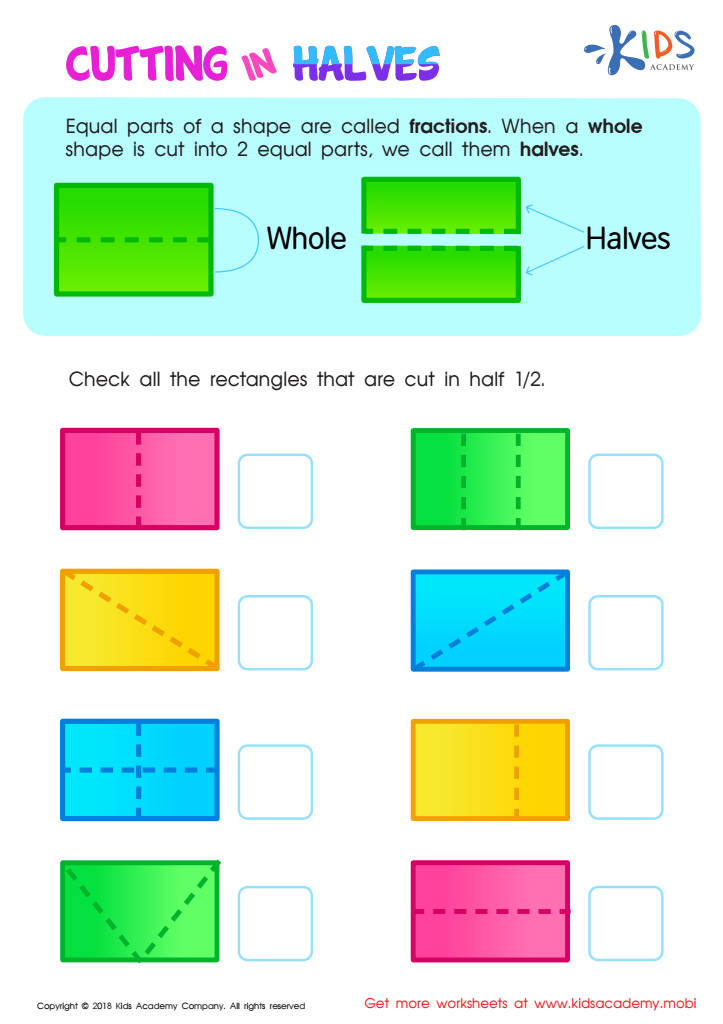
Cutting in Halves Worksheet






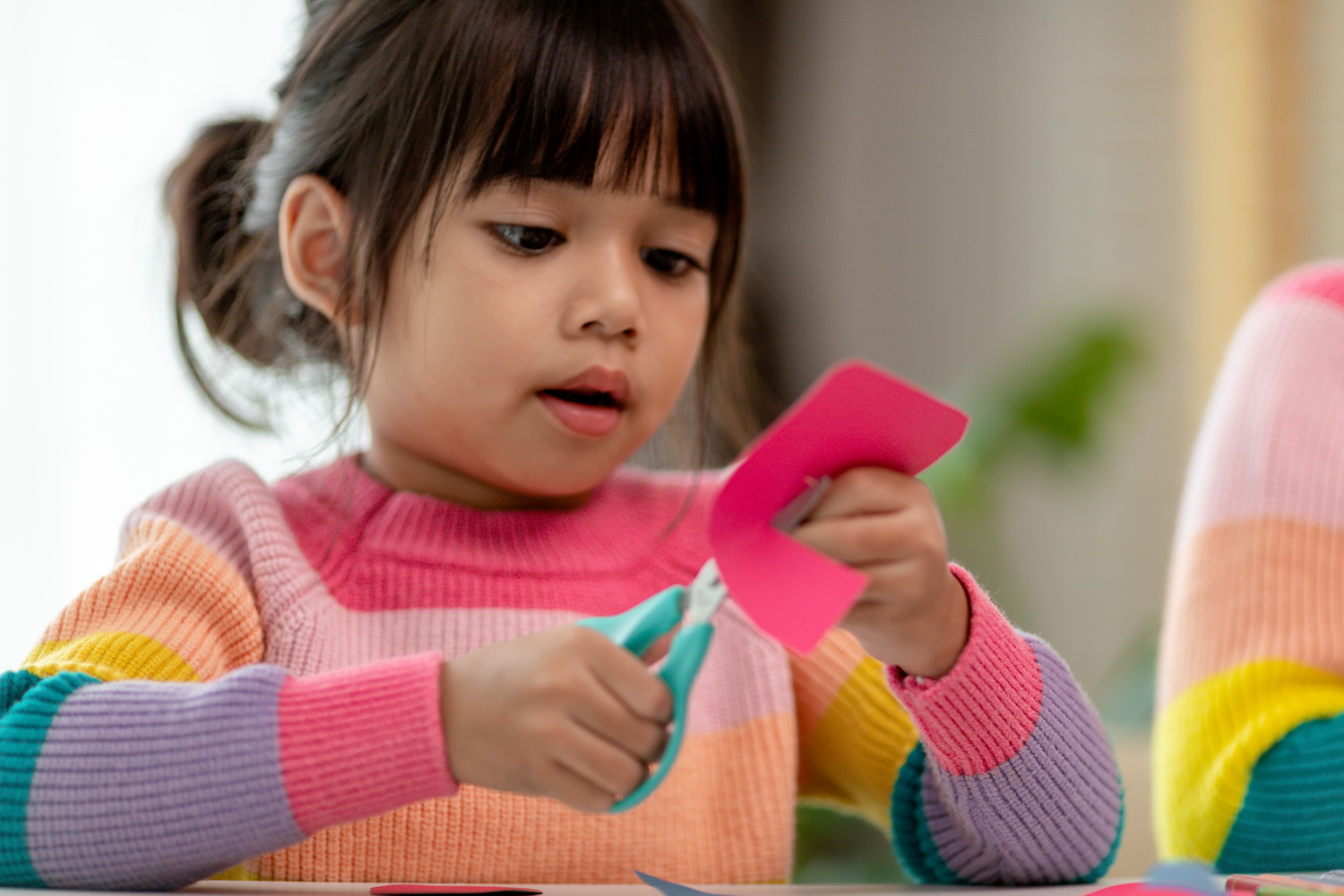

Basic geometry is an essential component of early education for children aged 6-8, as it fosters numerous developmental benefits that extend beyond mathematics. Firstly, understanding shapes, sizes, and spatial relationships lays the foundation for further mathematical concepts, enriching students' problem-solving and analytical skills. Geometry enables young minds to visually and tangibly interact with their surroundings, enhancing spatial awareness which is critical for real-life applications like reading maps, packing, and building.
Early exposure to geometry also strengthens cognitive development by stimulating logical thinking and organizational skills. Recognizing patterns and shapes leads to better memory retention and the ability to predict and reason through concepts. Moreover, as geometry often involves hands-on activities such as drawing, building, and manipulating objects, it improves fine motor skills and fosters creativity, encouraging children to express themselves and innovate.
Additionally, mastering basic geometry boosts a child's confidence in their ability to learn math, which is crucial for maintaining a positive attitude towards education in general. Teachers and parents should care about introducing geometry as it not only equips children with critical academic skills but also enhances their overall intellectual growth and prepares them for future academic challenges.








