
Data analysis Math Worksheets for Ages 6-8
4 filtered results
Difficulty Level
Grade
Age
-
From - To
Subject
Activity
Standards
Discover engaging data analysis math worksheets designed specifically for children ages 6-8! These worksheets focus on developing essential skills such as interpreting graphs, understanding charts, and making observations from data sets. Perfect for young learners, our resources offer fun and interactive activities that foster critical thinking and analytical skills. Each worksheet is tailored to align with educational standards, ensuring a comprehensive learning experience for your child. With colorful visuals and relatable themes, your little one will enjoy exploring the world of data in a meaningful way. Start building their confidence in math today with our easy-to-use, printable worksheets!
Favorites
With answer key
Interactive
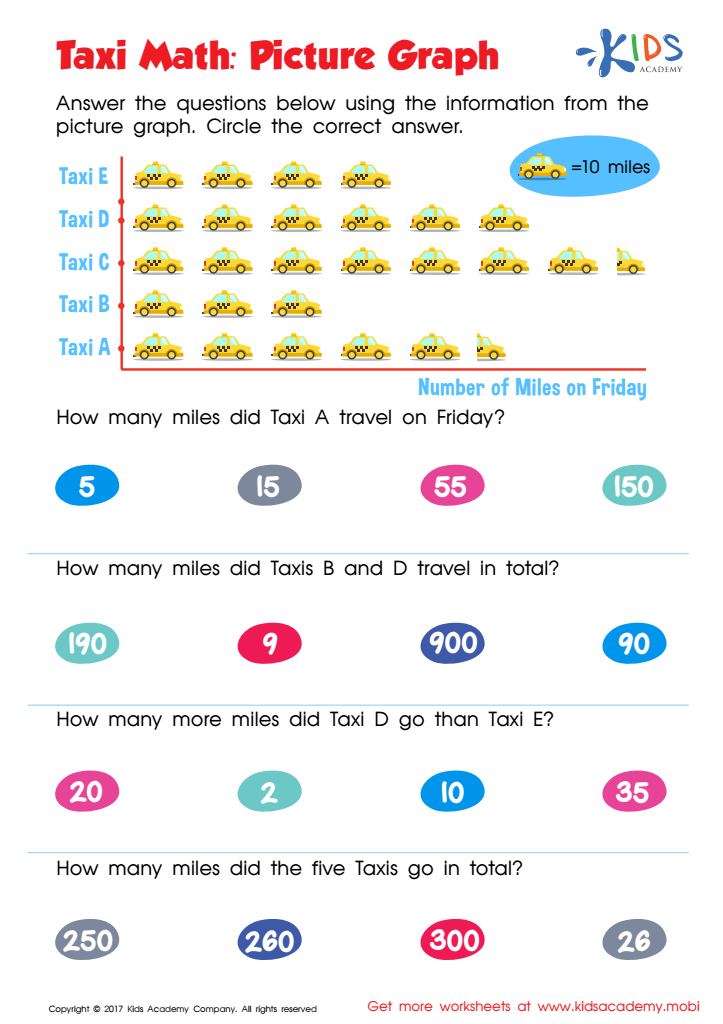
Taxi Math Worksheet
This 3rd grade worksheet helps kids learn data viz with fun taxis and colors to make the graph come alive. Picture graphs are an engaging way to teach data analysis, and this worksheet is the perfect tool!
Kids love picture graphs! This 3rd grade worksheet uses colorful taxis to help them learn to read graphs better. Each image represents a number, teaching data analysis with visuals and fun. An engaging way to learn data viz, this worksheet is perfect for young learners.
 Assign to My Students
Taxi Math Worksheet
Worksheet
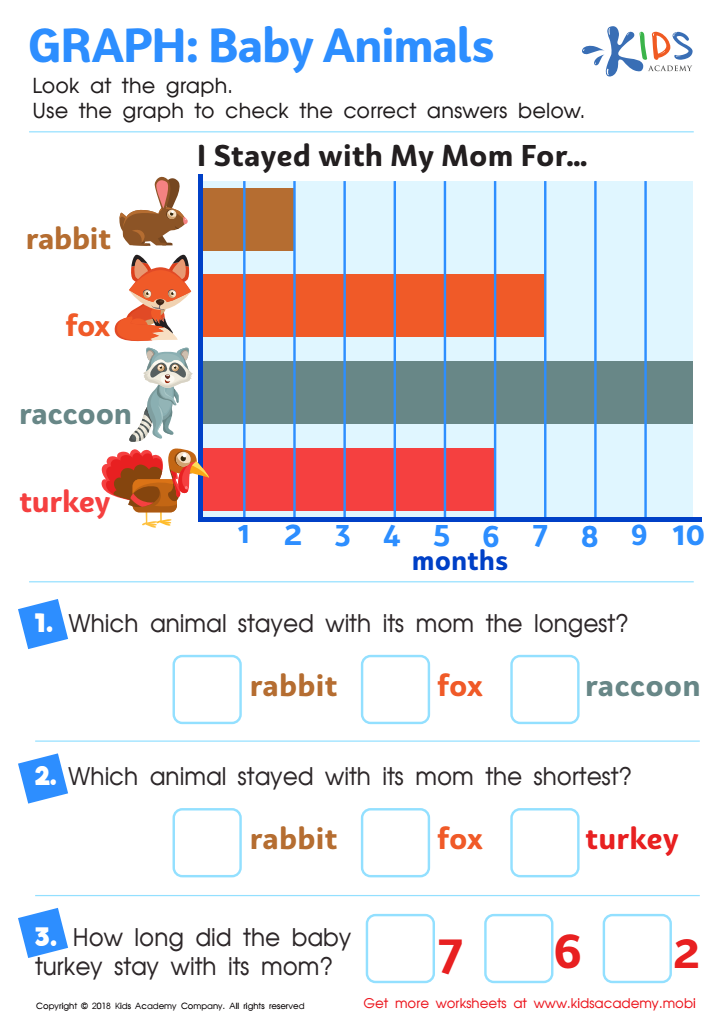
Graph: Baby Animals Worksheet
Graphs are essential for learning in math, science and ELA. This worksheet featuring baby animals is a fun way to practice reading graphs. Look at the graph and answer the questions below it. Check the boxes for the right answers based on the data.
Graph: Baby Animals Worksheet
Worksheet
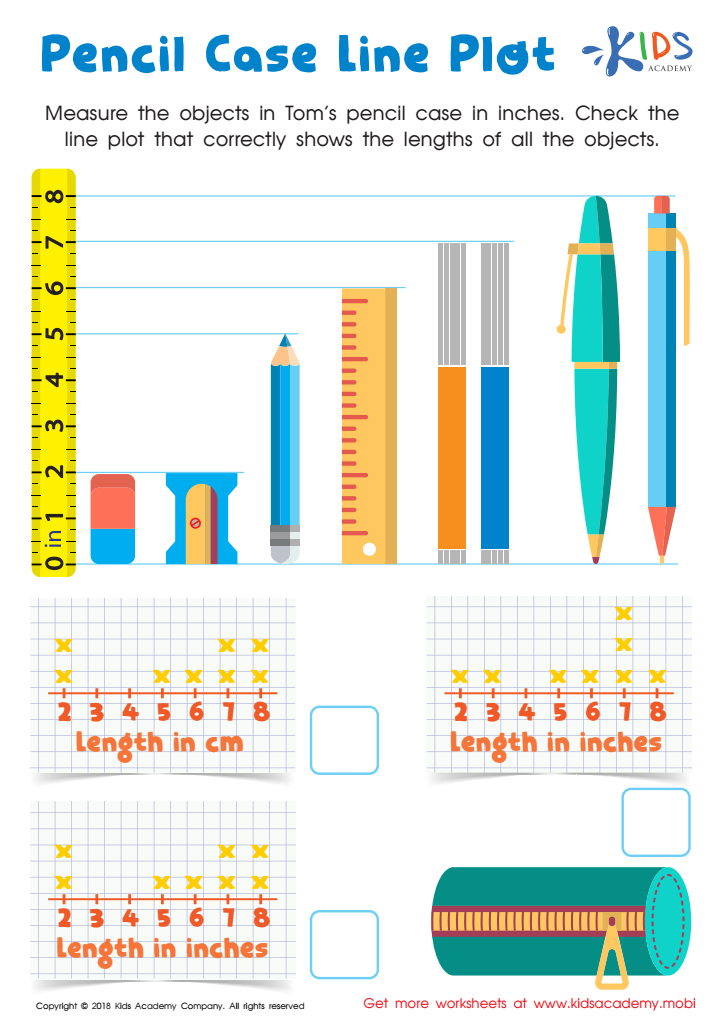
Pencil Case Line Plot Worksheet
Explain to your child that a line plot is a way to organize information. For example, if they need to arrange objects, they should draw a line plot. Now, have them help Tom measure the objects in his pencil case in inches. Then, have them check the line plot that accurately shows the length.
Pencil Case Line Plot Worksheet
Worksheet
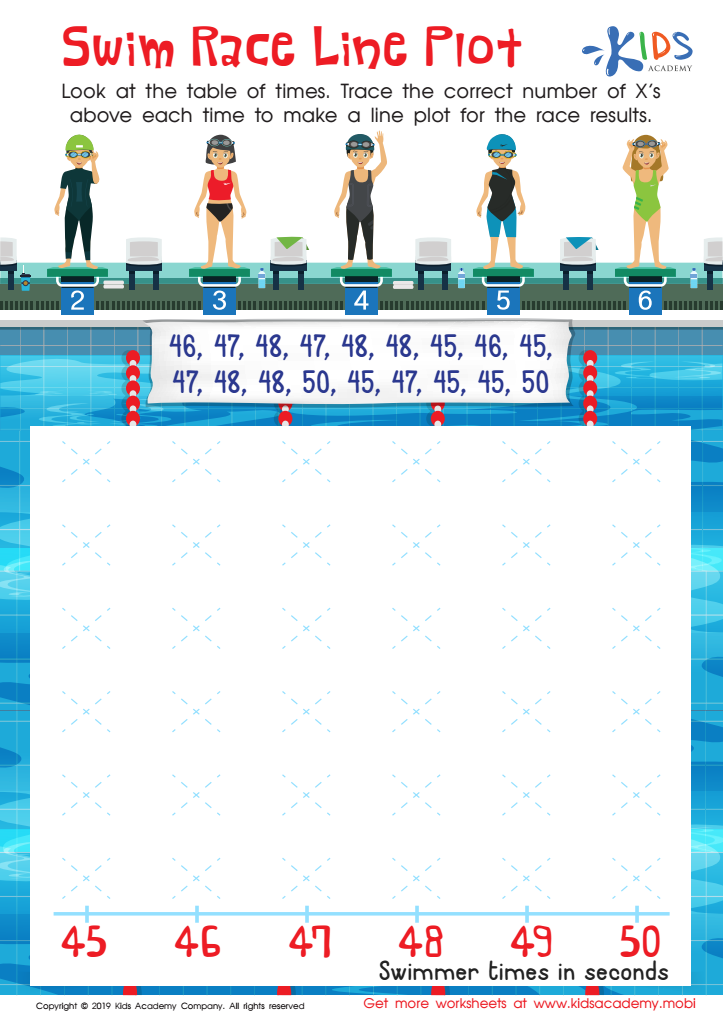
Swim Race Line Plot Worksheet
Kindergartners can benefit from extra help with math, particularly line plots. This worksheet can make the concept easier to understand. Together, study the table of times; then, guide the kids in tracing the correct number of x's above each time to make a line plot for the race result.
Swim Race Line Plot Worksheet
Worksheet
Join Kids Academy for Free
Who is primarily going to use this learning content?








Data analysis in math for children aged 6-8 is crucial as it fosters critical thinking and problem-solving skills that are vital for academic success and everyday life. At this age, children are naturally curious and beginning to make sense of the world around them. Engaging with data helps them develop skills in observation, comparison, and inference, which are foundational not just in math but across all subjects.
Moreover, learning to collect, organize, and interpret data introduces kids to basic statistical concepts such as mean, median, and mode in a fun and relatable context, making math less intimidating. These skills can enhance their ability to understand and filter information in a data-driven world, benefiting their digital literacy as they grow.
Both parents and teachers should prioritize teaching data analysis to encourage meaningful engagement with mathematical ideas. By incorporating real-life examples such as survey results, weather patterns, or simple graphic representations, children learn to see the connection between math and the world they live in. This engagement instills a love for math, enhances collaboration and communication skills, and prepares them to tackle more complex concepts as they advance in their education.








