Differentiating shapes Math Worksheets for Ages 6-8
4 filtered results
-
From - To
Enhance your child's geometric skills with our Differentiating Shapes Math Worksheets, tailored for ages 6-8! These engaging worksheets are designed to help young learners identify, compare, and differentiate between various shapes. With a blend of fun activities and educational content, your child will develop a solid understanding of shapes, their properties, and spatial relationships. Our expertly crafted worksheets encourage critical thinking and visual learning, making geometry enjoyable and accessible. Perfect for classroom use or at-home practice, these worksheets will support your child’s math journey and build a strong foundation in geometry. Start exploring today!
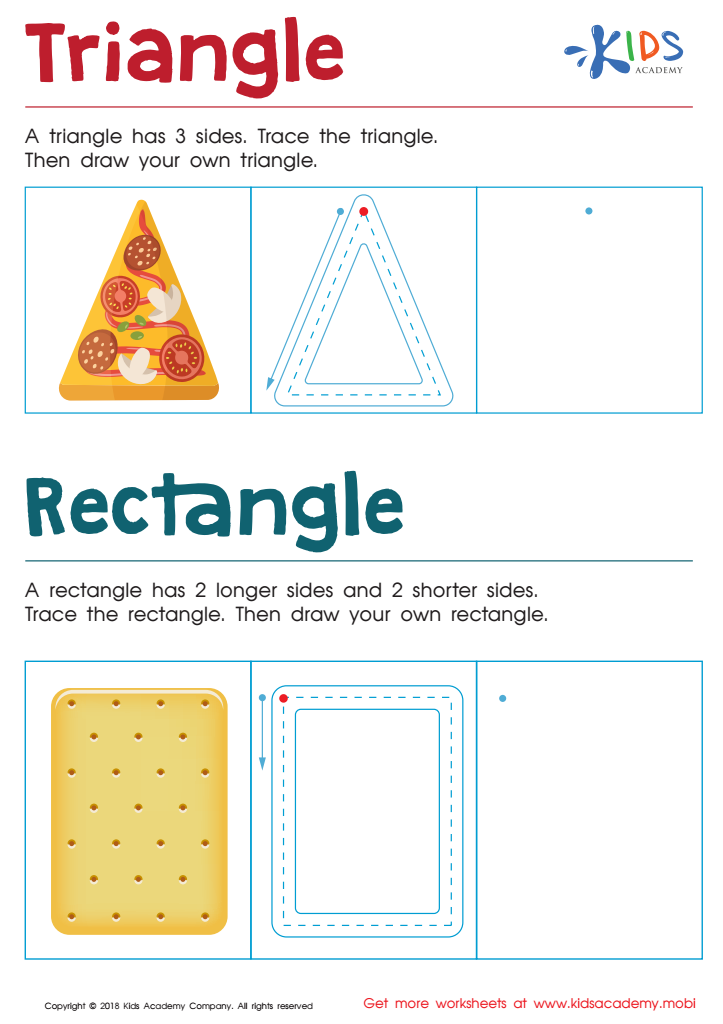
Triangle Rectangle Worksheet
 Assign to My Students
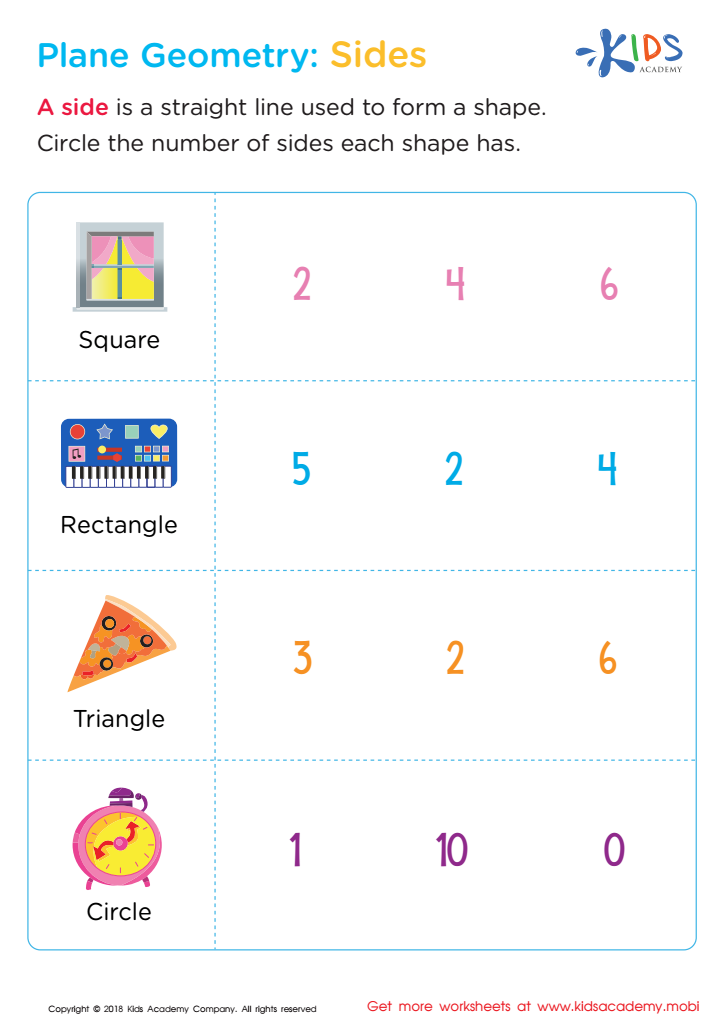
Plane Geometry: Sides Worksheet
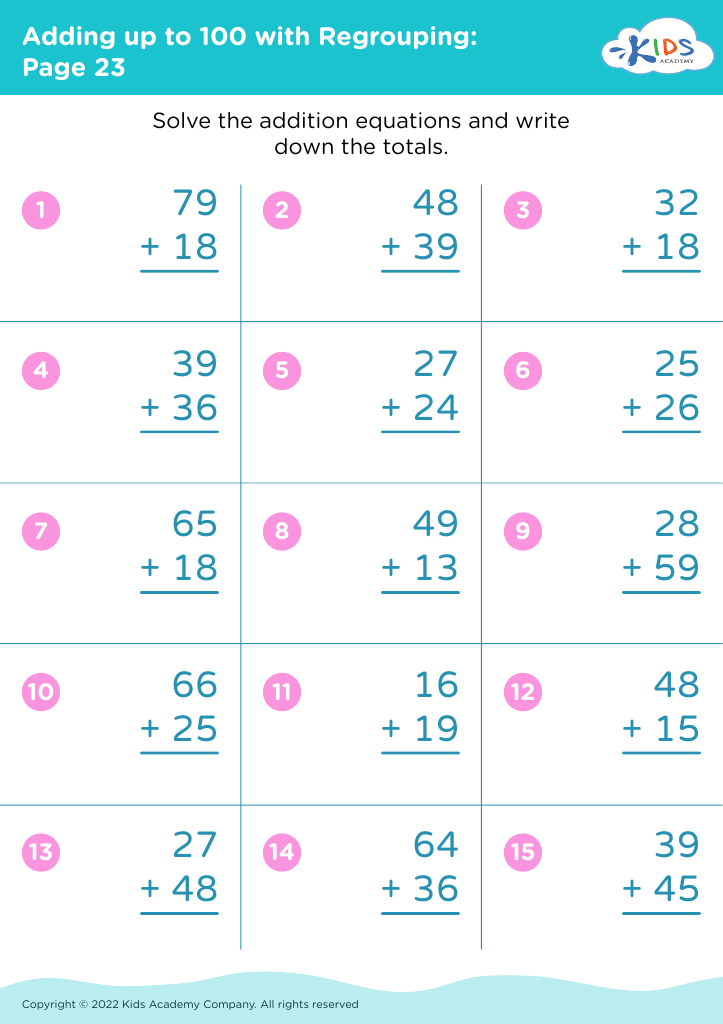
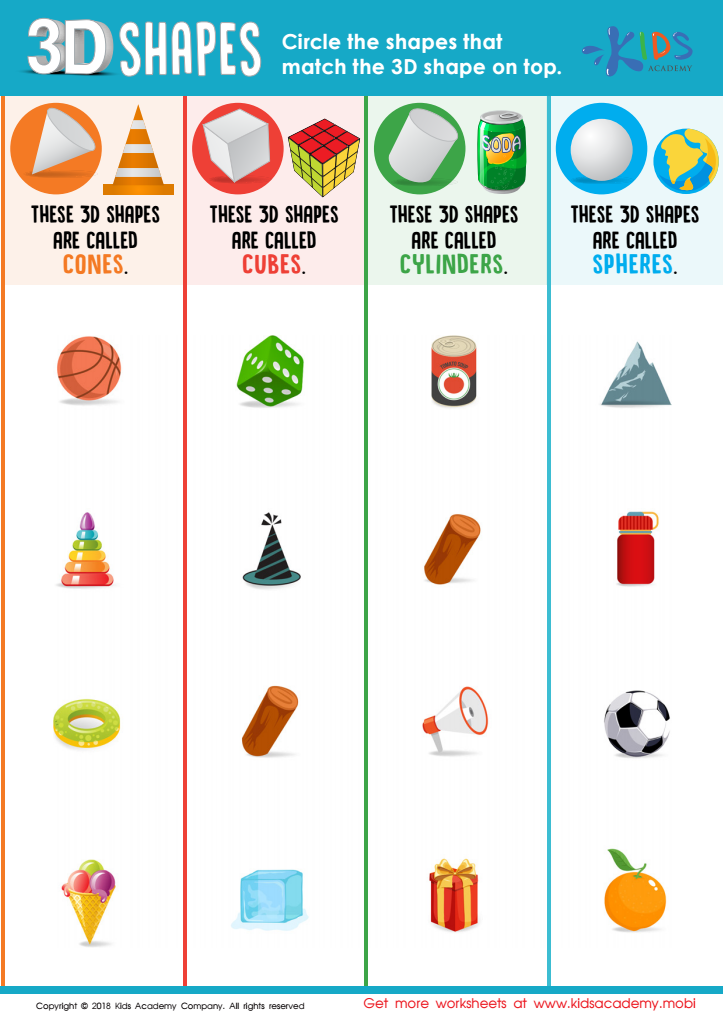
3D Shapes Worksheet








Parents and teachers should care about teaching young children to differentiate shapes in math because it builds essential cognitive and spatial reasoning skills foundational for later academic success. Recognizing and understanding shapes at ages 6–8 lays the groundwork for geometry, a key area of mathematics. When children learn to identify, compare, and categorize shapes, they're also enhancing their pattern recognition and logical thinking abilities, which are crucial for problem-solving in all areas of education.
Moreover, differentiating shapes helps improve spatial awareness, which affects how children navigate and interpret the world around them. These skills are especially important for understanding more complex mathematical concepts that appear as they advance in school, such as symmetry, measurements, and spatial relationships.
Fostering these skills benefits not only math proficiency but also overall brain development. Engaging in shape differentiation activities encourages fine motor skills and visual perception, which contribute to skills important for reading, writing, and everyday tasks.
For teachers, incorporating shape differentiation into lessons ensures that learning is interactive and fun, keeping students engaged while addressing diverse learning styles. For parents, supporting shape-related activities at home can strengthen the home-school connection and contribute to a child's confidence and enthusiasm for learning. Building a strong foundation in early math paves the way for lifelong academic achievement.








