
Enhance problem-solving Math Worksheets for Ages 6-8
3 filtered results
Difficulty Level
Grade
Age
-
From - To
Subject
Activity
Standards
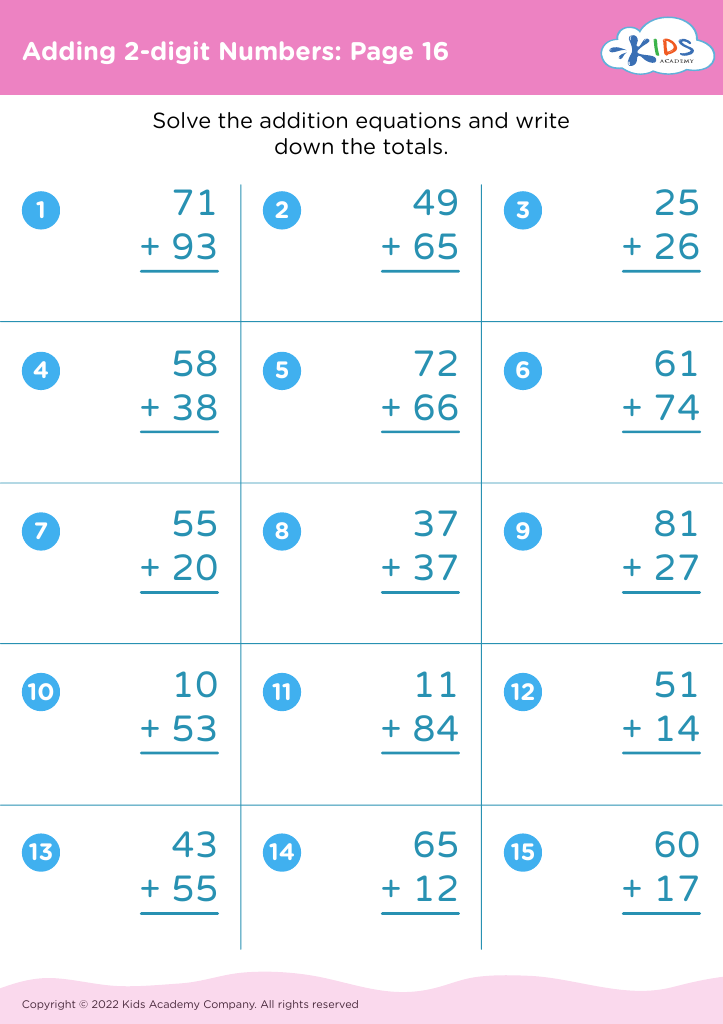
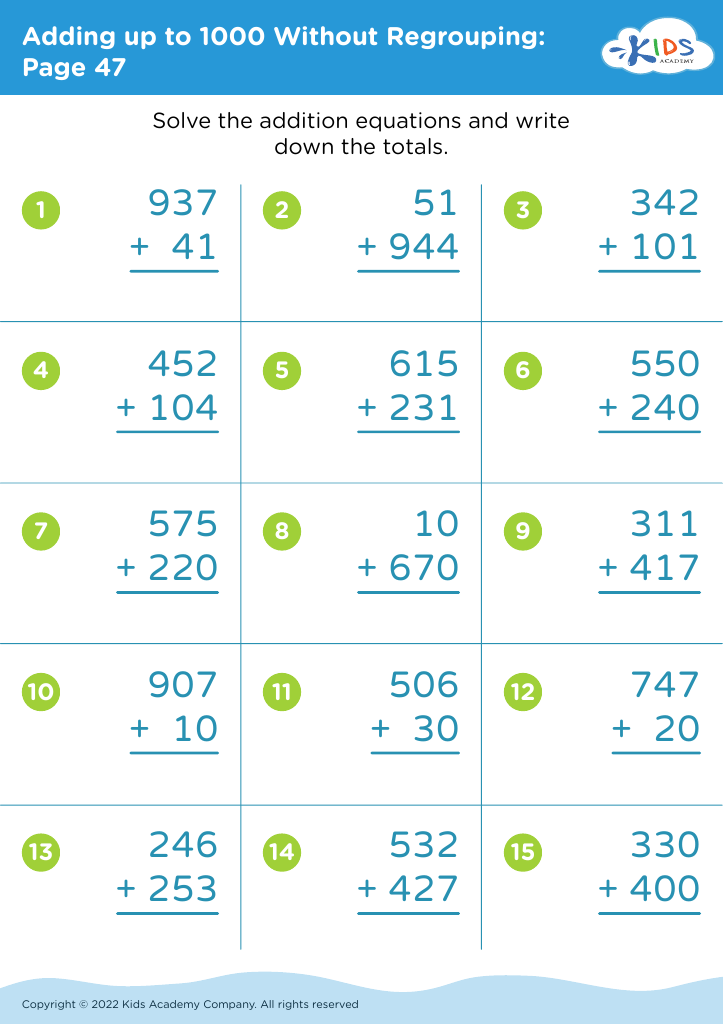
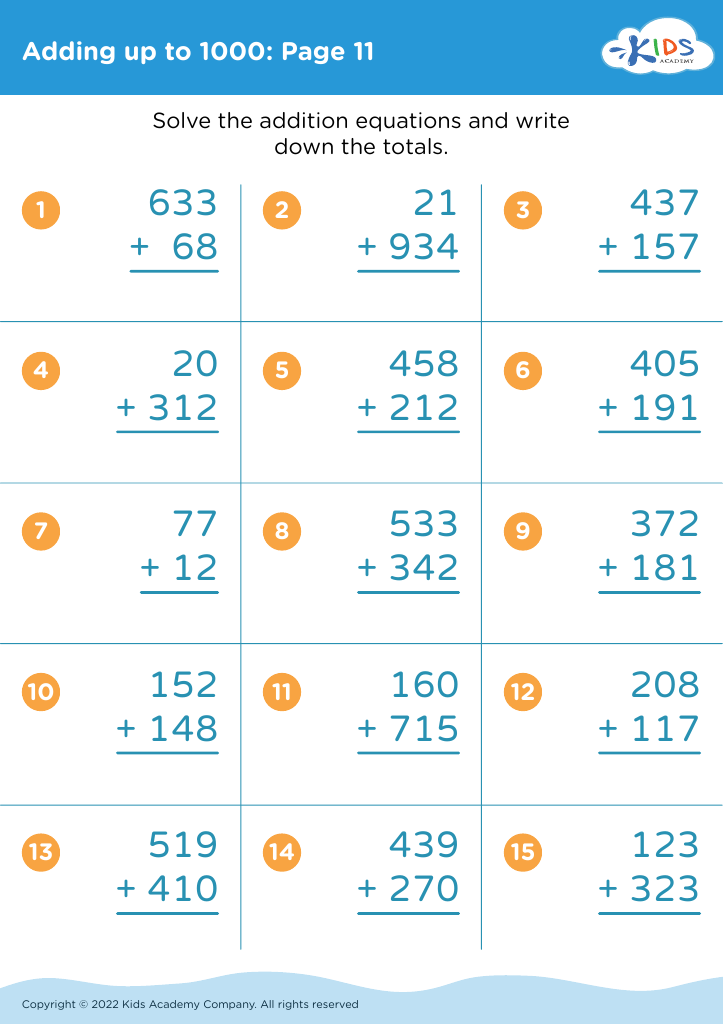
Discover our "Enhance Problem-Solving Math Worksheets for Ages 6-8" designed to boost young learners' critical thinking and mathematical skills. These engaging worksheets combine fun activities with essential math concepts, fostering a love for problem-solving. Students will tackle diverse challenges, from basic arithmetic to simple word problems, all tailored to their developmental stage. Each worksheet encourages exploration, enhances reasoning, and builds confidence. In addition, our resources support teachers and parents in creating an interactive learning environment. Explore our collection to inspire children in mastering math through enjoyable and stimulating experiences that further their educational journey!
Favorites
With answer key
Interactive
Join Kids Academy for Free
Who is primarily going to use this learning content?








Enhancing problem-solving math skills for children aged 6-8 is vital for their overall cognitive development and future success. First, this age group is a crucial period where foundational math concepts are formed, influencing not only their mathematical abilities but overall academic performance. Engaging in problem-solving activities fosters critical thinking, logic, and creativity as children learn to approach challenges from various angles.
Moreover, problem-solving is a life skill that extends beyond the classroom. It helps children develop resilience and adaptability, qualities necessary for navigating life's challenges. Teachers and parents alike should care, as they play a pivotal role in shaping children's attitudes toward math. Positive reinforcement and support during these formative years can help diminish math anxiety and encourage a growth mindset.
Additionally, enhanced problem-solving skills lead to better teamwork and communication abilities, as many math challenges are solved collaboratively. This social aspect promotes interdependence and develops essential soft skills. By prioritizing math problem-solving, educators and parents are not only nurturing independent thinkers but also preparing children for 21st-century demands, ensuring they are equipped to tackle future academic and real-world problems effectively. Investing time and resources in early math education is an investment in a child's promising future.








