Enhance vocabulary skills Math Worksheets for Ages 6-8
5 filtered results
-
From - To
Discover our "Enhance Vocabulary Skills Math Worksheets for Ages 6-8," designed to intertwine essential math concepts with vocabulary building. Perfect for young learners, these engaging worksheets help children strengthen their language skills while tackling arithmetic, geometry, and problem-solving tasks. Tailored to captivate and challenge, each worksheet features word problems, mathematical terminology, and varied exercises that not only boost math proficiency but also enrich students' vocabulary. Ideal for reinforcing classroom learning or providing extra practice at home, our carefully crafted worksheets ensure a well-rounded educational experience for children in early elementary grades. Get started today and watch your child's abilities flourish!
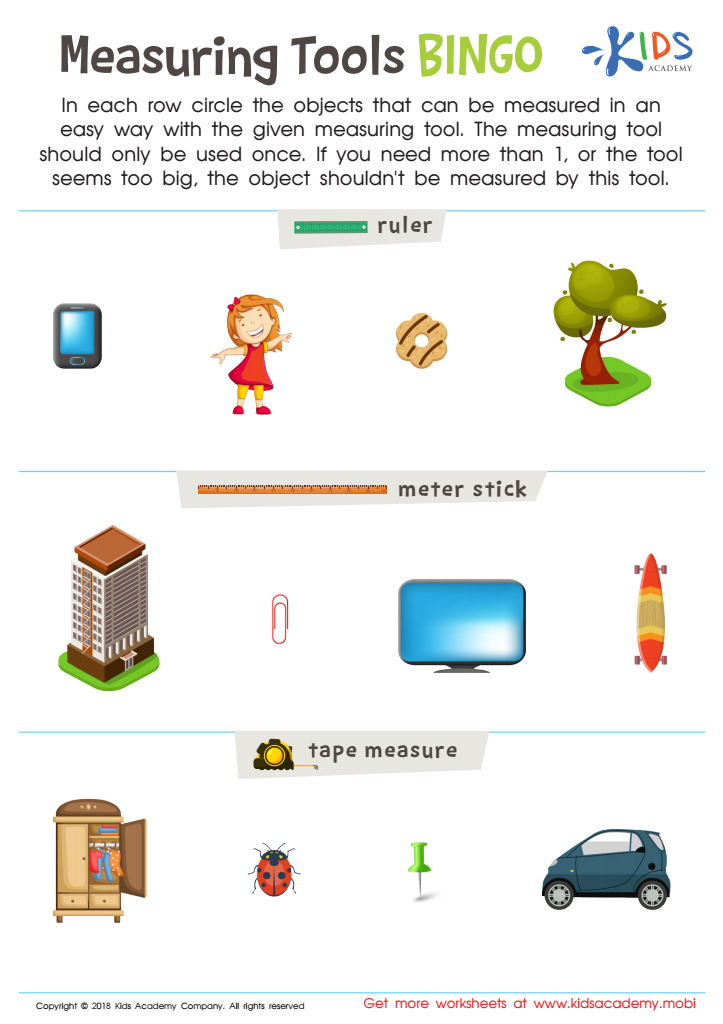
Measuring Tools Bingo Worksheet
 Assign to My Students







Enhancing vocabulary skills, especially related to math, for children aged 6-8 is critical for several reasons. At this developmental stage, kids are forming foundational skills that will support their future academic success. A robust math vocabulary helps them understand math concepts more deeply and communicate their ideas effectively.
First, knowing specific math terms allows children to follow instructions and engage meaningfully in classroom activities. Terms like "sum," "difference," "product," and "quotient" become building blocks for understanding more complex problems. When kids grasp these words early, they can solve problems faster and with greater confidence.
Second, math vocabulary contributes to better comprehension across different subjects. Math isn't isolated from literacy; it often involves explanations, story problems, and logical reasoning. A solid understanding of math language supports reading comprehension and critical thinking, aiding overall academic achievement.
Third, cultivating math vocabulary at an early age fosters a positive attitude toward math. When kids are comfortable with terminology, they are less likely to feel intimidated by new concepts. This confidence can diminish math anxiety and promote a lifelong interest in the subject.
In sum, enhancing math vocabulary for young children creates a strong foundation for academic success, improves comprehension, and encourages a positive and confident attitude toward learning.








