Improving problem-solving abilities Math Worksheets for Ages 6-8
3 filtered results
-
From - To
Enhance your child's problem-solving abilities with our engaging math worksheets designed for ages 6-8! These printable resources provide fun and challenging exercises that encourage critical thinking, logical reasoning, and creativity. Our carefully crafted worksheets cover a range of topics, including basic arithmetic, word problems, and geometric concepts, tailored to meet the developmental needs of young learners. With clear instructions and vibrant visuals, your child will build confidence in their math skills while having a great time. Perfect for home or classroom use, these worksheets are an essential tool in nurturing your child's passion for mathematics and problem-solving. Explore today!
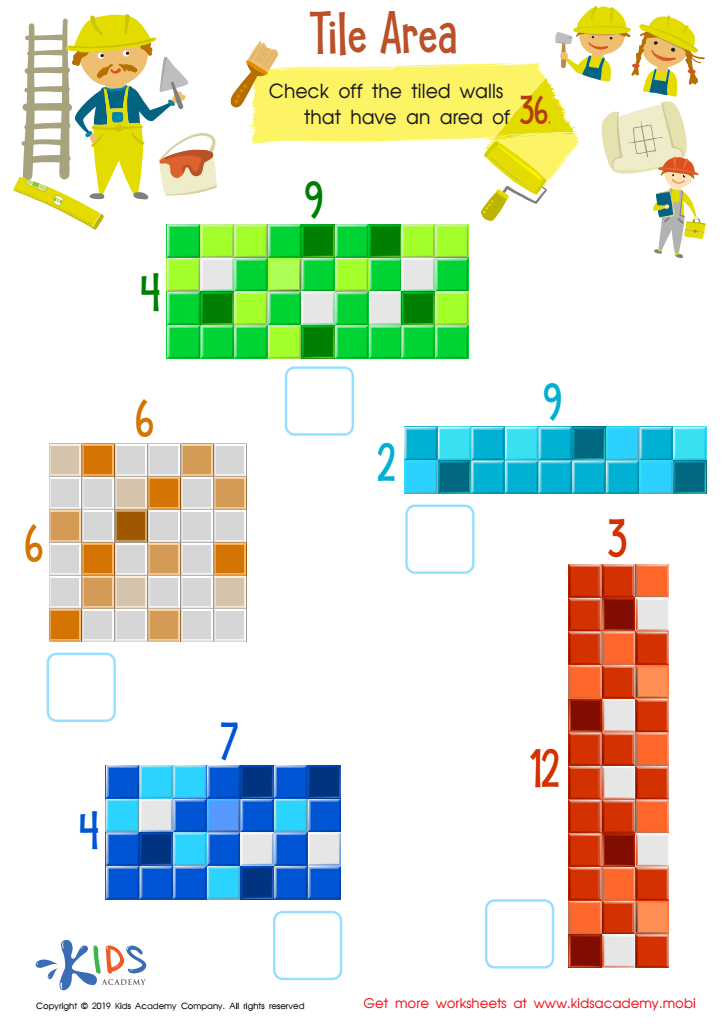
Tile Area Worksheet
 Assign to My Students
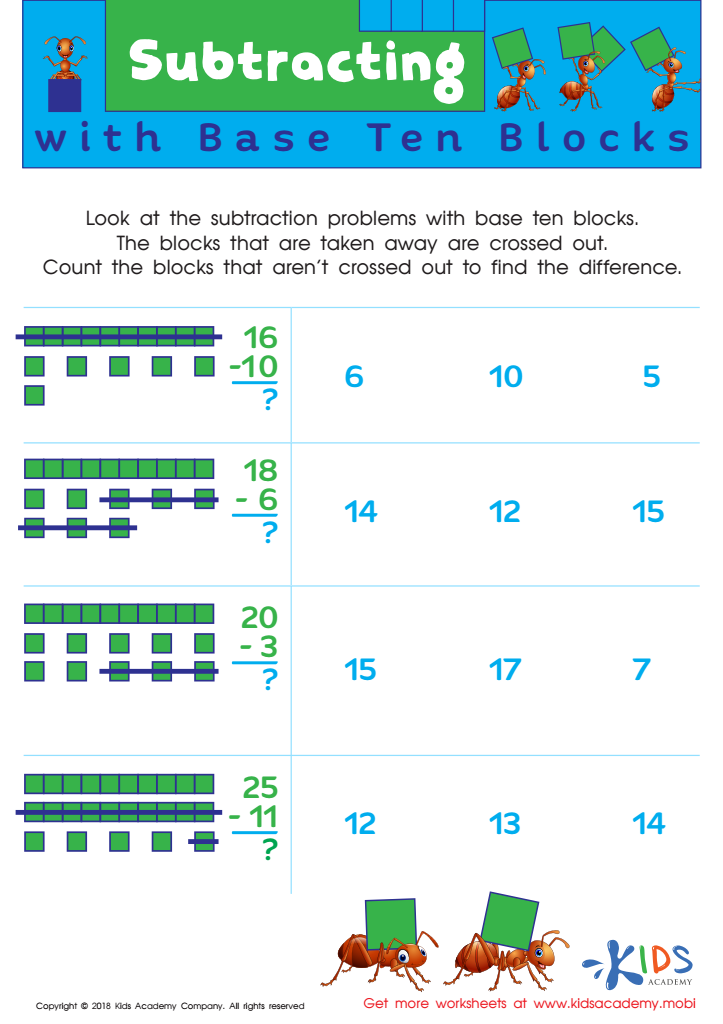
Subtracting with Base Blocks Worksheet
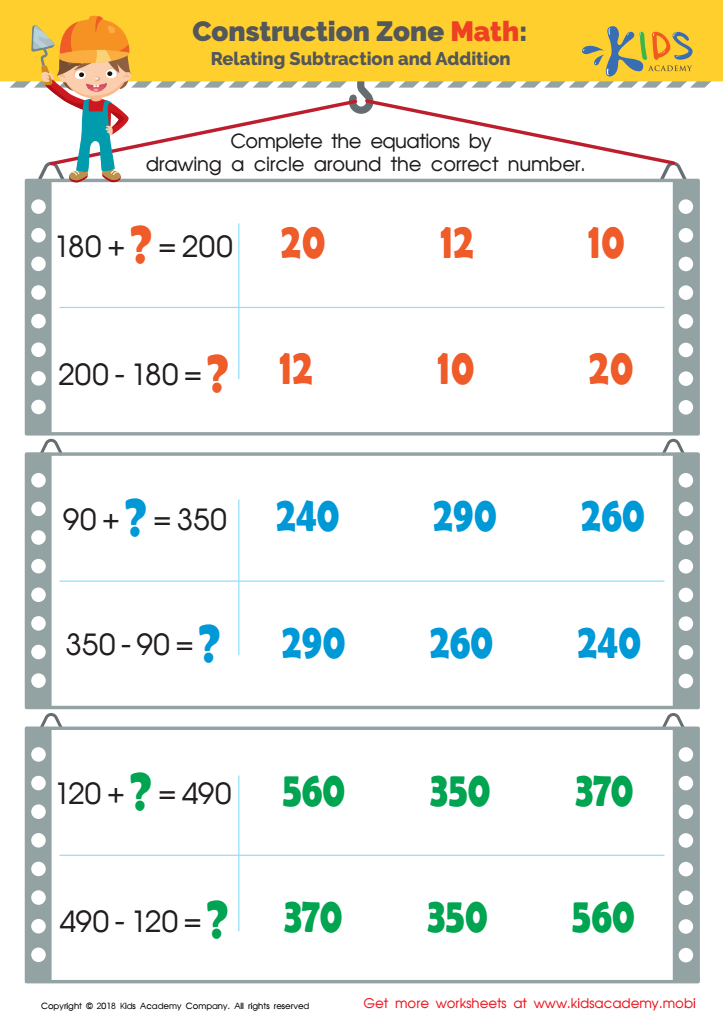
Construction Zone Math: Relating Subtraction and Addition Worksheet








Improving problem-solving abilities in mathematics for children aged 6-8 is vital for several reasons. At this stage, children's cognitive and analytical skills are rapidly developing, making it the perfect time to cultivate their problem-solving abilities. Effective problem-solving in math not only strengthens their numerical understanding but also enhances critical thinking and reasoning skills. This foundation equips children to tackle challenges with creativity and persistence, essential traits for lifelong learning.
Furthermore, competencies in math lay the groundwork for future academic success. Children who comfortably engage in problem-solving will more likely enjoy and pursue STEM-related subjects as they progress through school. Parents and teachers play a crucial role in nurturing a positive attitude towards math by encouraging exploration, trial, and error, and celebrating successes, regardless of how small.
Additionally, strong problem-solving skills foster resilience; children learn that mistakes are a natural part of learning. This resilience is beneficial not only in academics but across various life situations. Investing in improving math problem-solving abilities for ages 6-8 ultimately creates confident learners who are adaptable and capable of approaching real-world problems with assurance and creativity. Educators and parents must prioritize this developmental stage to ensure children become well-rounded problem solvers for the complexities of the future.








