Learn addition Math Worksheets for Ages 6-8
3 filtered results
-
From - To
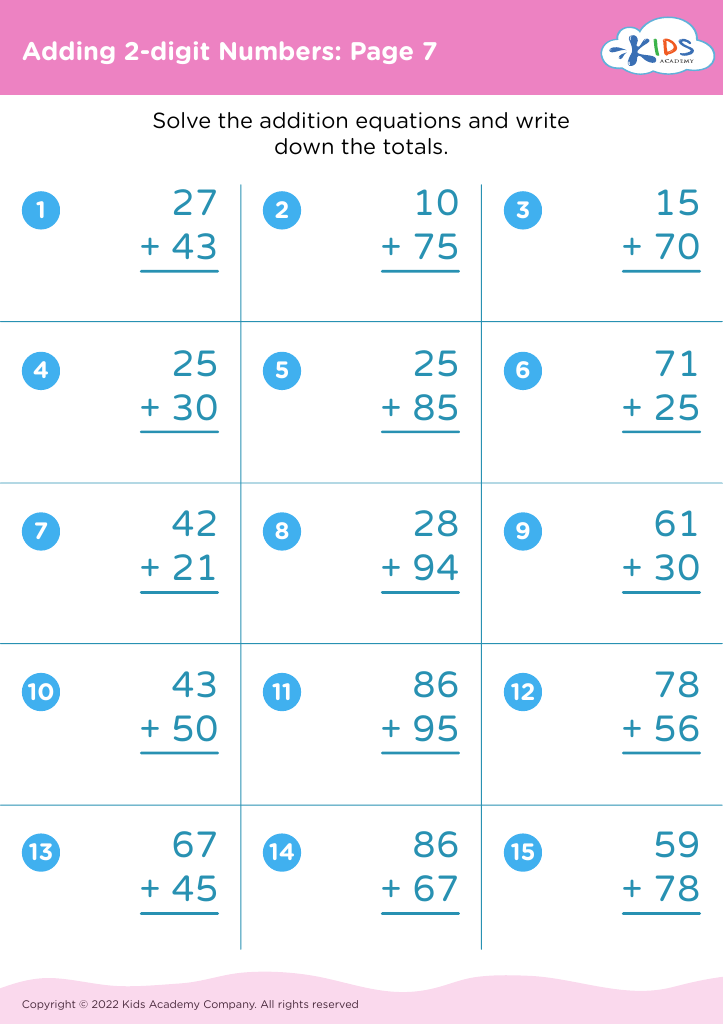
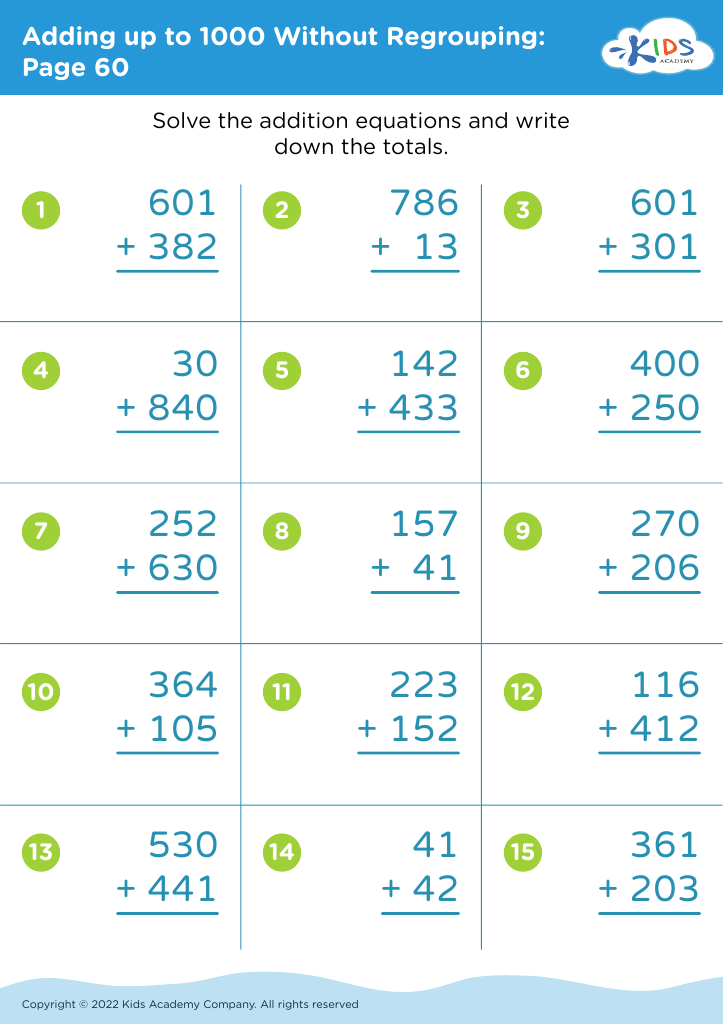
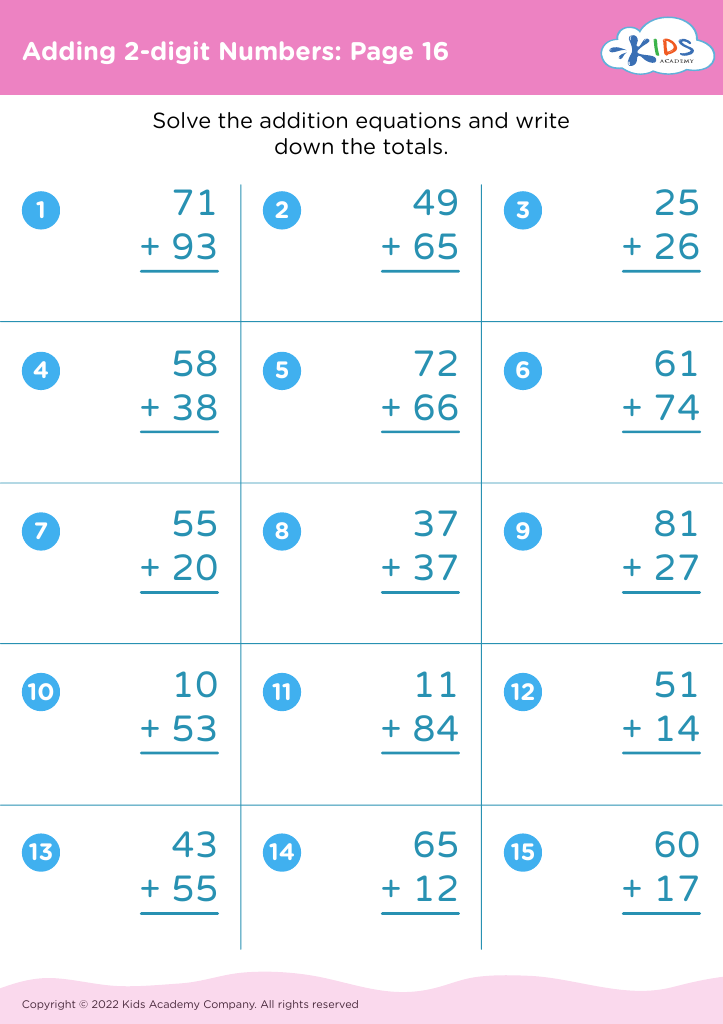
Discover a fun and engaging way for kids aged 6-8 to master addition with our specially designed math worksheets! Our collection offers a variety of exercises tailored to enhance counting, number recognition, and basic addition skills. Each worksheet features colorful illustrations and age-appropriate problems that make learning enjoyable. Parents and teachers will find valuable resources to reinforce classroom learning and support at-home practice. Whether it's simple sums or fun activities, these worksheets promote mastery and confidence in addition concepts. Start your child’s math journey today, and watch their skills flourish with our effective and interactive worksheets!






Understanding addition is a foundational skill for children aged 6-8, and it is essential for their academic success and everyday life. First, mastery of addition provides a solid groundwork for more complex mathematical concepts, such as subtraction, multiplication, and division. Grasping these basic principles builds confidence and a positive attitude toward learning, helping to instill a lifelong love for mathematics.
Additionally, addition skills are important for problem-solving in daily situations. Whether budgeting allowances, sharing snacks, or understanding time management, these skills enhance real-world decision-making and critical thinking abilities. As children learn to add, they also improve their cognitive abilities, as math encourages logical reasoning and pattern recognition.
Parents and teachers play a crucial role in supporting this process. Engaging students through games, visual aids, and everyday applications makes learning addition enjoyable and relevant. Furthermore, fostering a supportive learning environment encourages perseverance in facing challenges, crucial for personal growth.
In conclusion, investing time and effort into teaching addition to children aged 6-8 equips them with vital skills for future success and fosters a curious and resilient mindset. This foundational knowledge resonates beyond the classroom, preparing children for diverse life experiences.








