Money management skills Math Worksheets for Ages 6-8
3 filtered results
-
From - To
Equip your child with essential life skills using our money management math worksheets designed for ages 6-8. These engaging, interactive worksheets teach children the basics of handling money through fun activities including counting coins, making change, and budgeting simple expenses. Each printable worksheet is tailored to blend math proficiency with practical financial knowledge, helping your child develop smart money habits from a young age. Perfect for both classroom and at-home learning, these resources will give your youngster the confidence and competence to manage money wisely. Start building a foundation for your child’s financial literacy today!
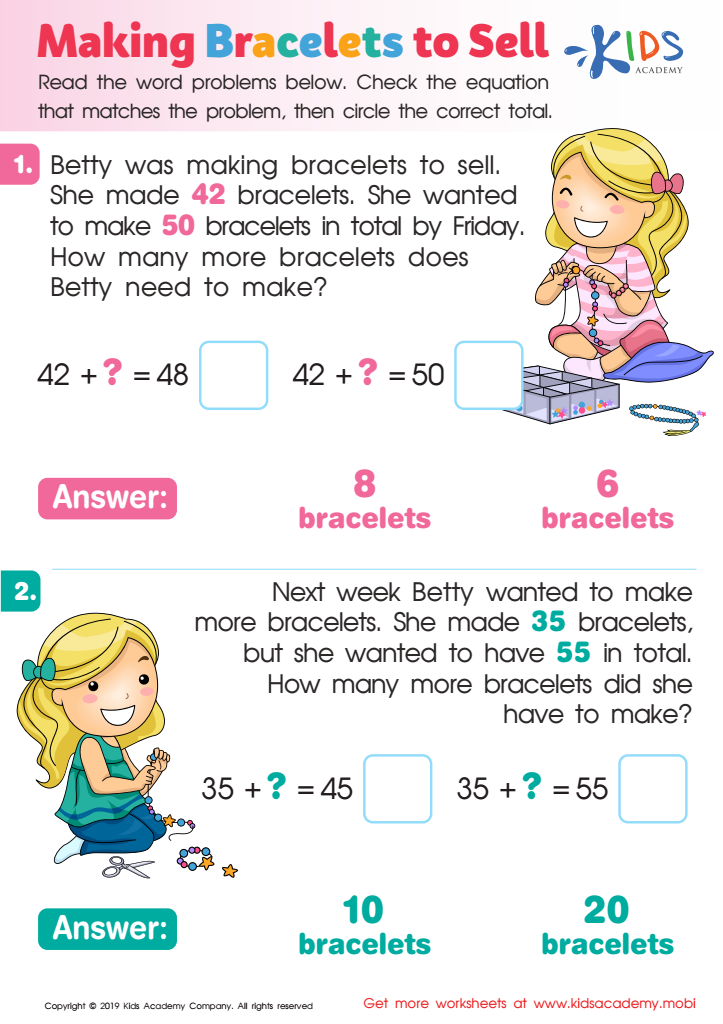
Making Bracelets to Sell Worksheet
 Assign to My Students
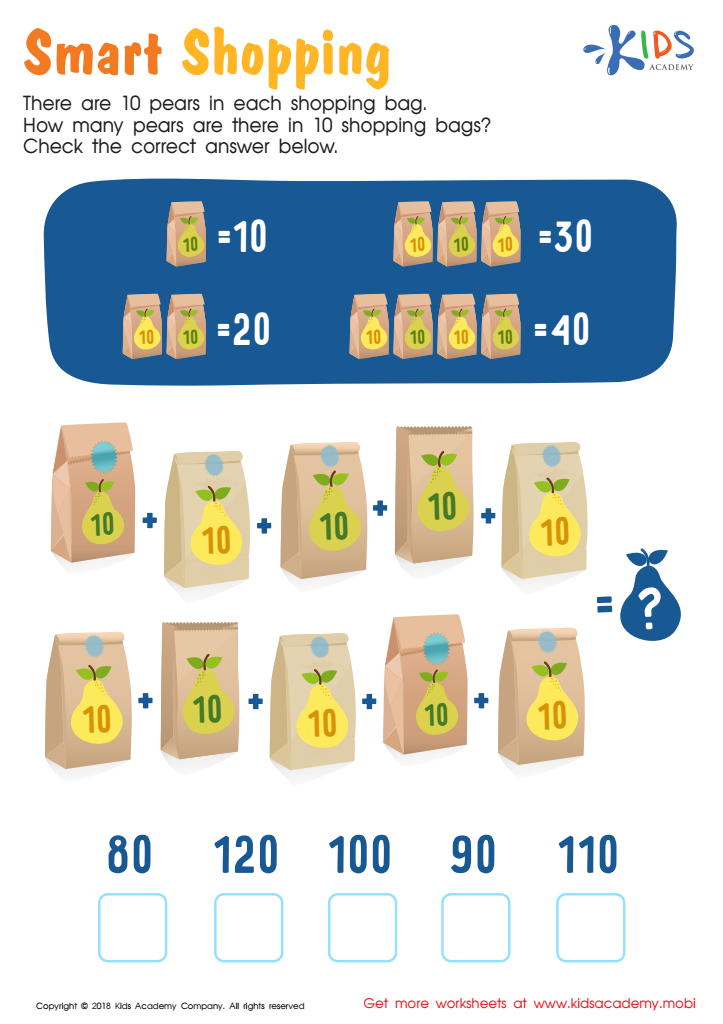
Smart Shopping: Trade Tens for a Hundred Worksheet
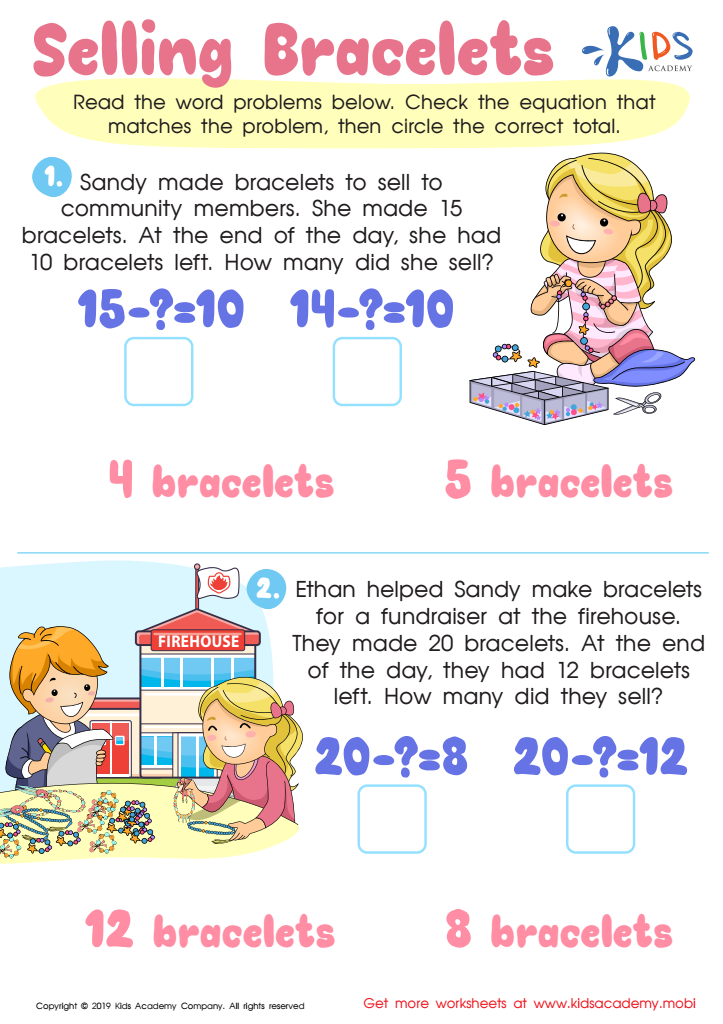
Selling the Bracelets Worksheet








Teaching money management skills to children aged 6-8 is crucial for several reasons, as it lays a solid foundation for their future financial literacy. First, early exposure helps demystify the concept of money, turning abstract numbers into tangible lessons. Children begin to understand that money is earned and exchanged for goods and services, fostering a sense of responsibility and the value of hard work.
Moreover, integrating math with money management equips children with essential arithmetic skills. They learn addition, subtraction, and basic problem-solving while handling real-world scenarios. This practical application enhances their enthusiasm for learning, as they see immediate relevance and benefits in everyday life.
Promoting these skills encourages smart decision-making from a young age. Kids start grasping concepts like saving, budgeting, delayed gratification, and making choices within their means. These lessons help reduce impulsive behavior and build a foundation for healthy financial habits in adulthood.
Additionally, early money management education can help bridge socio-economic divides. By equipping all children with these essential skills, educators and parents contribute to long-term economic equality, ensuring that every child, regardless of background, has the opportunity to build a stable financial future.
Ultimately, fostering financial literacy from a young age empowers children, helping them grow into responsible, informed adults who can navigate and excel in the financial world.








