Recognizing equal parts Math Worksheets for Ages 6-8
3 filtered results
-
From - To
Discover our engaging "Recognizing Equal Parts" math worksheets designed for children aged 6-8. These worksheets provide a fun and interactive way for young learners to understand the concept of equal parts and fractions visually. With colorful illustrations and varied activities, students will explore dividing shapes, identifying halves and quarters, and developing their skills in recognizing equal divisions. Perfect for at-home practice or classroom use, our worksheets help reinforce essential math skills while keeping children motivated and excited to learn. Explore our collection today and watch your child build a strong foundation in math through enjoyable learning experiences!
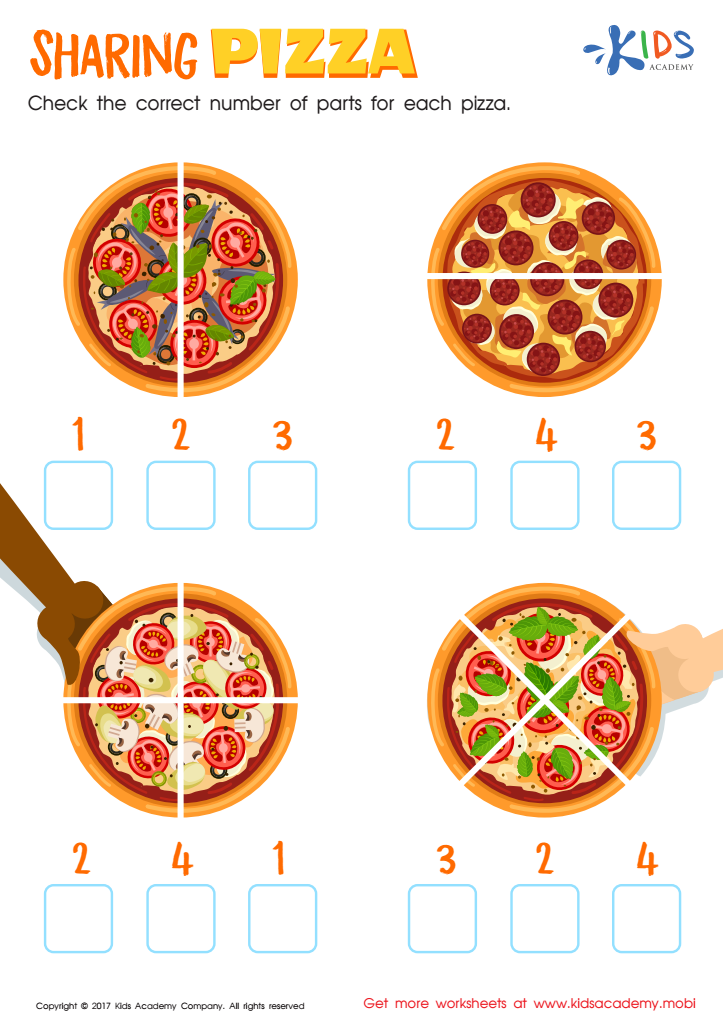
Sharing Pizza Worksheet
 Assign to My Students
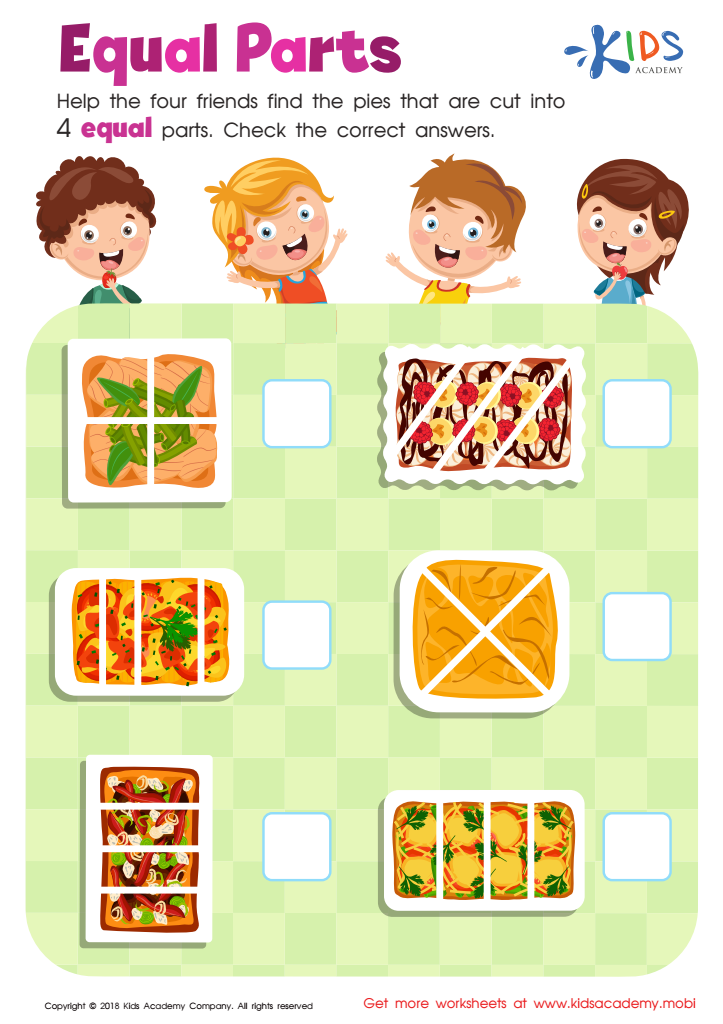
Equal Parts: Food Worksheet






Recognizing equal parts is a fundamental concept in mathematics for children ages 6-8, and parents and teachers should care about its significance for several reasons. Firstly, understanding equal parts lays the groundwork for comprehending fractions, which are critical for various real-life applications, including cooking, sharing, and measurement. Precision in recognizing equal parts fosters skills in fairness and equity, as children learn the importance of sharing equally among peers.
Secondly, this concept is crucial for developing a strong mathematical foundation. It enhances spatial reasoning and improves problem-solving skills, as children visualize and manipulate objects to see how they can be divided into equal sections. Engaging young learners in activities involving equal parts cultivates curiosity and nurtures a love for math.
Moreover, the ability to recognize equal parts promotes collaboration and communication among peers during group activities, encouraging teamwork and social interaction. Parents and teachers should foster this understanding through interactive games, storytelling, and hands-on activities, ensuring that children become confident thinkers who can approach mathematical challenges with ease. Ultimately, emphasizing equal parts empowers children to build a solid mathematical foundation, paving the way for future success in more advanced math concepts.








