Times table familiarity Math Worksheets for Ages 6-8
3 filtered results
-
From - To
Introduce your child to the exciting world of mathematics with our Times Table Familiarity Math Worksheets, specially designed for ages 6 to 8! These engaging worksheets provide children with the tools they need to master multiplication through fun, interactive exercises. By practicing times tables in a variety of formats, including games and puzzles, kids will build confidence and improve their math skills. Our well-structured activities are perfect for independent learning or targeted practice at home. Help your child develop a solid foundation in multiplication that will serve them well throughout their education. Start their math journey today!
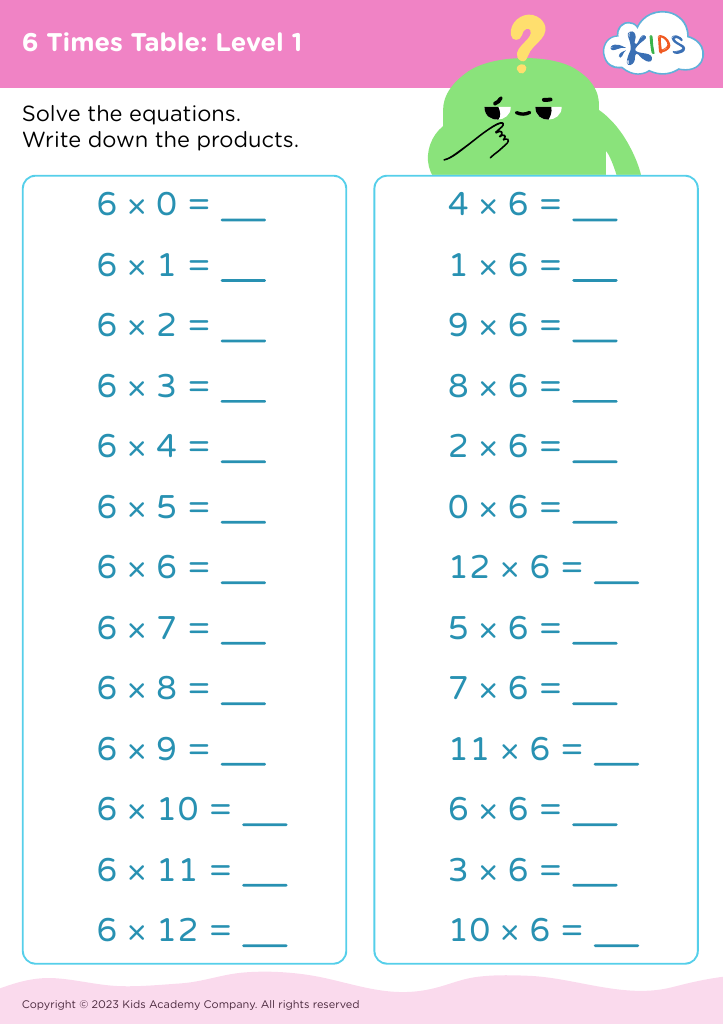
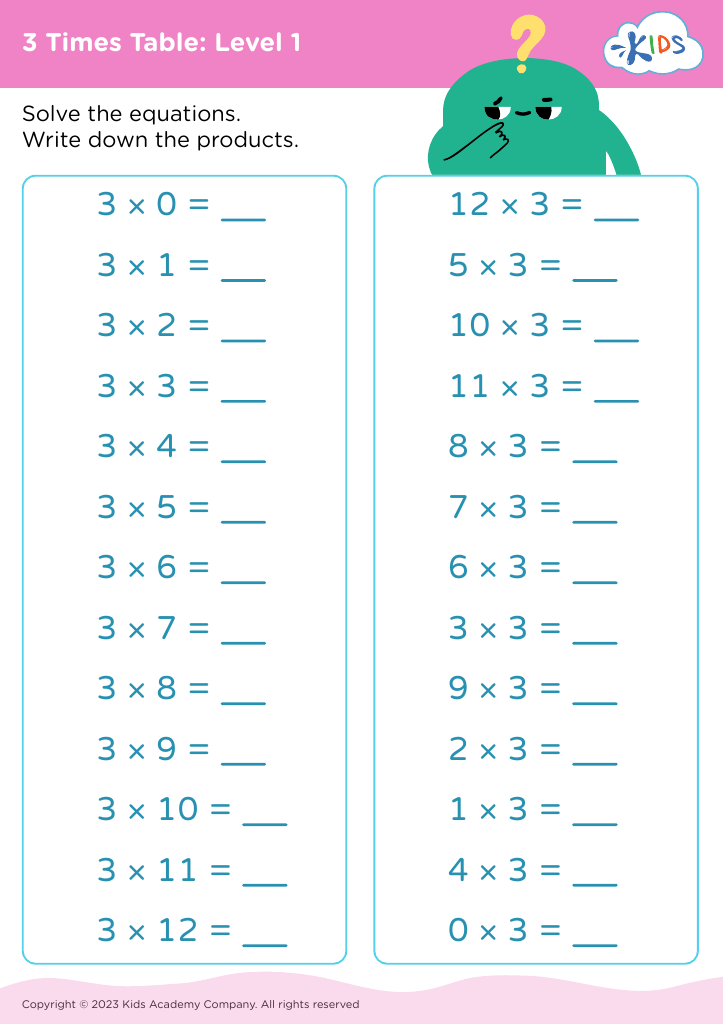
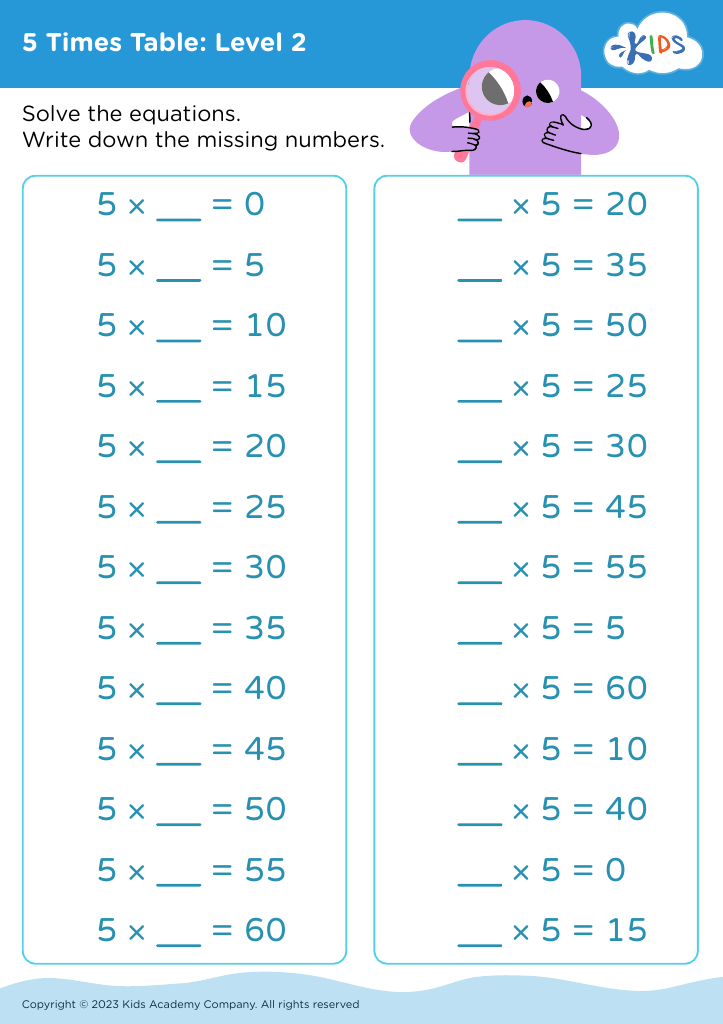






Understanding times tables is crucial for children aged 6-8 as it lays the foundation for their future math skills. This age group is typically in the early stages of formal education, where they are introduced to essential mathematical concepts. Familiarity with times tables enhances their ability to perform calculations, leading to improved problem-solving skills and self-confidence in math.
Parents and teachers should care about this topic because mastery of multiplication not only aids in acquiring more complex math skills—like division and fractions—but also enhances a child’s overall cognitive development. By practicing times tables, kids develop memorization techniques and improve their concentration, which is beneficial in the learning process.
Additionally, times table fluency can influence a child's attitude toward mathematics. Confidence in tackling basic math problems can reduce math anxiety and encourage a positive mindset toward learning, promoting a lifelong appreciation for the subject. Engaging children in fun, interactive ways to learn their times tables, such as games and songs, can make the learning process enjoyable and meaningful. Ultimately, aches at this formative stage in their education showcase the importance of establishing a strong mathematical foundation for their academic journey ahead.








