Understanding clocks Math Worksheets for Ages 6-8
5 filtered results
-
From - To
Teach your children to tell time with our 'Understanding Clocks' math worksheets, designed specifically for ages 6-8. These engaging and interactive sheets cover key concepts, from reading analog and digital clocks to understanding hours and minutes. Each worksheet is rich with fun activities and colorful illustrations to keep young learners motivated. Perfect for home or classroom use, our resources support foundational time-telling skills essential for daily life. Ensure your child masters this important milestone with practical, easy-to-follow exercises that make learning both enjoyable and effective. Dive into our collection today and make telling time a breeze!
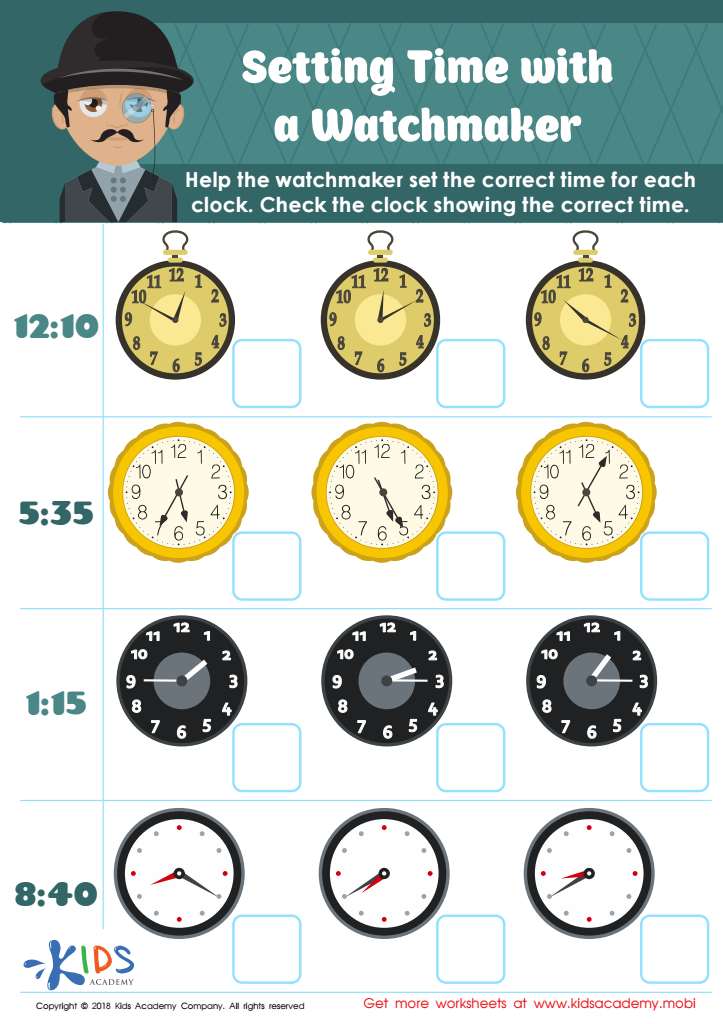
Setting Time with Watchmaker Worksheet
 Assign to My Students
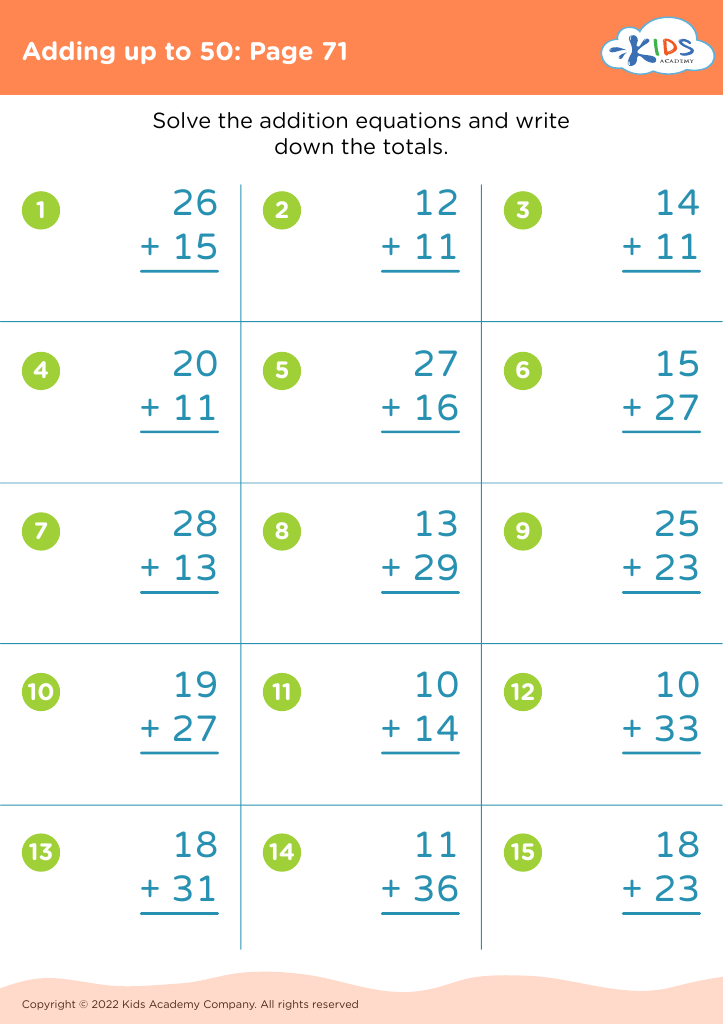
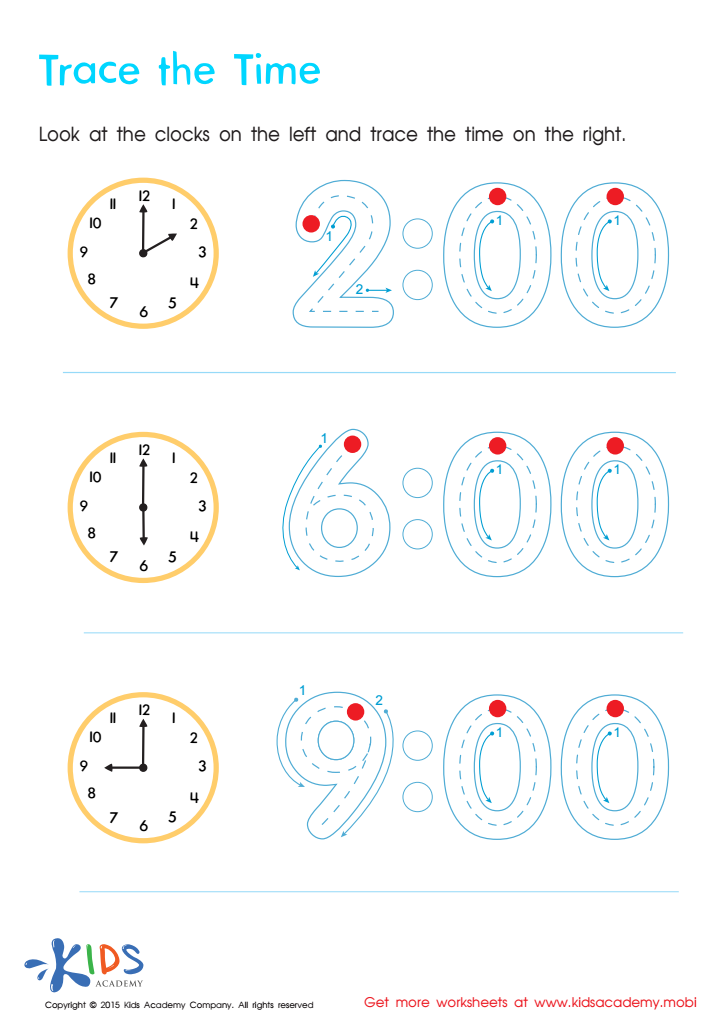
Telling The Time Worksheet: Part 2
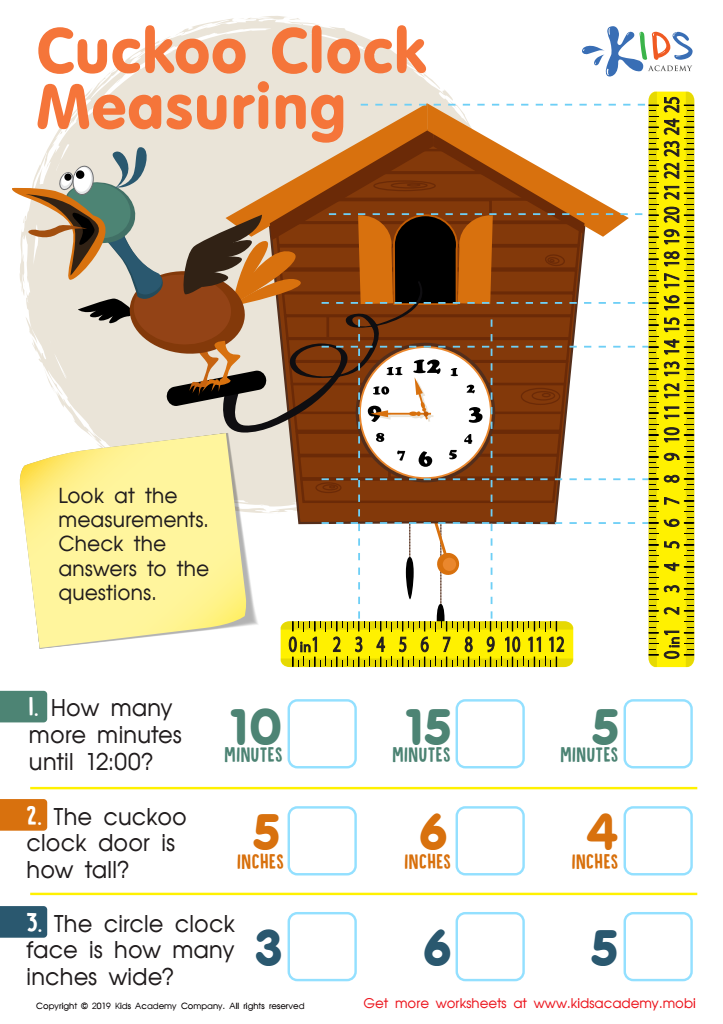
Cuckoo Clock Measuring Worksheet
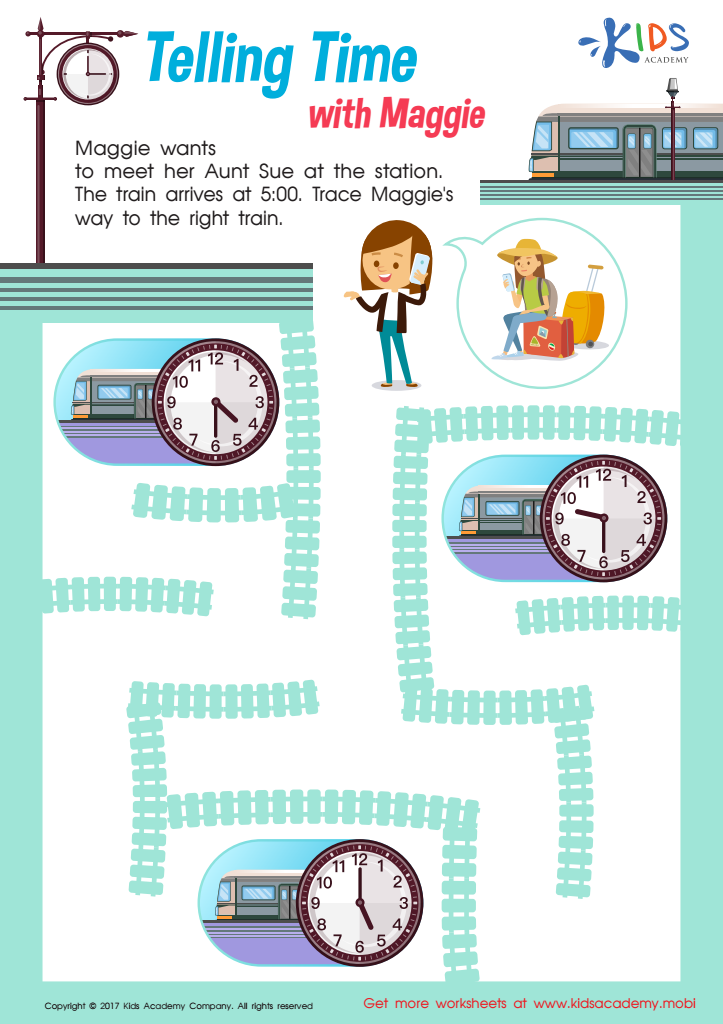
Telling Time With Maggie Time Worksheet








Understanding clocks and telling time is a crucial skill for children ages 6-8 and is something parents and teachers should prioritize. Learning to read both analog and digital clocks helps children manage their daily routines, fostering independence and responsibility.
When children learn to tell time, they gain a better understanding of time management. This understanding enables them to organize their day, knowing when activities like playtime, homework, and bedtime occur. For example, knowing school timings helps them prepare in the morning without constant reminders from adults.
Learning to read clocks also enhances foundational math skills. Children practice counting by fives and understand units of measurement, such as hours and minutes, enhancing their numerical literacy. Recognizing the passage of time improves their comprehension of sequencing and duration, vital concepts in both math and daily life.
Additionally, the ability to tell time integrates with learning about timelines and schedules, enriching their overall cognitive development. As children grasp these concepts, they become more efficient learners, which can result in better academic performance across subjects.
In short, understanding clocks helps children develop skills essential for both their current educational journey and future daily interactions, making it a vital lesson during their early academic years.








