Understanding number sequences Math Worksheets for Ages 6-8
7 filtered results
-
From - To
Unlock the world of numbers with our "Understanding Number Sequences" Math Worksheets, specifically designed for children aged 6-8. These engaging and educational worksheets help young learners master sequencing skills, essential for their math development. With fun exercises covering counting, number patterns, and addition/subtraction sequences, our worksheets make learning intuitive and enjoyable. Perfect for at-home practice or classroom use, these resources ensure kids grasp fundamental math concepts while fostering critical thinking. Explore our collection to give your child the confidence and skills needed to excel in mathematics. Dive into the excitement of number sequences today!
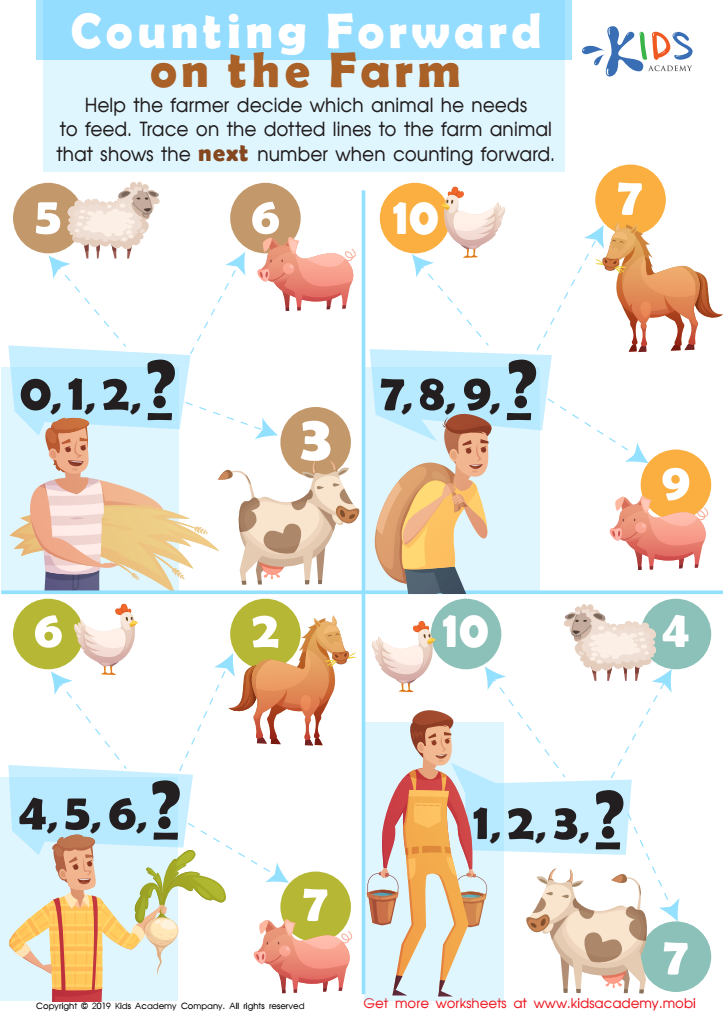
Counting Forward On the Farm Worksheet
 Assign to My Students
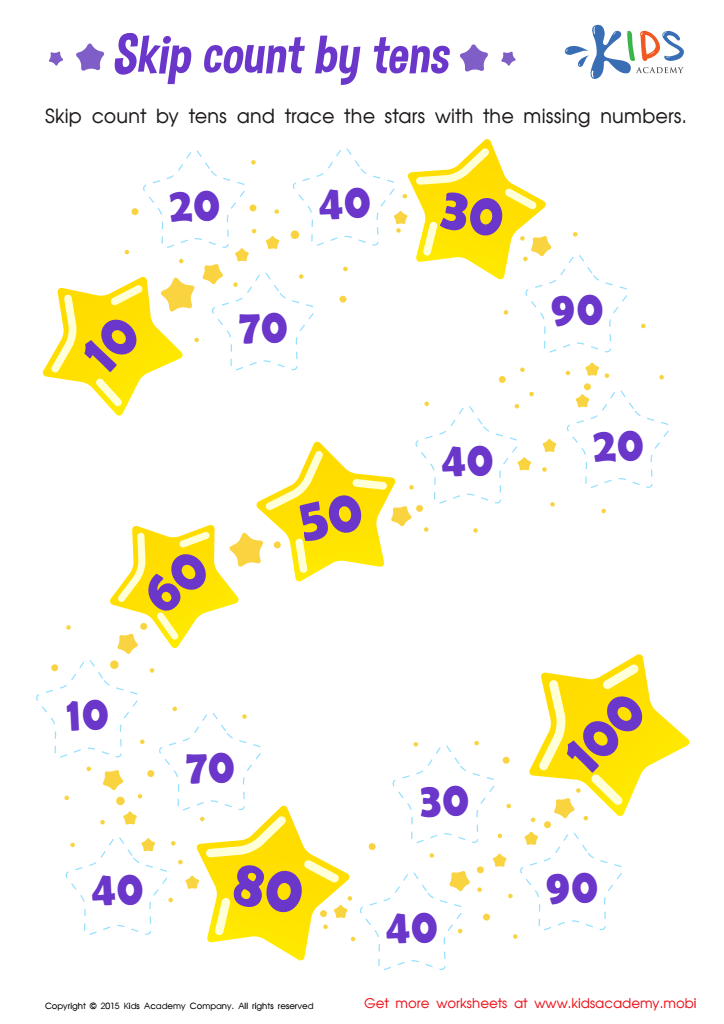
Learn dozens: Skip Count by Tens Printable
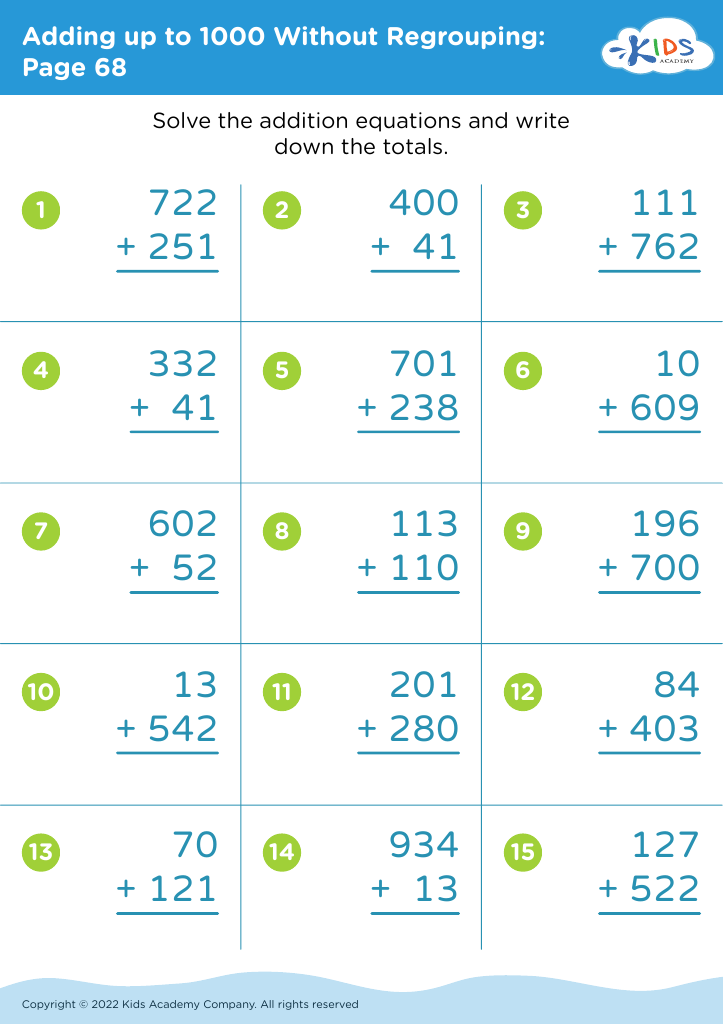
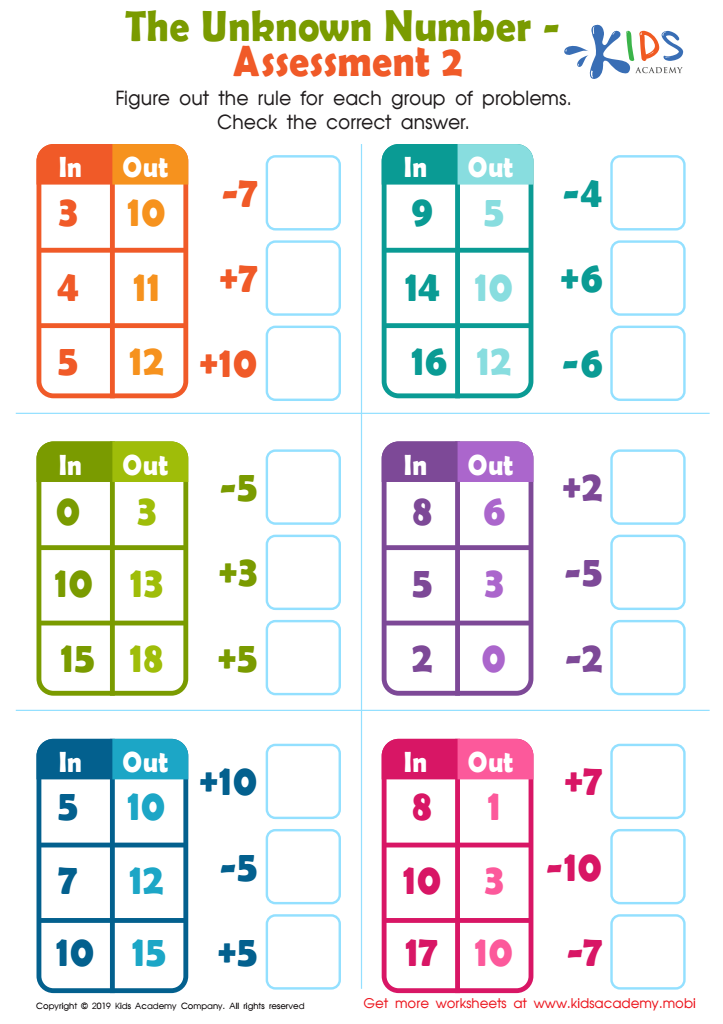
The Unknown Number - Assessment 2 Worksheet
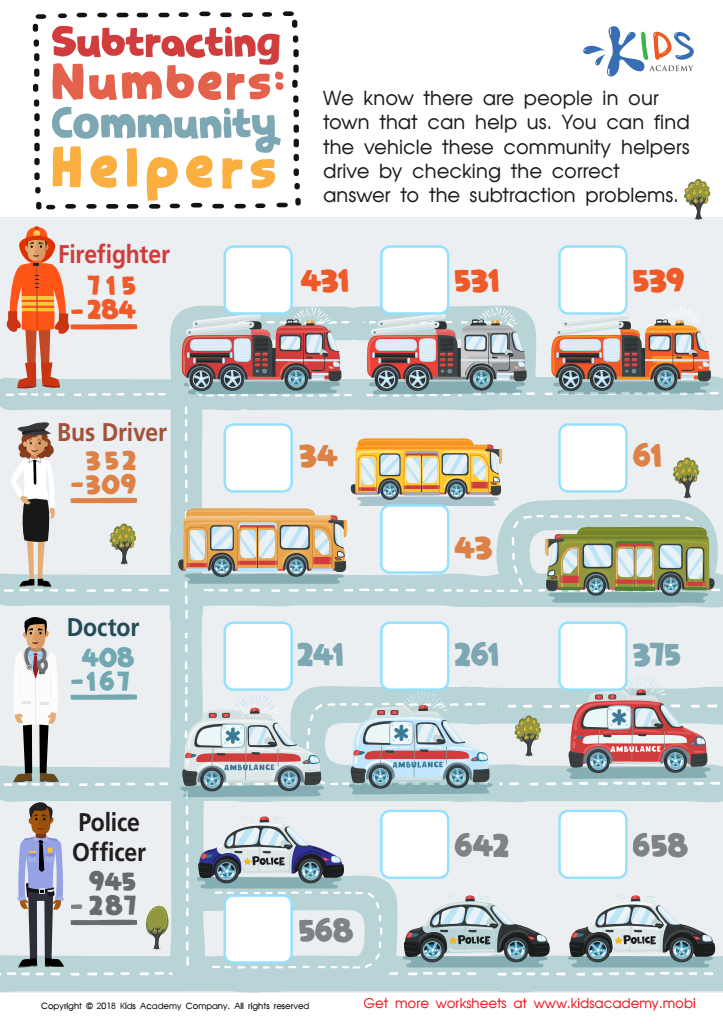
Subtracting Numbers: Community Helpers Worksheet








Understanding number sequences is a foundational math skill crucial for children ages 6-8, and both parents and teachers should be deeply invested in nurturing this understanding. During these formative years, young learners are developing basic numeracy skills that will serve as the groundwork for more advanced mathematical concepts.
Number sequences teach children valuable patterns and relationships within mathematics, helping them to recognize ordered sets and predict future numbers. This ability to identify patterns enhances critical thinking and problem-solving skills. For instance, grasping sequences like counting by twos or fives lays the foundation for multiplication and division.
Furthermore, a solid understanding of number sequences is essential for day-to-day activities. Children use these skills in everyday scenarios, such as telling time, counting money, and following schedules. Real-life applicability makes learning math contextserved and engaging for young students.
Parents and teachers influence children’s willingness to learn and attitude toward math by fostering a supportive and encouraging learning environment. Positive reinforcement and practical applications of number sequences in home and classroom settings can demystify math and make it more accessible and enjoyable. By prioritizing this aspect of math education, parents and teachers are setting children up for continued academic success and life-long numeracy.








