Visual discrimination skills Math Worksheets for Ages 6-8
3 filtered results
-
From - To
Enhance your child's learning experience with our Visual Discrimination Skills Math Worksheets, designed specifically for ages 6-8. These engaging worksheets help young learners develop essential visual discrimination skills, crucial for success in mathematics. Through fun, interactive activities, children will sharpen their ability to notice differences and similarities in shapes, numbers, and patterns. Our thoughtfully crafted exercises promote critical thinking, improve focus, and build confidence in math. Perfect for classroom use or at-home learning, these worksheets offer an excellent way for children to strengthen their problem-solving abilities while enjoying the learning process. Explore the joy of math with our beautifully illustrated worksheets today!
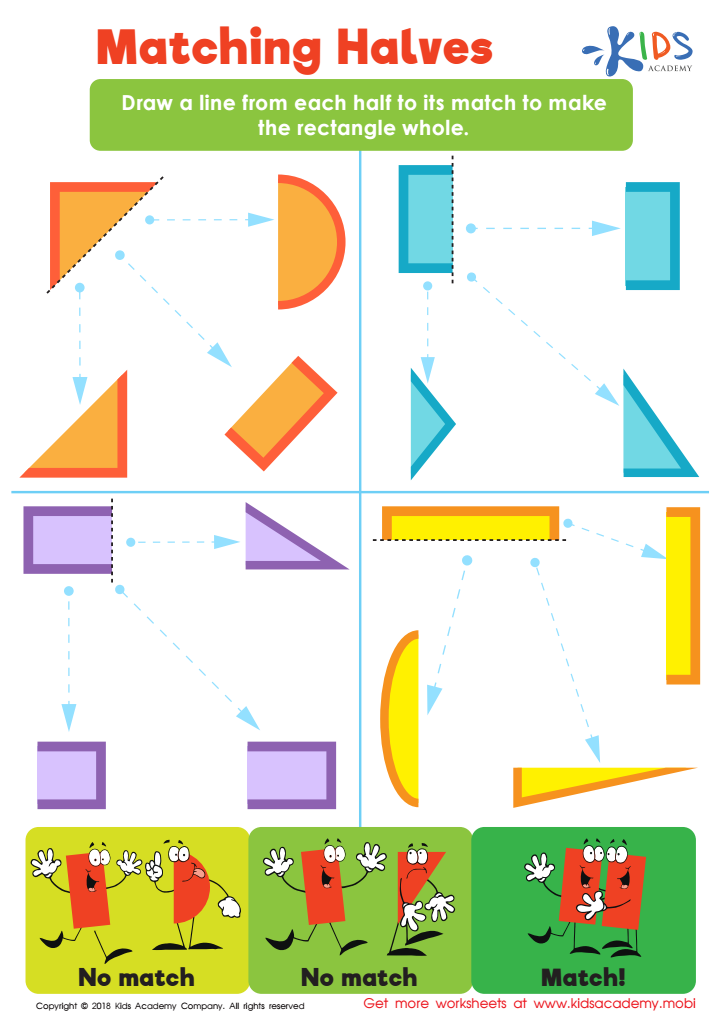
Matching Halves Worksheet
 Assign to My Students
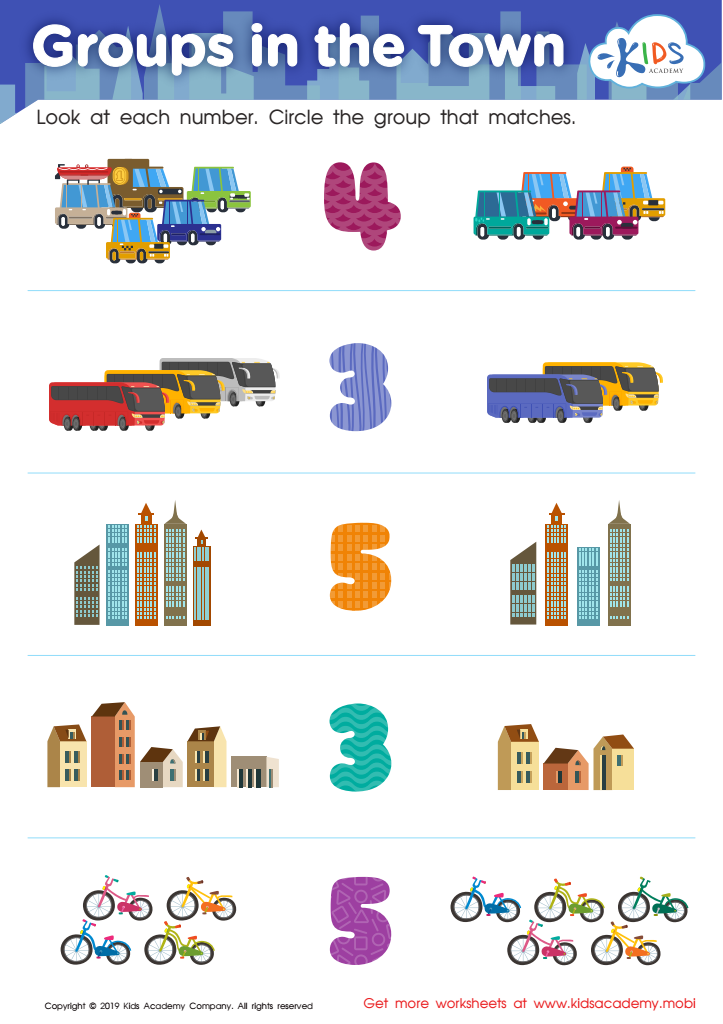
Groups in the Town Worksheet








Visual discrimination skills are critical for children ages 6-8, especially in the context of mathematics. These skills involve the ability to notice and interpret different visual characteristics, such as shape, size, color, and spatial relationships. Parents and teachers should prioritize these skills because they directly influence a child's ability to understand mathematical concepts.
In mathematics, visual discrimination allows students to differentiate between numbers, recognize patterns, and solve problems effectively. For instance, when learning about addition and subtraction, a child needs to distinguish between quantities visually represented in various forms (like graphs, counters, or arrays). Furthermore, as students progress, they encounter geometric shapes and measurements that require the ability to identify differences and similarities accurately.
Fostering visual discrimination skills enhances critical thinking and problem-solving abilities, laying a strong foundation for future math competencies. It also supports reading and writing development, as these skills are interconnected in processing visual information. By encouraging practice and engagement in activities that strengthen visual discrimination, adults empower children to build confidence, improve academic performance, and develop a positive attitude towards learning math, ensuring they are equipped for success in their educational journey.








