Visual fraction representation Math Worksheets for Ages 6-8
3 filtered results
-
From - To
Discover our engaging Visual Fraction Representation Math Worksheets, designed specifically for kids aged 6-8! These worksheets help young learners grasp the concept of fractions through vivid illustrations and interactive exercises. By utilizing visual tools, children can better understand essential fraction concepts, such as recognition, comparison, and equality. Our carefully crafted materials stimulate critical thinking while making math enjoyable. Perfect for home and classroom use, these worksheets provide an excellent foundation for future math skills. Help your child build confidence and proficiency in fractions with our colorful, age-appropriate resources that promote hands-on learning and develop a love for mathematics!
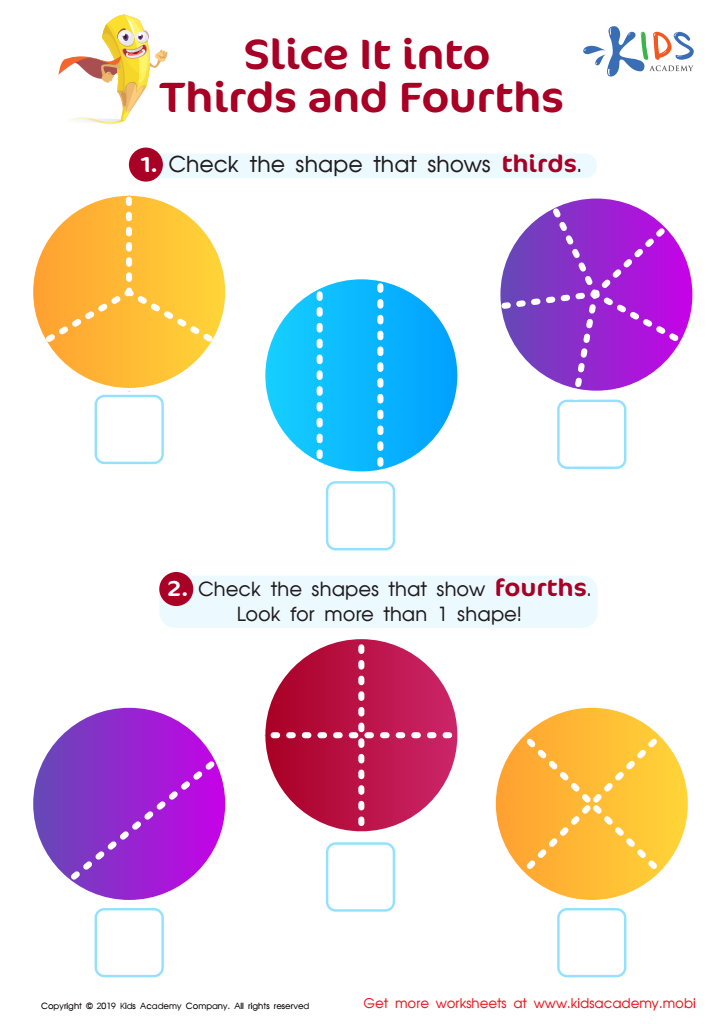
Slice in Thirds Fourths Worksheet
 Assign to My Students
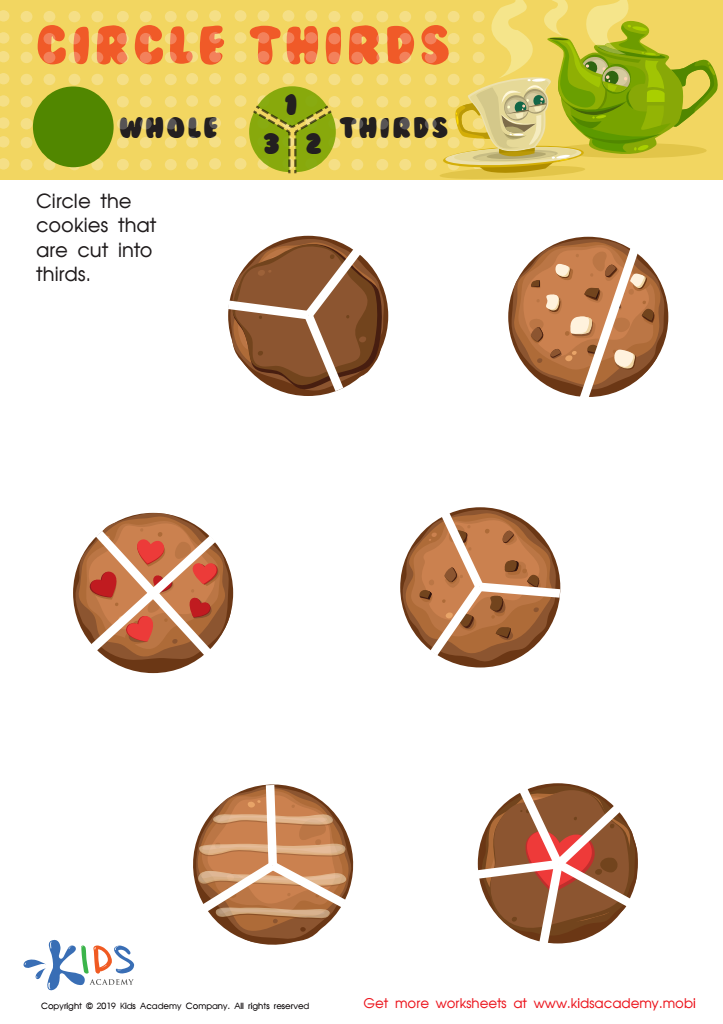
Circle Thirds Worksheet







Visual fraction representation is crucial for children ages 6-8 as it lays a foundational understanding of mathematics. At this developmental stage, children begin to grasp complex concepts, and visual representations simplify these ideas. Fractions often confuse young learners; visuals, such as pie charts, number lines, and bar models, provide concrete ways to visualize relationships between parts and wholes. This can significantly enhance their comprehension and retention of fractional concepts.
Moreover, incorporating visual aids caters to different learning styles, making it easier for teachers and parents to engage children in learning mathematics. Studies have shown that visual tools promote active learning, encouraging children to explore, discuss, and connect with the material in meaningful ways. Engaging in discussions centered around these visuals also fosters critical thinking and problem-solving skills.
Additionally, mastering fractions early on is vital, as they form the basis for more advanced math concepts later. By prioritizing visual fraction representation, parents and teachers help their children build confidence and competence in math, setting the stage for successful academic experiences. This early intervention cultivates a positive attitude toward math, reducing anxiety and instilling a lifelong appreciation for the subject. Ultimately, visual fraction representation is essential for developing numerical fluency in young learners.








