Visualization skills Math Worksheets for Ages 6-8
3 filtered results
-
From - To
Enhance your child's math abilities with our Visualization Skills Math Worksheets, designed specifically for ages 6 to 8. These engaging worksheets promote critical thinking and help students develop essential visualization skills needed for problem-solving and understanding mathematical concepts. Kids will love the colorful, interactive activities that transform learning into a fun experience! Each worksheet is tailored to capture young minds’ attention while building their ability to visualize numbers, shapes, and relationships. Perfect for home or classroom use, these resources foster a solid foundation in math and set the stage for future success. Start your child's learning journey today!
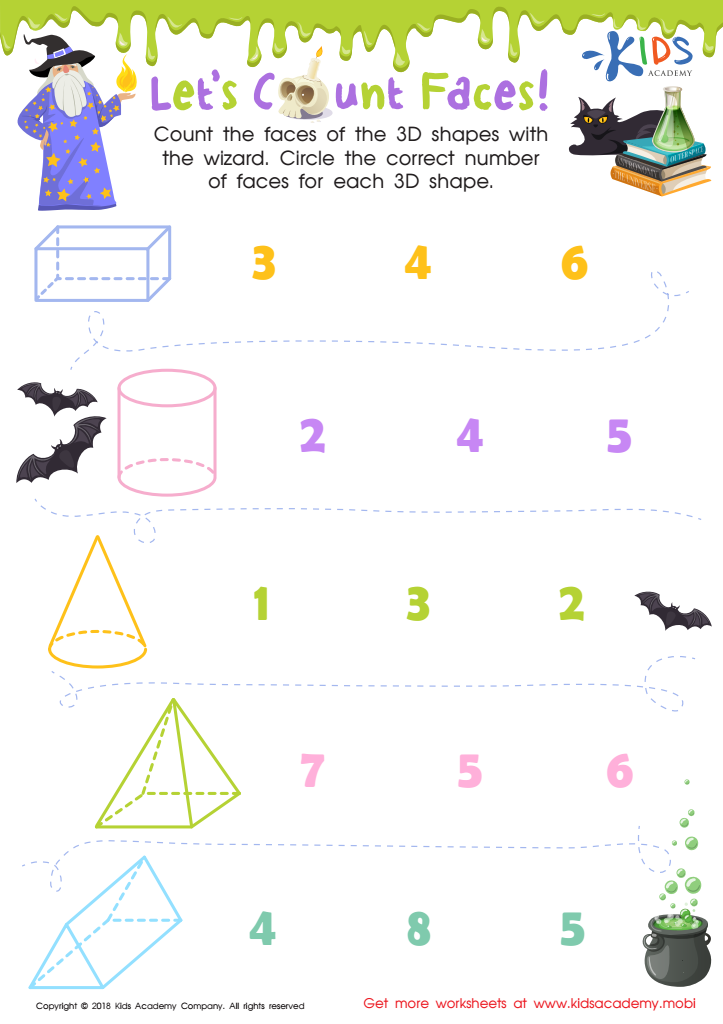
Let's Count Faces! Worksheet
 Assign to My Students
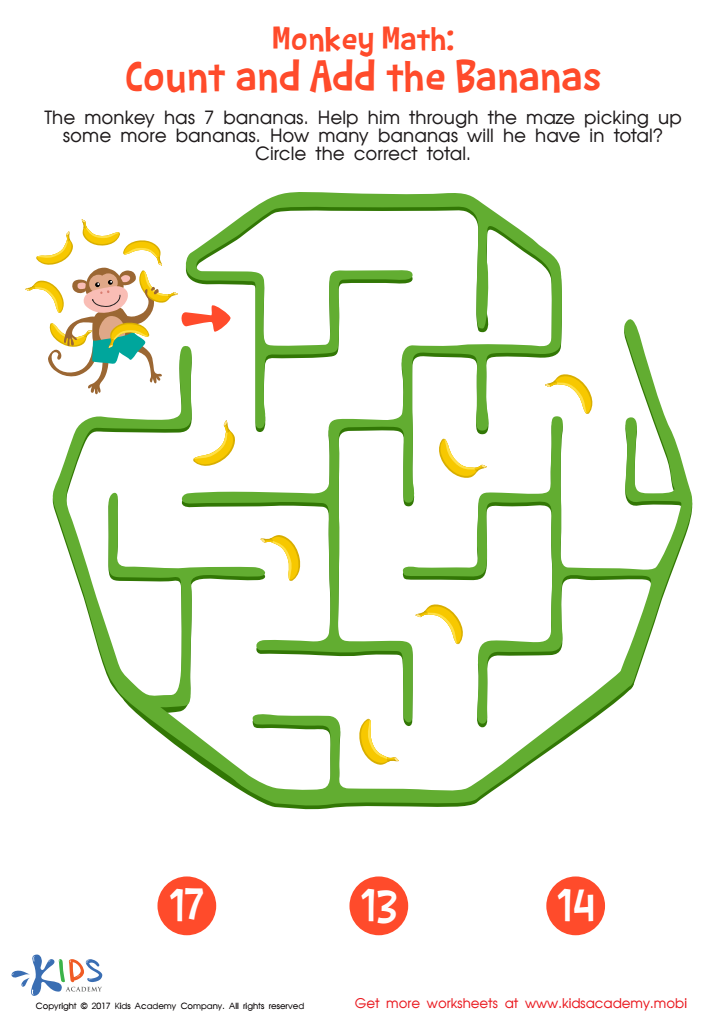
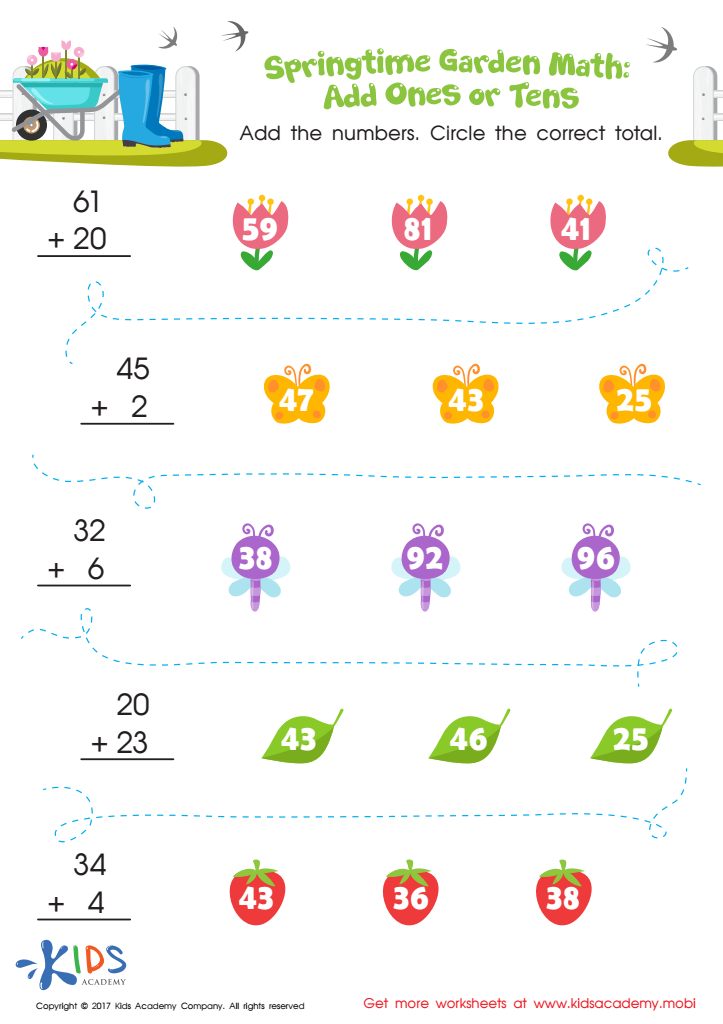
Springtime Garden Math Worksheet








Parents and teachers should prioritize visualization skills in math for children aged 6-8 because these skills form a critical foundation for mathematical understanding and problem-solving. At this developmental stage, children are naturally curious and learn best through concrete experiences. Visualization helps them mentally manipulate and engage with numbers, shapes, and patterns, making abstract concepts more tangible.
Strong visualization skills enable children to picture mathematical problems, leading to improved comprehension and retention. For instance, when they can visualize mathematical scenarios such as addition or subtraction, they can more easily grasp the underlying concepts and relationships, reducing reliance on memorization. This ability also enhances spatial reasoning, which is essential for higher-level math, geometry, and even daily tasks, like understanding maps or graphics.
Furthermore, developing visualization skills cultivates critical thinking and creativity. Children learn to approach problems from different angles and devise strategies for overcoming challenges. As they gain confidence in their math abilities, they are more likely to embrace future mathematical learning with enthusiasm. Ultimately, supporting visualization skills not only enhances math proficiency but also encourages a lifelong love of learning, equipping children for success in academics and beyond.








