Enhancing Counting Skills Measurement Worksheets for Ages 6-8
3 filtered results
-
From - To
Enhance your child's counting skills with our engaging Measurement Worksheets designed for ages 6-8. These interactive activities specifically focus on developing foundational math skills by incorporating fun measurement concepts and practical counting exercises. Perfect for young learners, these worksheets provide varying levels of difficulty to challenge children while keeping them motivated. Through hands-on practice, kids will gain confidence in their counting abilities and improve their understanding of measurements in real-world contexts. Browse our collection today to discover a dynamic learning resource that will make counting an enjoyable and rewarding experience for your child!
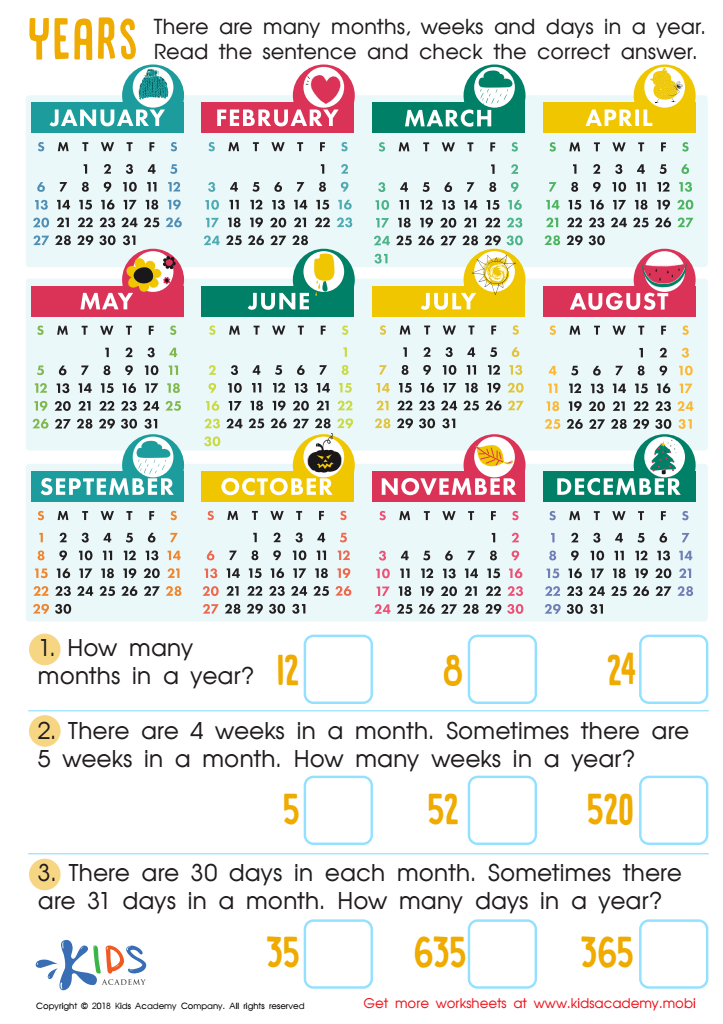
Years Worksheet
 Assign to My Students
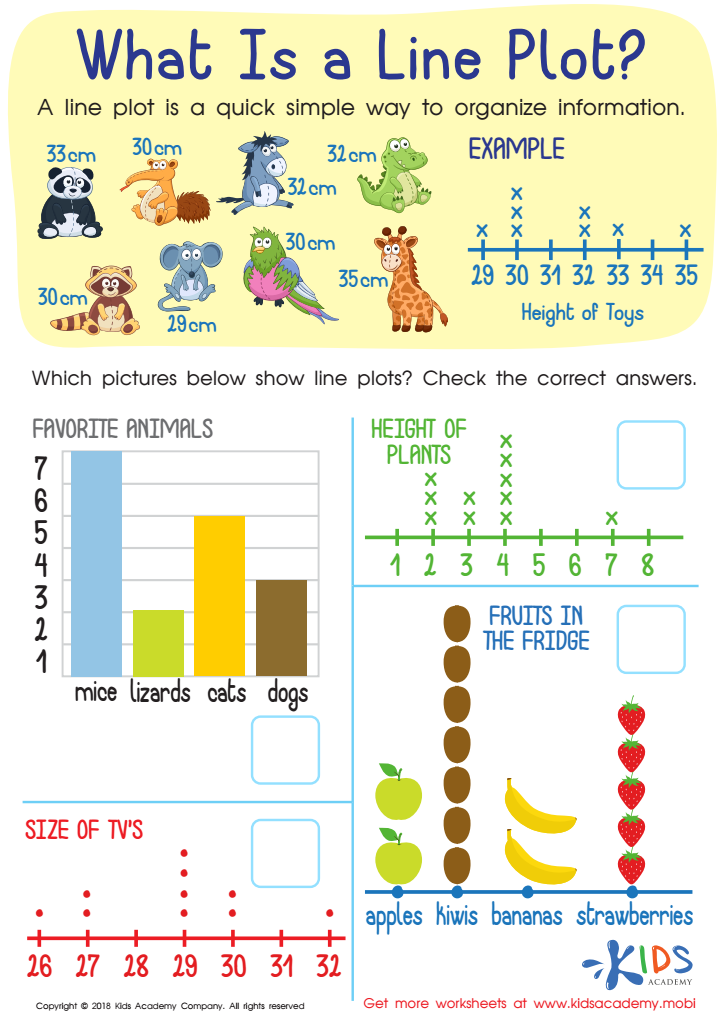
What Is a Line Plot? Worksheet
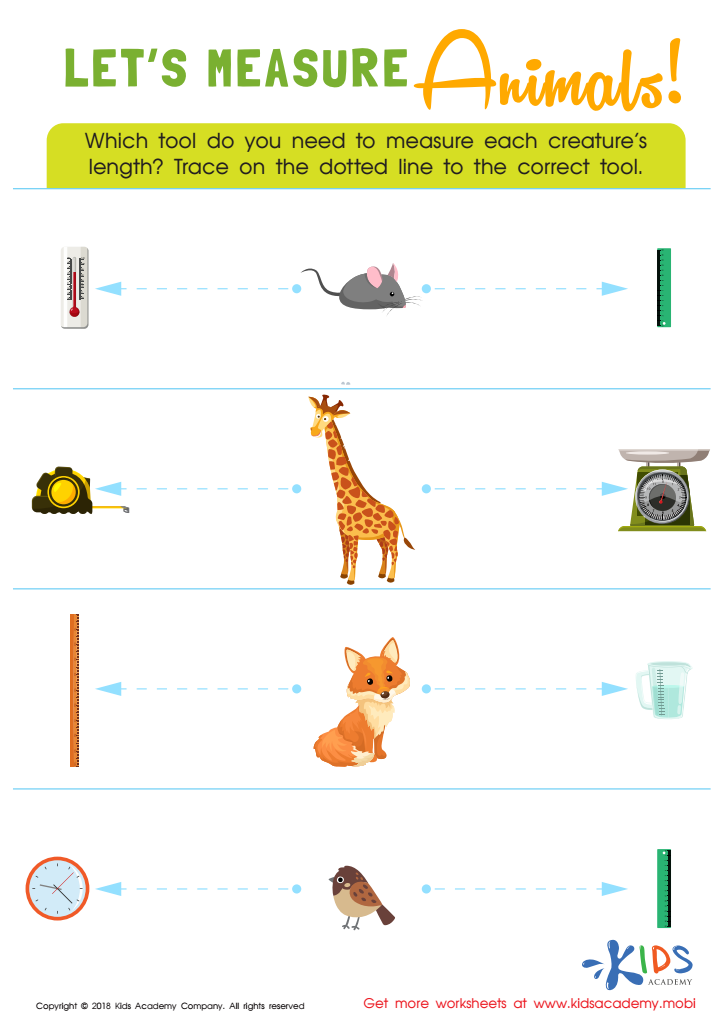
Let's Measure Animals! Worksheet








Enhancing counting skills and measurement for children aged 6-8 is crucial for their cognitive development and foundational math competence. At this age, children are developing an understanding of numbers and their relationships. Strong counting skills are not just about numbers; they contribute to critical problem-solving abilities that children will carry into more complex math concepts in later years.
Parents and teachers play a pivotal role in supporting this skill development through engaging activities. By fostering counting and measurement skills, children learn to quantify their environment, increasing their confidence in their math abilities. It cultivates a sense of curiosity and interaction with the world around them, making math relevant and enjoyable.
Moreover, a solid grasp of these early mathematical concepts is linked to future academic success. Measuring skills allow children to compare lengths, weights, and volumes, further enhancing their comprehension of spatial reasoning and geometry. Early exposure to these skills can reduce math anxiety and build a positive attitude towards the subject.
Investing time and resources into enhancing counting and measurement skills progresses children's knowledge while supporting their emotional and intellectual growth, setting the stage for lifelong learning and confidence in their mathematical abilities.








