Improving counting skills Measurement Worksheets for Ages 6-8
3 filtered results
-
From - To
Enhance your child's counting abilities with our specially designed Measurement Worksheets for Ages 6-8. These engaging, educational worksheets are crafted to strengthen counting skills, incorporating fun activities that make learning enjoyable. Perfect for young learners, they reinforce concepts such as counting up, counting down, and skip counting while introducing basic measurement principles. Aligned with educational standards, these printable resources help children grasp foundational math skills, setting the stage for future academic success. Make math learning an exciting adventure with our curated selection of printable worksheets, and watch your child’s confidence and proficiency grow!
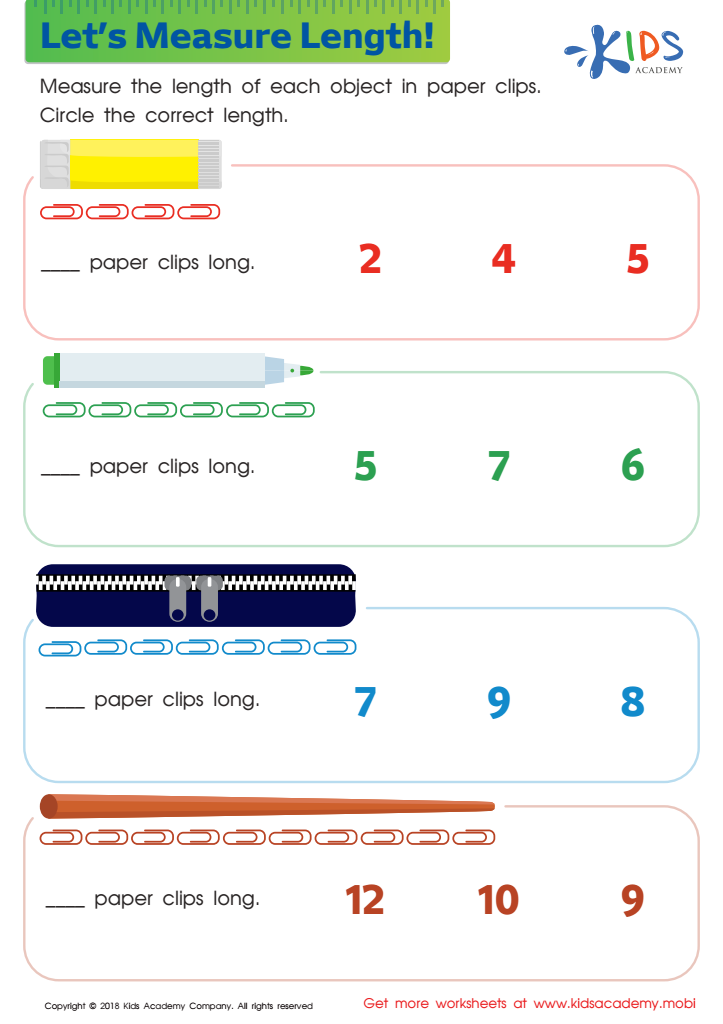
Lets Measure Length Worksheet
 Assign to My Students
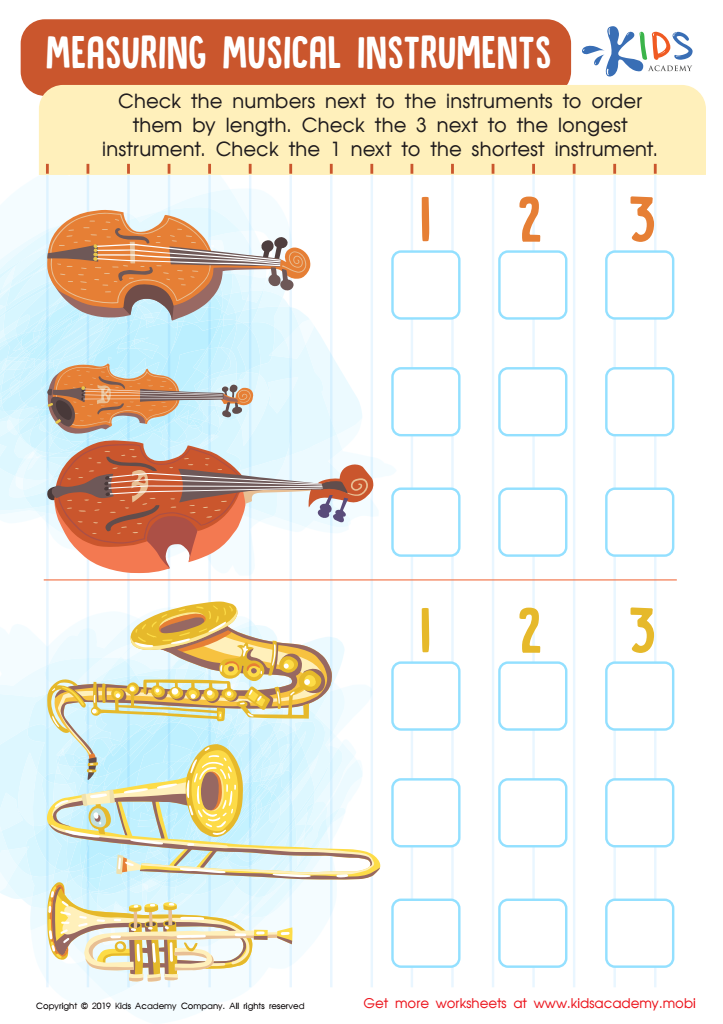
Measuring Musical Instruments Worksheet
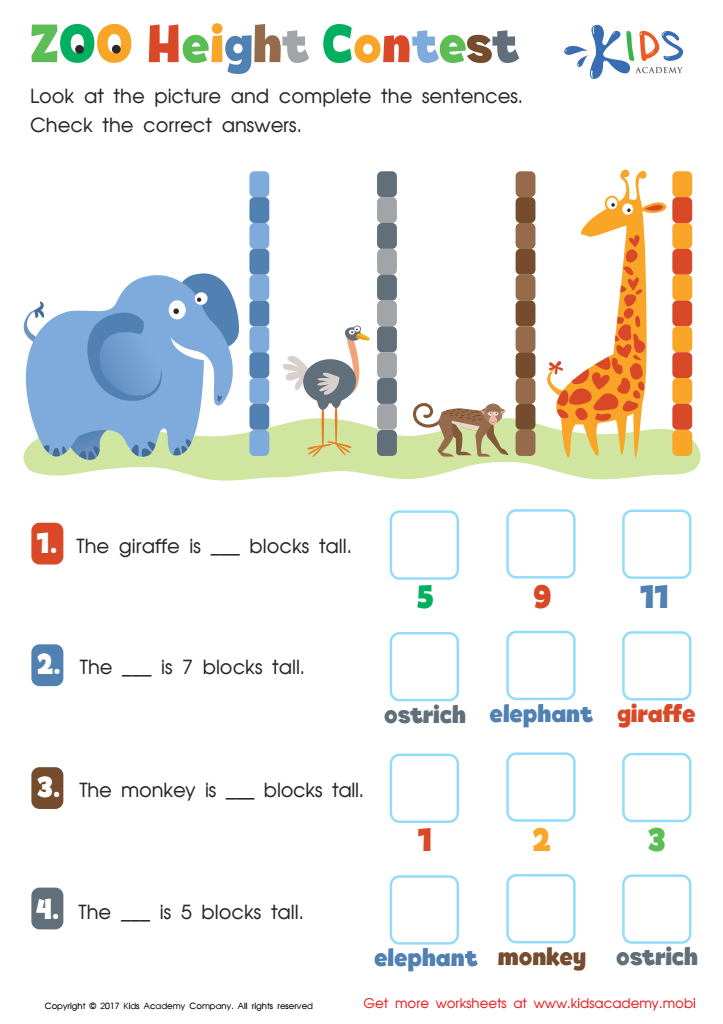
Zoo Height Contest Worksheet








Improving counting skills and measurement understanding for children ages 6-8 is fundamental to their overall academic development and daily life skills. During this formative period, children are establishing the foundational building blocks for more complex mathematical concepts. Proficiency in counting helps young learners grasp number sense, enabling them to perform basic arithmetic operations—addition, subtraction, multiplication, and division—in the future. Accurate counting paves the way for more advanced problem-solving and computational thinking.
Understanding measurement has equal importance as it introduces children to sizes, volumes, lengths, and quantities, which are prevalent in everyday activities. Whether they're estimating ingredients for a recipe, comparing their height, or understanding distances on a map, measurement is central to practical life skills. Moreover, measurement concepts assist in developing their spatial awareness and geometry skills.
Also, focusing on these skills increases students' confidence and reduces math anxiety, which is critical for future success across many academic disciplines. Engaging children with hands-on measurement activities like using rulers, scales, and measuring cups fosters a tangible understanding, making abstract math concepts more relatable. Thus, teachers and parents should prioritize these skills to ensure well-rounded cognitive development and prepare children for future educational challenges and real-life situations.








