Visual perception Measurement Worksheets for Ages 6-8
4 filtered results
-
From - To
Discover our engaging "Visual Perception Measurement Worksheets" designed for children aged 6-8. These worksheets aim to enhance visual perception skills, which are essential for understanding measurement concepts in math. With a variety of fun and interactive activities, children will learn to recognize shapes, compare sizes, and interpret visual information. Each worksheet is crafted to promote critical thinking and problem-solving skills, fostering a deeper understanding of measurements in everyday life. Perfect for both classroom settings and at-home learning, our resources encourage creativity while building foundational math skills. Equip your child with essential visual perception abilities for academic success!
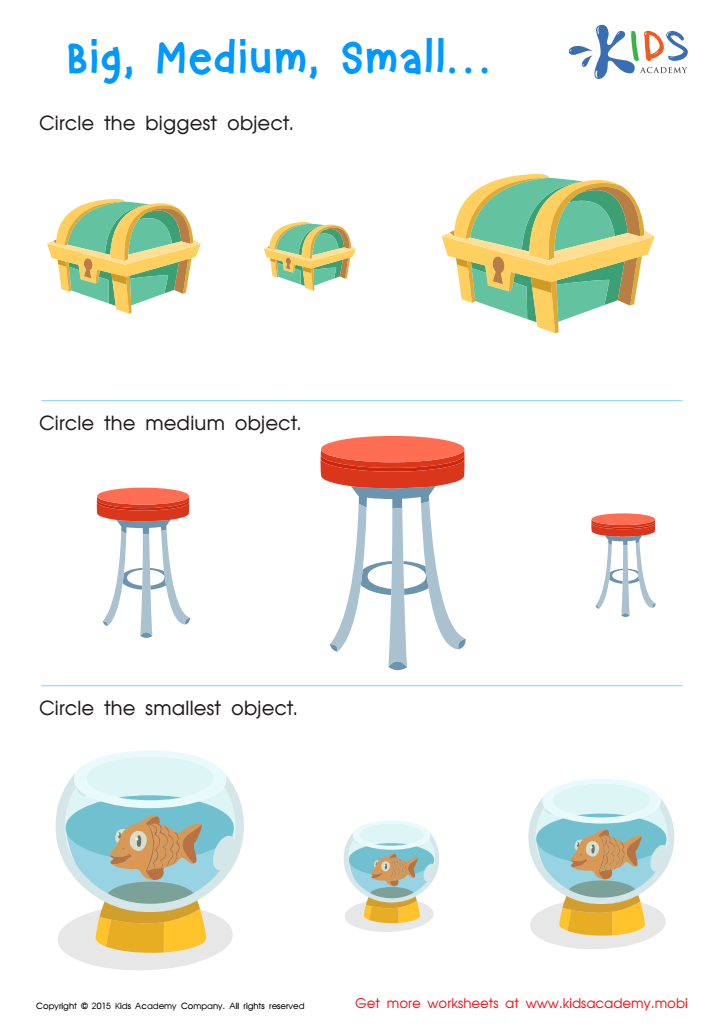
Big Medium Small Worksheet
 Assign to My Students
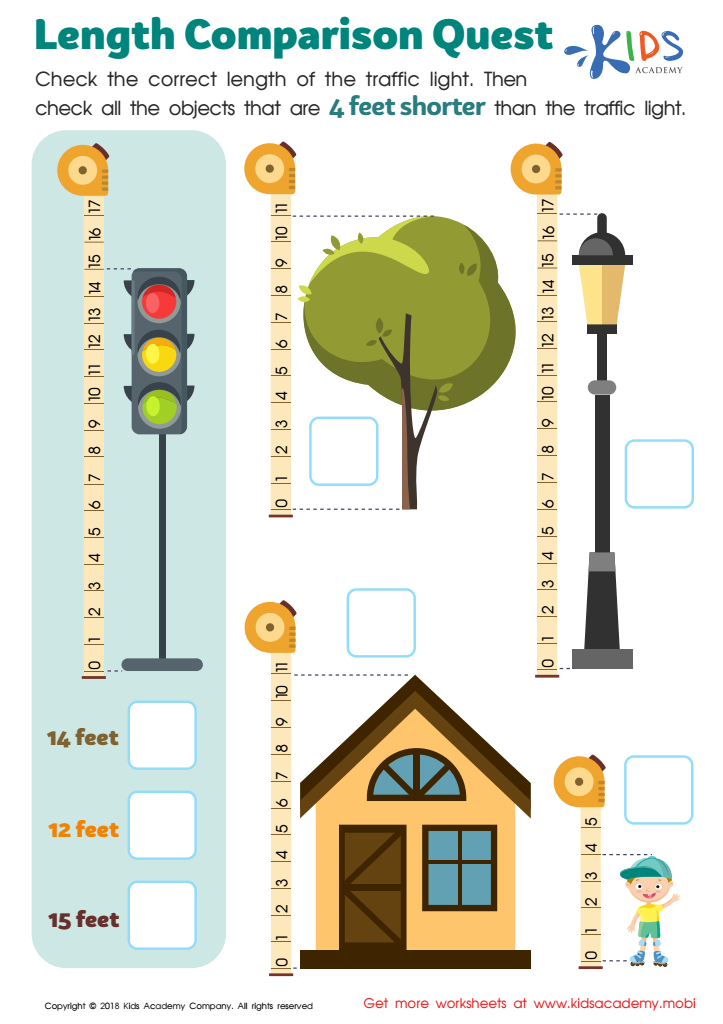
Length Comparison Quest Worksheet
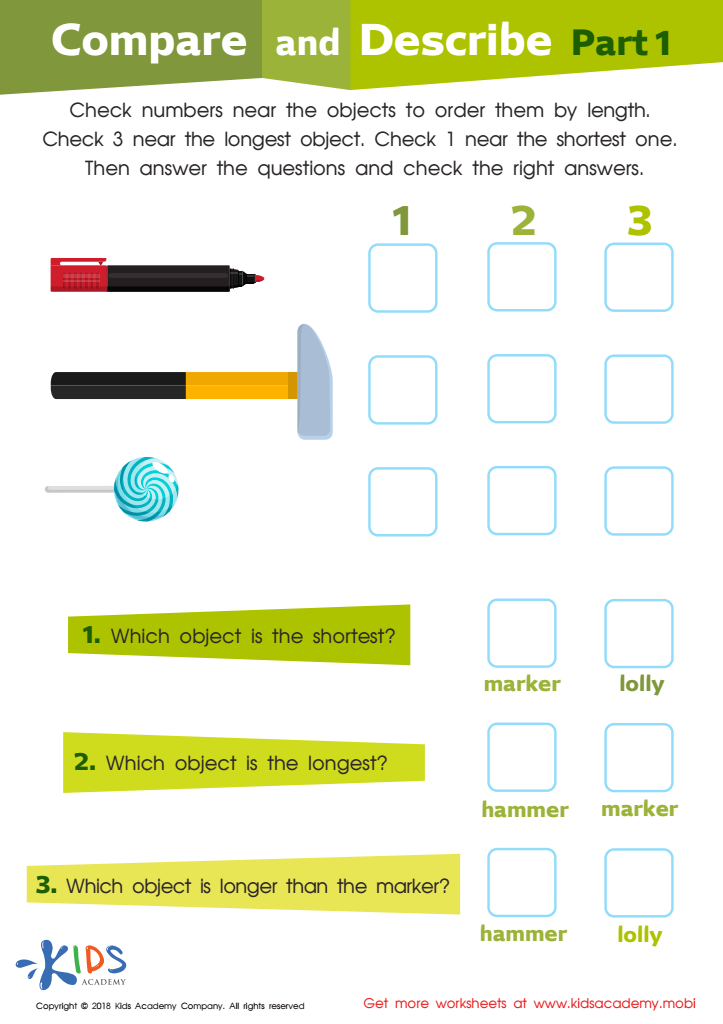
Compare and Describe: Part 1 Worksheet
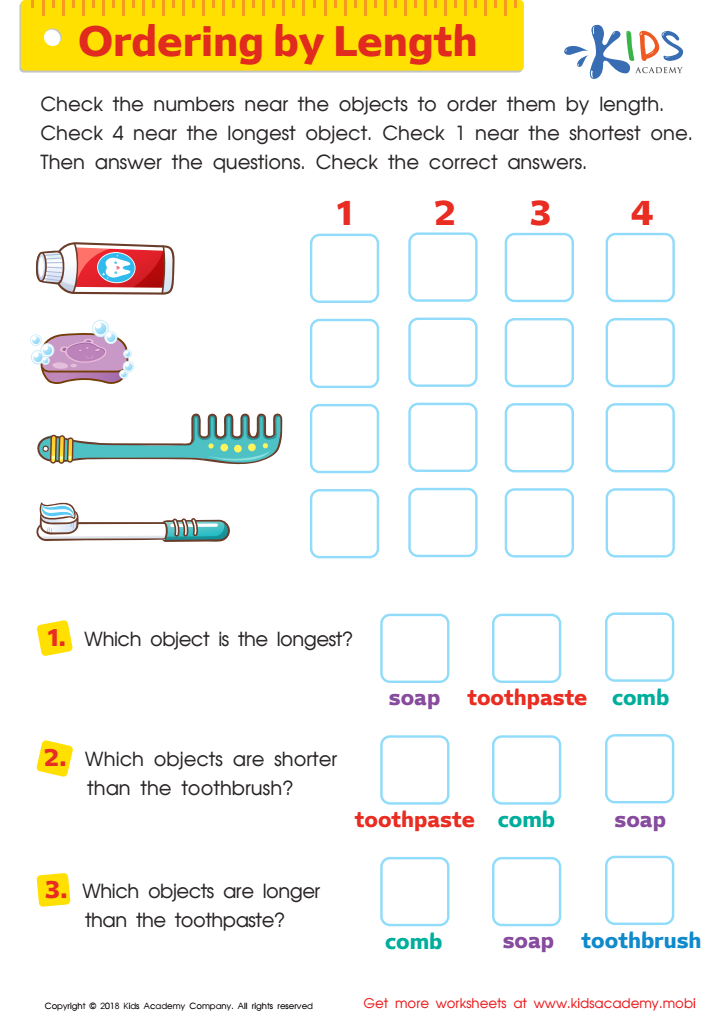
Ordering by Length Worksheet







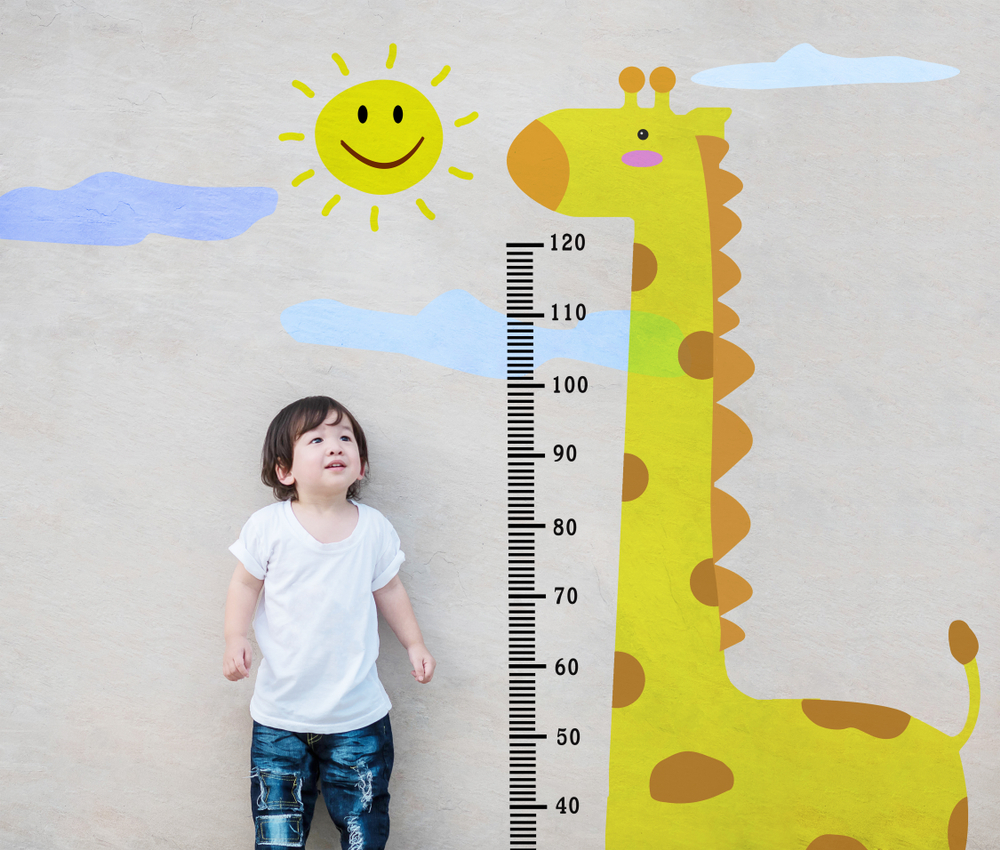
Visual perception is a critical cognitive skill that allows children to interpret and understand visual information from their environment. For children aged 6-8, developing strong visual perception is essential for various academic tasks, such as reading, writing, and math problem-solving. When parents or teachers measure visual perception, they gain insights into a child's ability to recognize shapes, discern patterns, and interpret visual details—key components in learning.
Identifying potential difficulties in visual perception early can help address challenges before they impact a child's academic performance and self-esteem. If a child struggles with visual perceptual skills, it may manifest as difficulties in reading letters and numbers, handwriting irregularities, or challenges in following instructions. By assessing these skills, educators and parents can tailor interventions, whether through targeted exercises, specialized activities, or collaborations with occupational therapists.
Moreover, fostering strong visual perceptual skills can enhance overall learning experiences and facilitate better social interactions. Monitoring visual perception development encourages a collaborative approach, ensuring that children have the tools and support needed to succeed. Ultimately, understanding the importance of visual perception measurement boosts a child's confidence and competence in a learning environment, preparing them for future educational challenges.








