Enhancing math skills Multiplication Worksheets for Ages 6-8
3 filtered results
-
From - To
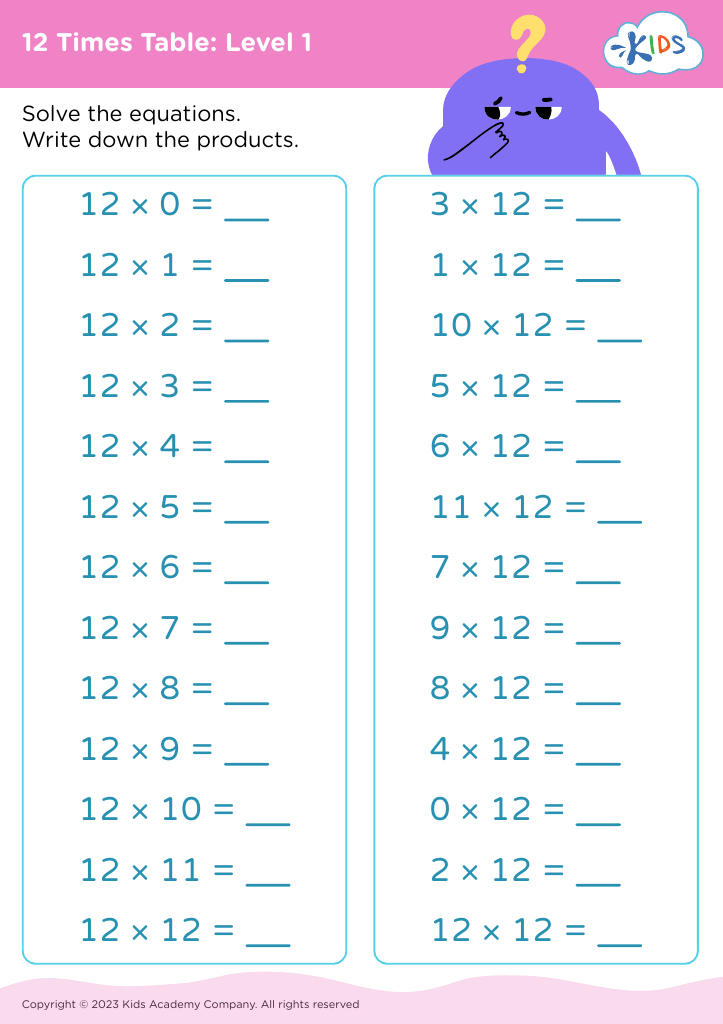
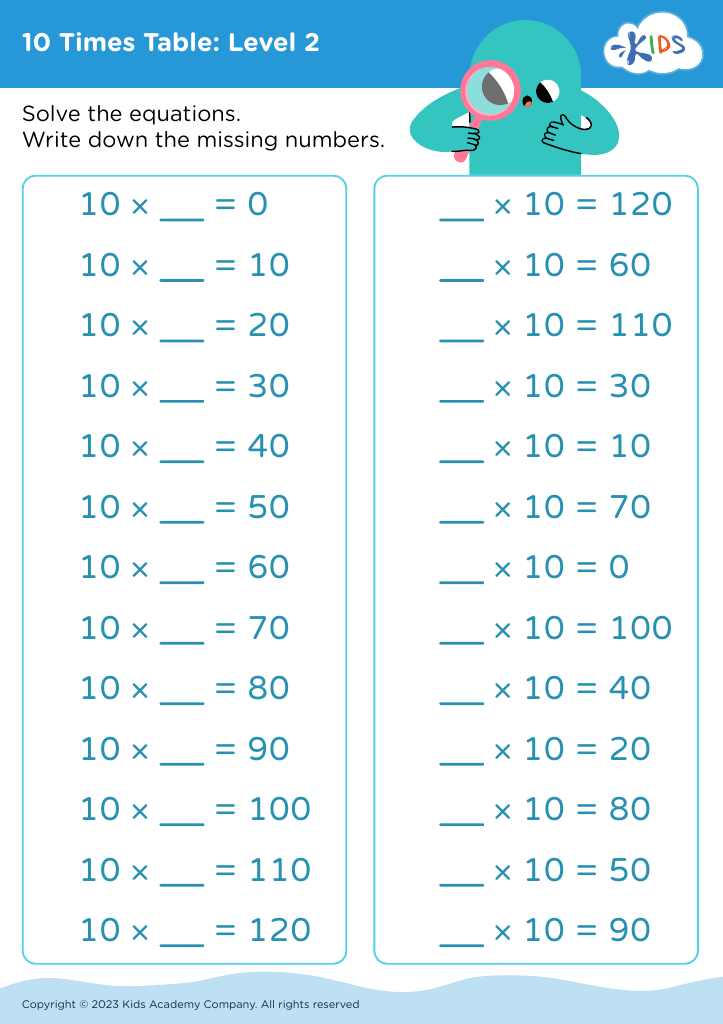
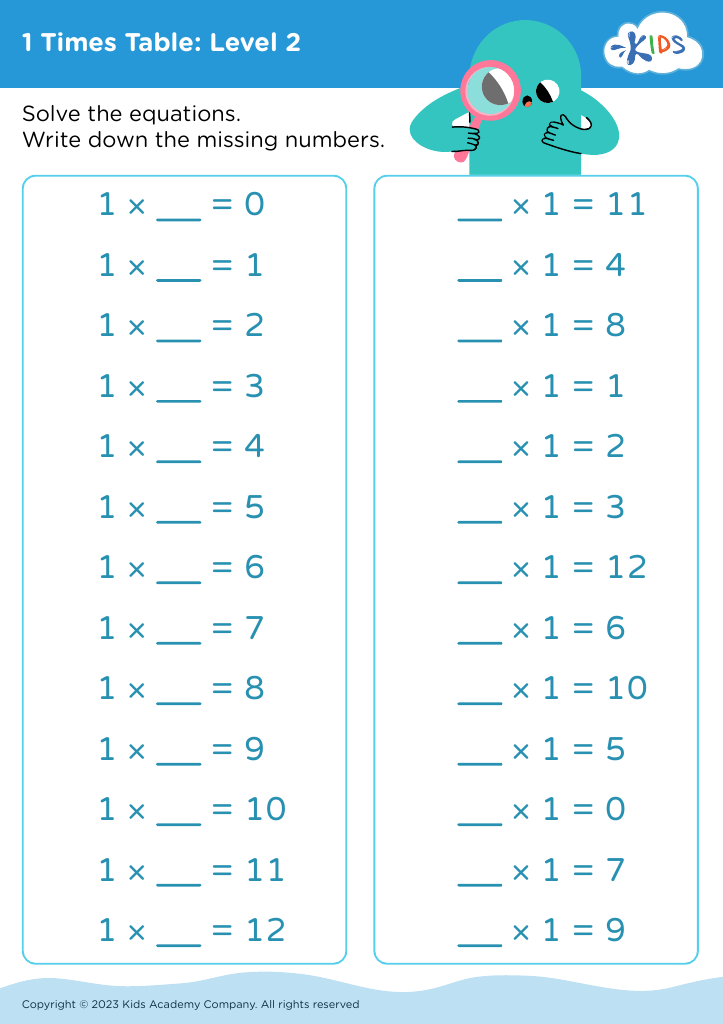
Boost your child's confidence and proficiency in math with our engaging multiplication worksheets designed specifically for ages 6-8. These interactive worksheets provide a fun and effective way to build essential multiplication skills through various activities and exercises. Each worksheet is structured to reinforce understanding, enhance problem-solving abilities, and cultivate a love for math. Ideal for classroom use or at-home practice, our carefully crafted materials support continuous learning and improvement. Help your child develop a strong foundation in multiplication and achieve academic success with our top-quality resources today!








Parents and teachers should prioritize enhancing multiplication skills for children aged 6-8 because this foundational math skill critical for their academic and real-life success. During these formative years, kids develop cognitive abilities that make it easier for them to grasp and retain mathematical concepts. Mastering multiplication builds a solid foundation for more advanced math topics such as division, fractions, algebra, and even geometry.
Teaching multiplication at an early age fosters numerical fluency, helping children perform calculations more quickly and accurately. This proficiency not only aids academic performance across all subjects but also boosts confidence, reducing math-related anxiety and promoting a positive attitude towards learning.
Mathematical skills acquired early on also have practical life applications. Whether it’s sharing snacks, solving puzzles, or managing allowances, the concept of multiplication is omnipresent. This ensures that children can interpret and interact with their environment more effectively.
Furthermore, cultivating such skills early can ignite a lifelong interest in STEM (Science, Technology, Engineering, and Math) fields. By appreciating and learning the logic behind numbers, children can also enhance problem-solving skills and logical thinking, invaluable talents in today's technology-driven world.
In summary, emphasizing multiplication skills in young learners is not just about academic achievement; it's about equipping them with essential tools for their future life.








